

1. The Water Propagation Station
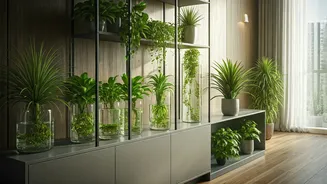
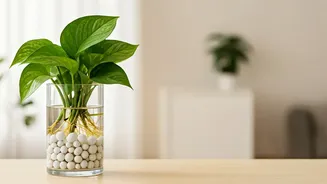
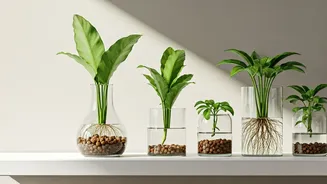
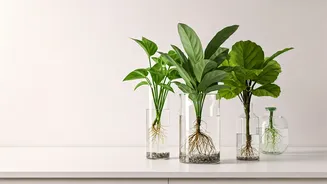
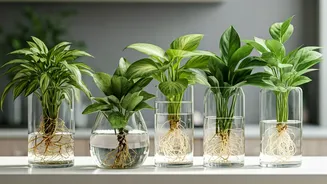
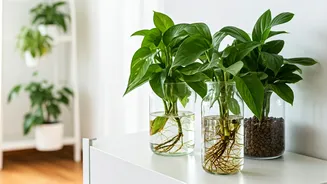
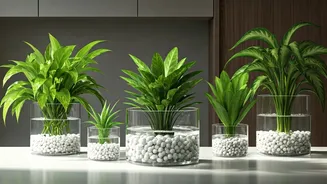
The simplest entry into soilless gardening is also one of the most visually stunning. Water propagation involves placing plant cuttings in a vessel of water, where they will grow roots and can often live happily for months or even years. This method completely
eliminates soil-borne pests like fungus gnats and prevents the dreaded trail of dirt from the front door to the kitchen sink. Think of it as a living bouquet. Snippets of pothos, philodendron, monstera, and tradescantia are perfect candidates. All you need is a clear glass vase, jar, or propagation station. The transparent vessel allows you to watch the roots develop, which is a fascinating process in itself. It's a clean, minimalist, and almost scientific way to display greenery that fits perfectly on a crowded bookshelf or a tiny windowsill.
2. The LECA Revolution
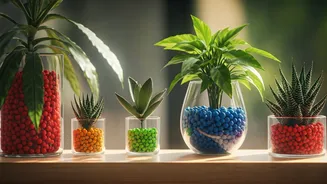
If you're browsing plant-centric social media, you’ve likely seen those little terracotta-colored clay balls. They’re called Lightweight Expanded Clay Aggregate, or LECA, and they're a popular soil substitute. These porous, baked-clay pebbles provide a sturdy structure for roots while wicking water up from a reservoir at the bottom of the pot. It’s a semi-hydroponic system that’s surprisingly low-maintenance. The benefits are huge for small-home dwellers. LECA is reusable, sterile, and pH neutral. It reduces the risk of over-watering and root rot, two common plant-killer mistakes. Best of all, it’s clean. You can repot a plant with LECA on your living room rug without a single speck of dirt. It’s the perfect solution for those who want the look of a traditional potted plant without any of the associated grime.
3. The Art of Kokedama
For a more organic, sculptural look, consider kokedama. This traditional Japanese art form involves binding a plant's root ball in a special soil mixture and then encasing it in a sphere of soft green moss. The result is a self-contained, pot-less plant that can be displayed on a dish or hung from the ceiling. While it technically contains some soil, the moss ball keeps everything neatly contained, making it a mess-free alternative to a conventional pot. Kokedama balls are especially useful for maximizing vertical space in a small home. Hanging a few at different heights can create a floating garden effect, drawing the eye upward and making a room feel larger. They are living works of art that add a touch of handcrafted, natural beauty without taking up precious surface area.
4. Air Plants: The Ultimate Minimalists
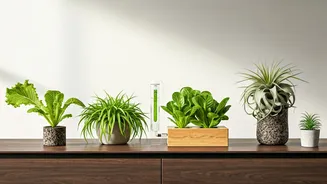
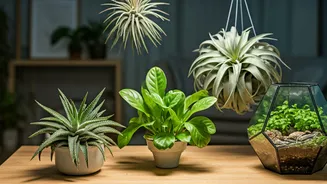
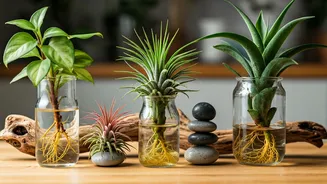
If you want the absolute lowest-mess plant possible, look no further than Tillandsia, commonly known as air plants. These fascinating epiphytes don't require any soil at all. They absorb moisture and nutrients from the air through specialized scales on their leaves. Their care routine is simple: a good soak in water every week or two and a spot with bright, indirect light. Their versatility is their superpower in a small home. You can tuck them into geometric metal holders (himmeli), place them in a terrarium with sand or crystals, mount them on a piece of driftwood, or even attach small magnets to display them on your fridge. They are the epitome of mud-free greenery, offering a touch of life with zero mess and endless creative possibilities.
5. Preserved Moss Walls
What if you want the visual impact of a wall of green without any of the watering, light requirements, or maintenance? A preserved moss wall is the answer. This isn't a living plant system but rather real moss that has been sustainably harvested and preserved using a glycerin-based solution. It retains its soft texture and vibrant color for years, requiring no water, no sunlight, and no trimming. While it’s more of a decorative element than a living plant, a framed piece of preserved moss can satisfy the craving for greenery in a dark corner or a windowless bathroom where a living plant wouldn't survive. It’s a one-time installation that provides lasting, zero-effort, and completely mud-free botanical beauty, making it a brilliant hack for adding a dramatic green statement to a small space.