







Treat Your Windshield for Ultimate Clarity
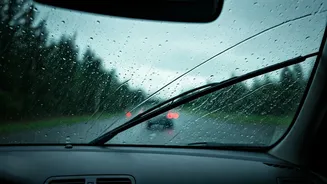
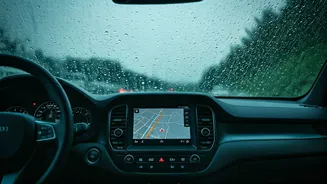
The most important factor in rainy driving is visibility. If you can’t see the road, you can’t react. While good wiper blades are non-negotiable, you can take your view to the next level with a hydrophobic glass treatment. Products like Rain-X or similar
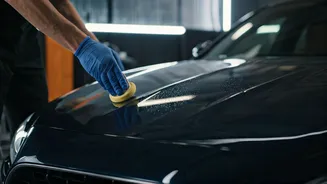
glass coatings work by creating a super-slick surface that forces water to bead up and roll away. At highway speeds, the wind alone can clear your windshield, sometimes making wipers almost unnecessary. Applying it is a simple DIY job that takes less than 30 minutes. You clean the glass thoroughly, apply the treatment with a cloth, let it haze over, and then buff it off. The result is a dramatically clearer view that reduces eye strain and helps you spot hazards sooner.
Give Your Tires the Penny Test
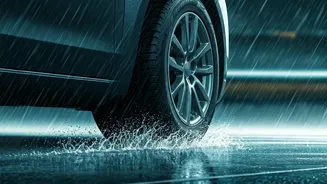
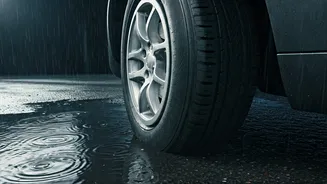
Your tires are your car’s only connection to the road, and in the rain, that connection is fragile. Tire tread is designed to channel water away from the contact patch, preventing your car from floating on a thin layer of water—a dangerous phenomenon known as hydroplaning. But how do you know if your tread is deep enough? Use a penny. Place it upside down in one of the tread grooves. If you can see the top of Abraham Lincoln's head, your tires are worn and likely unsafe for wet conditions. You should have enough tread that the penny covers at least part of his head. Check multiple spots on each tire, as they can wear unevenly. This simple, two-second check can be a lifesaver.
Become a Master of Defogging
As rain falls, the temperature and humidity difference between the inside and outside of your car causes windows to fog up instantly, blinding you. Many drivers fumble with the controls, making it worse. Here's the foolproof hack: turn on your air conditioning. The A/C system acts as a dehumidifier, pulling moisture from the air. Next, turn off air recirculation (the button with the U-shaped arrow inside a car silhouette). You want to pull in fresh, less-humid outside air. Finally, direct the vents toward your windshield and turn up the fan. This combination will clear a foggy windshield faster than any other method, restoring your vision in seconds, not minutes.
Know When to Ditch Cruise Control
Cruise control is a fantastic feature for long, dry road trips. In the rain, it’s a hazard. The system is designed to maintain a constant speed, and it doesn't know the road is wet. If your car begins to hydroplane while cruise control is engaged, the system will try to 'correct' the perceived loss of speed by accelerating, which is the exact opposite of what you should do. This can send the car into a spin. Furthermore, it encourages you to keep your feet flat on the floor, increasing your reaction time if you suddenly need to brake or ease off the gas. When it rains, turn cruise control off and keep your feet, and your full attention, on the task of driving.
Use Your Headlights Correctly
This seems obvious, but it’s amazing how many drivers get it wrong. In rainy conditions, your headlights are not just for you to see—they're for other drivers to see you. A gray car on a gray, rainy day can become nearly invisible. In many states, the law requires your headlights to be on whenever your wipers are in use. But don’t use your high beams. The intense light will reflect off the millions of raindrops, creating a wall of glare that actually reduces your visibility and blinds oncoming drivers. Use your standard low-beam headlights to ensure you are seen without creating an additional hazard for everyone else.
Learn the Feel of Hydroplaning (and How to React)
The key to surviving a hydroplaning incident is to recognize it instantly and react calmly. It feels like the car has suddenly gone light and floaty, and the steering will feel unusually easy or disconnected. You may also hear the engine rev as the tires lose traction and spin freely. The natural, but wrong, instinct is to slam on the brakes. Don't. This can lock the wheels and cause a complete loss of control. Instead, gently ease your foot off the accelerator. Do not make any sudden steering adjustments. Keep the wheel pointed in the direction you want the car to go. As the car slows, the tires will regain contact with the pavement, and you will feel control return.