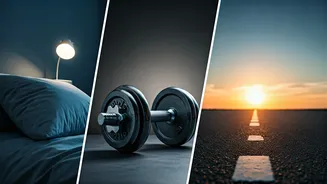







The Real Fitness Power Couple
For years, the fitness mantra has been about pushing harder, lifting heavier, and grinding it out. But a smarter, more sustainable approach is gaining traction, one that recognizes a fundamental truth: your workout is only half the battle. The other half happens
while you’re unconscious. Strength training and sleep aren't two separate wellness pillars; they are partners in a powerful, symbiotic relationship. Improving one directly enhances the other. When you lift weights, you create the stimulus for change. When you sleep, your body does the actual work of rebuilding and getting stronger. Ignoring sleep is like planting a garden and refusing to water it—you're just not going to see the growth you've worked for.
How Lifting Primes You for Better Sleep
Ever notice that you feel 'pleasantly tired' after a good lifting session? That's not just in your head. Resistance exercise has been shown to improve sleep quality and duration. One reason is that it helps regulate your body’s core temperature. The initial rise in temperature during a workout is followed by a gradual drop a few hours later, which signals to your brain that it’s time to sleep. Strength training also increases the production of adenosine, a compound in the brain that builds up throughout the day and creates 'sleep pressure,' helping you fall asleep faster and potentially increasing the amount of restorative deep sleep you get. Unlike some forms of intense cardio, strength training, when timed correctly, is less likely to over-stimulate your nervous system close to bedtime, making it a perfect tool for winding down.
Sleep: The Ultimate Anabolic State
Let’s flip the script. While you’re sleeping, your body is anything but idle. This is when the magic happens for muscle growth. During deep sleep, your pituitary gland releases a pulse of Human Growth Hormone (HGH), which is critical for repairing damaged muscle fibers and building new tissue. This process, known as muscle protein synthesis, is the very definition of getting stronger. At the same time, quality sleep helps regulate your hormones for optimal performance. It lowers levels of the stress hormone cortisol, which can break down muscle tissue, and in men, a significant portion of testosterone production occurs during sleep. Sacrificing sleep for an early morning workout or a late-night Netflix binge effectively sabotages the very hormonal environment you need to see progress.
The Question of Timing
So, when is the best time to lift for maximum benefit? The science here is more flexible, but there are smart guidelines. For most people, the golden rule is to avoid extremely intense, heavy lifting sessions within 1-2 hours of bedtime. This can spike your heart rate and cortisol, making it harder to wind down. A late-afternoon or early-evening workout can be ideal, as it allows your body temperature and nervous system to return to baseline before you hit the pillow. Morning workouts are also fantastic, as they can boost your mood and energy for the day without interfering with sleep. The key takeaway isn't that there's one perfect time, but that you should listen to your body and avoid sacrificing sleep at either end of the day for a workout.
Putting It All Together
Integrating sleep into your fitness plan doesn’t require a complete overhaul. It's about making small, strategic adjustments. First, prioritize a consistent sleep schedule, even on weekends. This stabilizes your circadian rhythm, making all your body's processes, including recovery, more efficient. Second, think of your 'rest days' as 'recovery days'—they are as crucial as your training days. If you're feeling exhausted, a day of light activity and an extra hour of sleep will serve you far better than forcing a heavy workout. Finally, ensure your nutrition supports both activities. Adequate protein is essential for muscle repair, while avoiding heavy meals or excessive caffeine close to bedtime is key for undisturbed rest. Treat your bedtime with the same discipline you apply to your deadlift, and you'll unlock a new level of strength and well-being.