









First, What Exactly Is a Panchang?
Think of a panchang as far more than a standard calendar. For Hindus, it’s a traditional astrological almanac that acts as a detailed guide for daily life. The word itself means "five limbs," referring to its five key elements: *tithi* (the lunar day),
*vaar* (the weekday), *nakshatra* (the lunar mansion or star constellation), *yoga* (an astrological combination), and *karana* (half a lunar day). Together, these components determine the auspiciousness of any given moment. For generations, families consulted printed, book-like panchangams, often calculated for a specific city, to determine the ideal times—known as *muhurats*—for everything from religious ceremonies (*pujas*) and weddings to starting a new business or moving into a new home. It was, and remains, a foundational tool for integrating tradition into life's major milestones.
The 'Smart' Digital Revolution
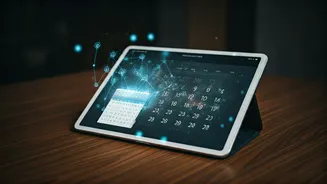
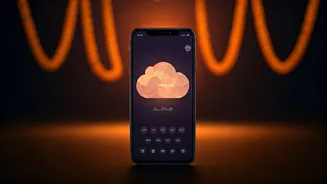
The challenge with traditional panchangams in the modern world is one of logistics. A printed almanac calculated for Mumbai is of little use to family members in Chicago or London, as timings are location-specific. This is where "smart cloud panchang" apps and websites come in. Instead of relying on a static, printed document, these digital tools use your phone's GPS or a user-inputted location to generate hyper-accurate, localized timings. They automatically adjust for time zones, daylight saving, and precise sunrise/sunset times, which are critical for many calculations. This shift from a physical book to a dynamic, cloud-based app represents a massive leap in accessibility. Now, the ancient science of Vedic astrology is available with a few taps on a screen, customized for your exact spot on the globe.
Solving the Coordination Chaos
Herein lies the true genius for families spread across continents. Imagine planning a virtual engagement ceremony with relatives in New York, California, and India. Instead of a messy back-and-forth of emails and spreadsheets trying to reconcile different panchang timings, a family can use a single smart app. Everyone can input their location and see the auspicious *muhurat* windows displayed in their respective local times. Some apps even allow users to share specific event timings or create a group calendar for a wedding, ensuring the bride's family in New Jersey and the groom's in Texas are all aligned on the perfect moment for each ritual. This technology transforms a potentially stressful coordination nightmare into a simple, collaborative process. It removes ambiguity and ensures that even when physically apart, families can come together at a time that is spiritually significant for everyone.
Beyond the Big Festive Gatherings
While coordinating large events is a major benefit, the utility of smart panchang apps extends into daily life. Many users rely on them for smaller, personal observances. For example, they provide accurate dates and timings for fasting days (*vrats*) like Ekadashi, list daily auspicious and inauspicious periods (*choghadiya* or *rahu kaal*), and remind users of upcoming festivals. For diaspora families, especially second and third-generation members, these apps serve as an accessible educational tool. They provide context for traditions that might otherwise feel distant, explaining the significance of a festival or the meaning behind a particular ritual. In this way, the apps do more than just schedule events; they help preserve and pass down cultural knowledge in a format that feels intuitive and modern.