
The Tyranny of the Fixed Wall
For decades, the blueprint for urban living was clear: you found an apartment with a set number of rooms and made your life fit inside them. The living room was for lounging, the bedroom for sleeping, and if you were lucky, a spare corner became a makeshift
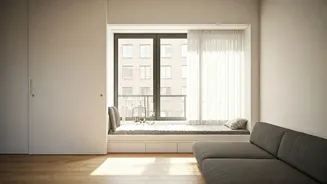
office. But as cities grow denser and apartment footprints shrink, this rigid model is cracking under the pressure of modern life. The rise of remote work, the desire for flexible lifestyles, and the sheer cost of square footage have created a new demand: homes that do more with less. The problem isn't just about space; it's about functionality. A 600-square-foot apartment designed with fixed walls is inherently limited. It can be a great space for a dinner party, a poor one for focused work, and an awkward one for hosting an overnight guest. This inflexibility has long been the accepted trade-off for city life, but a new design ethos is challenging that assumption.
Beyond the Lumpy Pull-Out Couch
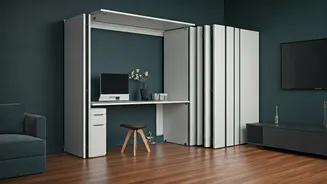
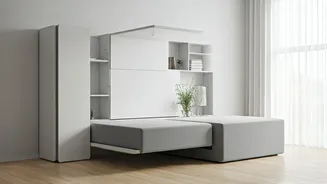
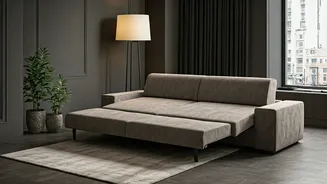
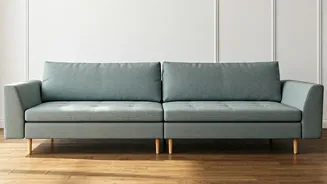
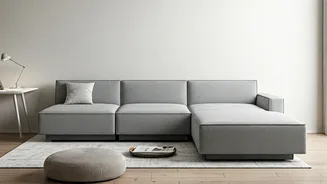
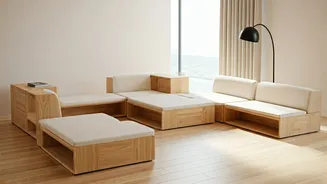
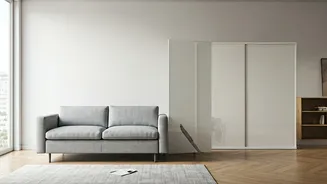
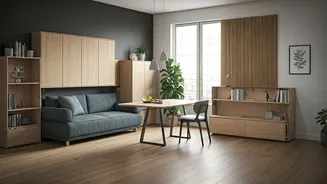
The first wave of this redefinition is happening at the furniture level. Forget the clunky, back-breaking sofa beds of the 90s. Today’s convertible furniture is sleek, sophisticated, and often mechanically ingenious. High-quality convertible sofas now feature premium mattresses and effortless transformation mechanisms, turning a stylish living room into a comfortable bedroom in seconds. But the innovation goes far beyond the couch. We're seeing dining tables that retract into slim consoles or rise to become standing desks. We’re seeing entire bedroom sets, complete with shelving and a desk, that fold away with the touch of a button to reveal a spacious living area. Companies like Ori Living are even pioneering 'robotic furniture,' where entire walls of storage and integrated furnishings glide to reconfigure a studio apartment from a bedroom to a walk-in closet to a living room on demand. This isn't just about saving space; it's about multiplying it.
Walls That Move and Disappear
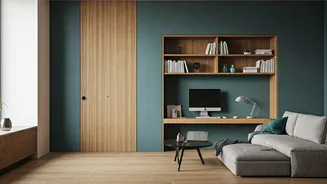
The second, and perhaps more profound, change is the move away from permanent walls. Sliding dividers and partitions are emerging as the architectural stars of the small-flat world. These aren't the flimsy accordion doors of a church basement. Modern solutions include elegant, floor-to-ceiling glass panels that slide on concealed tracks, translucent partitions that let light through while providing privacy, and even beautifully crafted wood screens that double as art installations. A large sliding panel can cordon off an alcove to create a guest room when needed, and then disappear back into the wall to restore an open-plan layout. Pocket doors, which slide into the wall cavity, can separate a kitchen from a living area during cooking, eliminating noise and odors, before vanishing to create a large, unified space for entertaining. This approach creates 'rooms on demand,' allowing residents to define their space based on the activity of the moment rather than a fixed architectural plan.
A New Philosophy of 'Home'
When you combine hyper-functional furniture with dynamic walls, you get more than just a clever apartment. You get a new philosophy of what a 'home' can be. The traditional idea of a room tied to a single function—the 'bedroom,' the 'office'—is dissolving. Instead, designers and residents are thinking in terms of zones and activities. A single area of a flat can now host three or four different functions throughout the day. By morning, it's a bedroom. By mid-morning, the bed has folded away, a desk has emerged, and it's a home office. By evening, the desk is gone, a couch is out, and it's a media room. This shift empowers residents to be active curators of their space. The home is no longer a static container but a responsive partner that adapts to the fluid needs of contemporary life. It’s a move from owning space to commanding it.