




The Journey Is the First Act
Getting to Dudhsagar is part of the drama. While rugged jeep trails offer one route, the most iconic approach is by rail. The Mandovi Express train snakes its way through the dense, rain-soaked jungles of the Western Ghats. Passengers crowd the doors
and windows, not just for fresh air, but for the moment the train slows to a crawl on a high, arched bridge. There, out of the misty green, it appears. The train track itself becomes a front-row seat, a precarious balcony offering an unparalleled view of the main event. The rumble of the engine is soon drowned out by a far more elemental roar, and the scene is set for one of nature’s most spectacular reveals.
A Sea of Milk
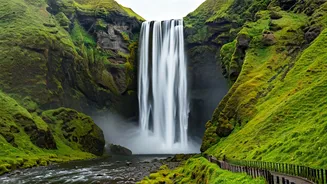
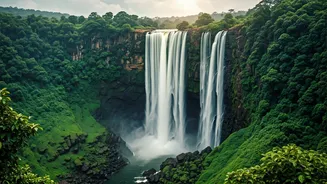
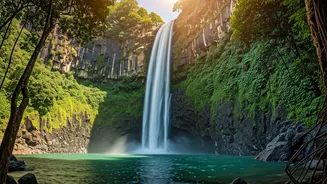
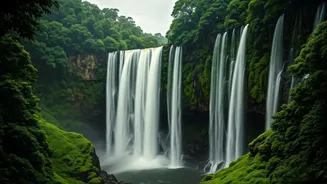
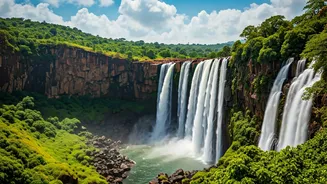
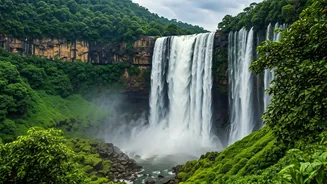
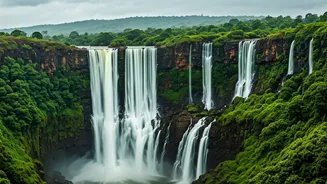
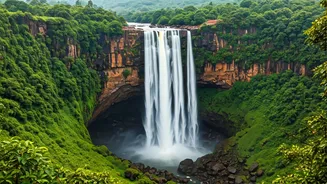
The name Dudhsagar literally translates to “Sea of Milk,” and even in the dry season, it’s easy to see why. The waterfall is a four-tiered cascade, dropping a staggering 1,017 feet from a steep mountainside. Its water is famously white and foamy as it plunges down the rock face, creating the illusion of milk pouring from the heavens. Located on the Mandovi River in the Bhagwan Mahaveer Sanctuary and Mollem National Park, it marks the border between the states of Goa and Karnataka. For most of the year, it’s a beautiful, powerful landmark—a place for trekkers and tourists to admire. But when the rains come, its character changes completely.
The Monsoon's Director's Cut
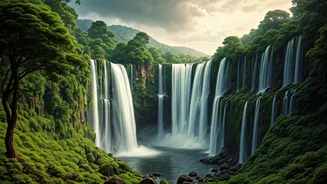
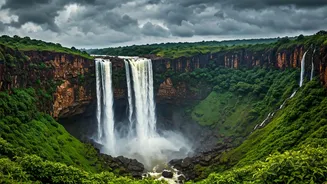
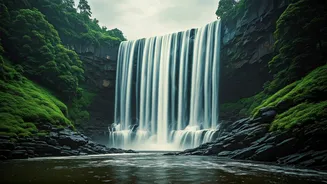
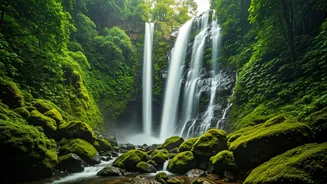
The Indian monsoon is less a weather pattern and more a force of nature, and at Dudhsagar, it’s the director. From June to September, relentless rains feed the Mandovi River, swelling it into a torrent. The falls transform from a distinct, multi-tiered cascade into a single, colossal curtain of water. The sheer volume is immense. It crashes into the pool below with such force that a permanent cloud of mist and spray fills the gorge, refracting the light and drenching everything within hundreds of feet. The sound is overwhelming—a deep, visceral roar that you feel in your chest. This isn't just a sight to be seen; it's a full-body, sensory experience. The air is thick with the smell of wet earth and charged with energy. It's nature in its most untamed, grandiose, and, yes, cinematic form.
More Than Just a Backdrop
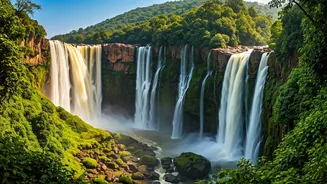
While the falls are the star, the supporting cast is just as impressive. The surrounding national park is a biodiversity hotspot, home to a rich variety of flora and fauna, including monkeys that are often seen near the railway tracks, hoping for a snack from travelers. The monsoon turns the entire forest into a saturated, emerald-green paradise. This isn't a sterile tourist site; it's a living, breathing ecosystem. The power of Dudhsagar during the monsoon is a vital part of this cycle, shaping the landscape and sustaining the life around it. Viewing the falls in this context makes the experience even richer, connecting the raw spectacle to the delicate web of life it supports.