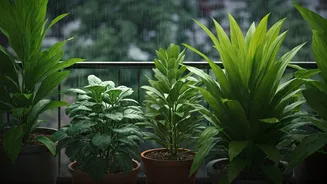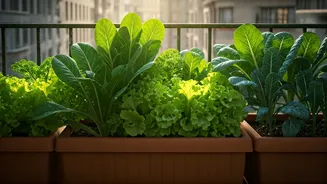



First, Get Your Drainage Right
Before you even think about plants, let’s talk about pots. No plant, not even one that loves moisture, enjoys sitting in a stagnant puddle. This is where drainage becomes your number one priority. Every single container on your balcony must have drainage holes
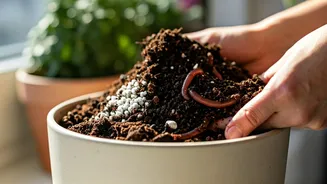
at the bottom—no exceptions. If you fall in love with a decorative pot that lacks holes, you have two options: drill them yourself or use it as a cachepot (a decorative outer pot) by placing a smaller plastic pot with drainage holes inside it. When it’s time to pot your plants, use a high-quality potting mix, not garden soil, which is too dense and will compact in a container, leading to waterlogged roots. Amending your mix with perlite can further improve aeration and prevent the soil from becoming a muddy mess.
1. Ferns
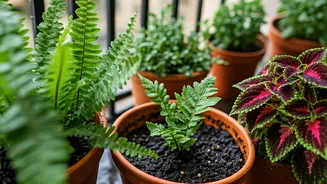
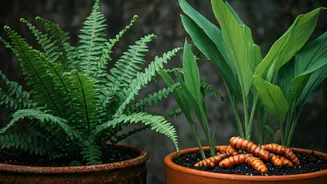
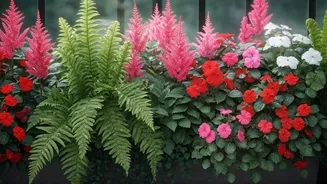
Ferns are the undisputed champions of the shady, damp corner. Their delicate, feathery fronds add texture and a deep, verdant green that makes any space feel like a woodland retreat. Most ferns thrive in indirect light and consistently moist soil, making them perfect for a covered or north-facing balcony that sees a lot of rain but not a ton of direct sun. Varieties like the Boston fern, maidenhair fern, and autumn fern are all excellent container choices. They look stunning on their own or when used as a lush filler in a mixed arrangement. Just remember to keep their soil evenly moist—don't let it dry out completely between waterings.
2. Astilbe
If you want beautiful plumes of color that don’t mind wet feet, look no further than Astilbe. These shade-loving perennials produce feathery, upright flower spikes in shades of pink, red, and white. They have fern-like foliage that remains attractive even when the plant isn't in bloom. Astilbe despises dry soil, so the consistent moisture from regular rainfall is a huge plus. They are a fantastic choice for adding height and soft color to a balcony arrangement. Choose a dwarf variety like 'Sprite' or 'Pumila' to ensure it stays a manageable size for your container.
3. Coleus
For vibrant, non-stop color that comes from leaves instead of flowers, coleus is a must-have. With foliage ranging from electric lime green and deep burgundy to psychedelic patterns of pink and orange, there’s a coleus for every palette. These plants prefer partial shade and consistent moisture to keep their leaves from drooping or scorching. While they can tolerate a bit of sun, their best and brightest color is often maintained in dappled light. They are fast-growing and incredibly easy to care for in pots, making them a low-stakes, high-reward option for a rainy balcony. Just pinch back the stems to encourage bushier growth.
4. Impatiens
A classic for a reason, impatiens provide a cheerful explosion of color in shady, damp spots where other annuals might fail. They love moisture and will reward you with a profusion of blooms in nearly every color imaginable. Modern varieties, like the New Guinea impatiens, offer larger flowers and more sun tolerance, but the classic walleriana types are still the best for true shade and wet conditions. They are perfect for hanging baskets or as a 'spiller' element in a mixed container, cascading over the sides of the pot with a wave of color. Keep their soil consistently moist, and they will bloom reliably from spring until the first frost.
5. Lobelia
For a cascade of delicate, true-blue flowers, lobelia is an unbeatable choice. This trailing annual is a perfect 'spiller' for hanging baskets and window boxes. It thrives in cooler weather and appreciates consistently moist soil, making it an ideal candidate for spring and fall planting in rainy climates. If it starts to look scraggly in the mid-summer heat, don't be afraid to give it a significant trim; with regular water, it will often bounce back for a second flush of blooms as the weather cools. Its intense blue, purple, or white flowers pair beautifully with the bright foliage of coleus or the texture of a fern.