





A Spectacle of Unfathomable Scale
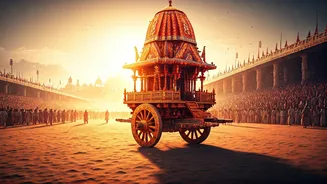
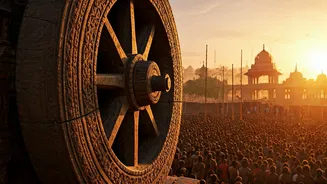
The heart of Rath Yatra, or the Festival of Chariots, beats strongest in Puri, a coastal city in the eastern Indian state of Odisha. Every year, during the monsoon season, its streets transform. Over a million people converge, creating a dense, vibrant
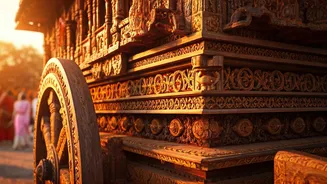
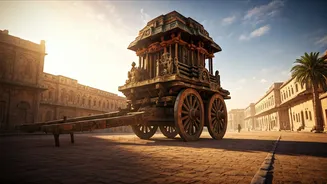
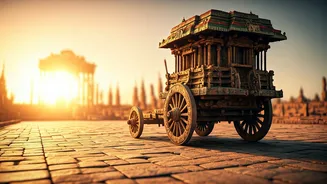
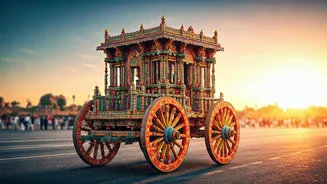
ocean of humanity. Their focus is on three gargantuan wooden chariots, towering as high as 45 feet, painted in brilliant reds, yellows, blacks, and greens. These are not floats in a parade; they are temporary, mobile temples for three revered deities: Lord Jagannath, his elder brother Balabhadra, and their sister Subhadra. The air crackles with the sound of drums, cymbals, and trumpets, punctuated by the roar of chants. For a few days, devotion isn't a private, silent affair. It’s loud, sprawling, and profoundly public.
The Journey of the Gods
Rath Yatra commemorates the annual journey of Lord Jagannath—considered a form of the Hindu god Vishnu—from his home temple to his aunt's temple, the Gundicha Temple, about two miles away. The story is one of divine accessibility. For this one time each year, the deities leave the sanctum sanctorum, where access is often restricted, to travel into the open. This allows everyone, regardless of caste, creed, or background, to see them and receive their blessing, a concept known as 'darshan.' The act of seeing the divine is, in itself, an act of worship. The chariots themselves are marvels of traditional craftsmanship, built anew each year by a dedicated community of carpenters, with no modern blueprints—only knowledge passed down through generations. The entire structure, from the wheels to the canopy, is assembled from specific types of wood using ancient techniques.
Devotion in Motion
What truly makes the festival feel 'alive' is the participation. The colossal chariots aren’t motorized. They are moved solely by the physical effort of the devotees. Thick, long ropes are attached to the front of each chariot, and thousands of hands grab on, pulling the immense structures forward inch by painstaking inch. This collective act is more than just labor; it's a form of spiritual service and a powerful metaphor. By pulling the ropes, devotees feel they are directly serving the deities and closing the distance between the human and the divine. The energy is palpable. It is a chaotic, strenuous, and ecstatic expression of faith. The sheer physical commitment required transforms the procession from a passive viewing experience into an active, breathing organism of belief.
From Puri to the World
While Puri remains the epicenter, the spirit of Rath Yatra has traveled far beyond India's shores. Thanks largely to the efforts of the International Society for Krishna Consciousness (ISKCON), the festival has become a global phenomenon. Major cities across the United States—including New York, San Francisco, and Washington, D.C.—host their own Rath Yatra festivals every year. On Fifth Avenue or along the Golden Gate Park, smaller but no less enthusiastic processions bring this unique Indian tradition to American streets. These events serve as vibrant cultural bridges, introducing a wider audience to the music, philosophy, and vegetarian cuisine associated with the tradition. For the Indian diaspora, they are a powerful link to their cultural and spiritual heritage, a chance to recreate a piece of home and share it with their communities.