





A Courtyard of Gods and Mortals
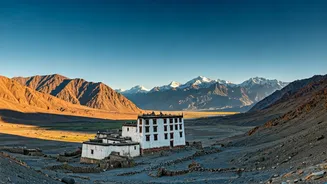
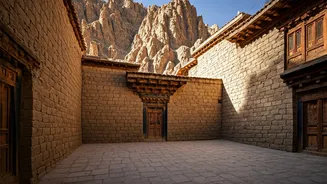
Imagine sitting on stone steps, surrounded by the stark, stunning beauty of the Ladakh region in northern India. The air is thin, crisp, and filled with anticipation. Below, in the main courtyard of the 17th-century Hemis Monastery, a crowd of local families
and international visitors gathers for the Hemis Tsechu festival. This annual event, celebrating the birth of Guru Padmasambhava, the sage who brought Buddhism to Tibet, is a vibrant spectacle. But as the first deep, guttural blast from a long Tibetan horn echoes off the mountains, it becomes clear this is no mere tourist attraction. This is a sacred space where the spiritual world is invited to manifest before your very eyes.
The Dance as a Form of Prayer
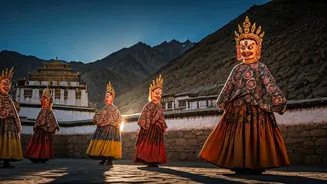
The centerpiece of the festival is the Cham dance. To a Western observer, it might look like a slow, deliberate theatrical play. But for practitioners of Tibetan Buddhism, it's a profound form of tantric meditation and ritual. The monks who perform are not simply actors; they are conduits. Through intense visualization and training, each dancer embodies a specific deity, demon, or enlightened protector. Their movements are not choreographed for entertainment but are prescribed sacred gestures, or ‘mudras,’ that are believed to purify the ground, bless the onlookers, and vanquish the negative forces and inner demons—like ignorance, hatred, and greed—that obstruct the path to enlightenment. It is, quite literally, a dance of liberation.
Masks of Wrathful Compassion
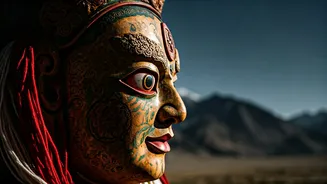
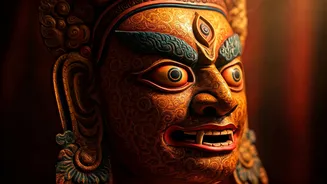
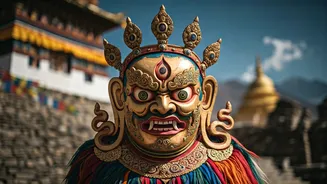
The most visually arresting element of the Cham is the collection of elaborate, oversized masks. Some are serene and beautiful, representing peaceful deities. Many, however, are terrifying, with bared fangs, bulging eyes, and crowns of skulls. This fearsome imagery can be jarring, but it holds deep symbolic meaning. These are the ‘wrathful deities,’ fierce protectors of Buddhist doctrine. Their terrifying appearance isn't meant to inspire fear in the audience but to represent the powerful, dynamic energy needed to destroy the ego and overcome spiritual obstacles. They are expressions of compassionate action in its most potent form, a reminder that spiritual progress sometimes requires confronting our own ugliest aspects with unwavering force.
A Hypnotic, Primordial Rhythm
Underpinning the entire ritual is the soundscape. The monastic orchestra produces a sound that feels both otherworldly and deeply terrestrial. The booming of dungchen (long horns), the clashing of cymbals, and the steady beat of drums create a hypnotic rhythm that seems to slow down time itself. The music isn't melodic in a familiar sense; it's a pulsating, atmospheric force that helps both the dancers and the audience enter a meditative state. For visitors, the slow, deliberate pace of the dance combined with this primordial sound can be transformative. It pulls you out of the frantic pace of modern life and immerses you in a moment of pure, focused devotion that has remained unchanged for centuries.
Why It Stays With You
So why do travelers leave Hemis feeling so “deeply moved”? It’s the powerful convergence of elements. You are witnessing an unbroken chain of faith, a living tradition practiced with immense sincerity against one of the world's most dramatic backdrops. The experience bypasses intellectual understanding and speaks directly to a more fundamental part of the human spirit. Seeing the dedication of the monks, feeling the vibration of the horns in your chest, and watching the timeless battle between ignorance and wisdom play out in vivid color creates a connection that transcends culture and language. It's a profound reminder that some of the most powerful human experiences are found not in action-packed adventure, but in quiet, shared reverence.