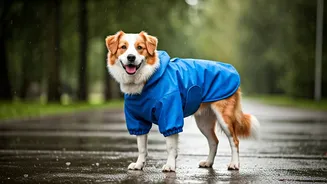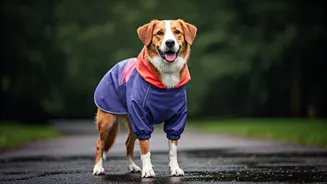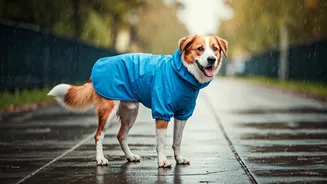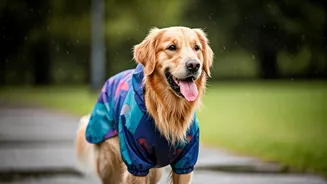




The Rainy Day Dilemma
You love your dog, but you probably don't love the aftermath of a walk in the rain. It's a familiar routine for millions of American pet owners. First comes the frantic towel-down at the door, an acrobatic maneuver to prevent your soaked companion from
shaking water all over your walls and furniture. Then there's the lingering scent of 'wet dog,' a musty aroma that seems to permeate every corner of your home. Add to that the muddy paw prints tracked across the floor, and a simple potty break suddenly becomes a 20-minute cleanup operation. This isn't just a minor inconvenience; it's a recurring source of stress. For some, it even leads to skipped or shortened walks, which isn't fair to a dog that needs to expend energy and relieve itself, rain or shine. Traditional raincoats made of vinyl or plastic offer a partial solution, but they often just cause water to bead off and run down the dog's legs and underbelly, leaving the messiest parts exposed.
Why Microfiber Changes the Game
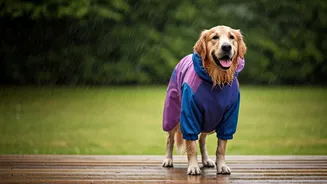
Enter the microfiber pet raincoat. Unlike standard rain gear, these coats are designed not just to repel water, but to absorb it. Microfiber is a synthetic material made of ultra-fine fibers. These fibers are split, creating a massive surface area and a static charge that makes the material incredibly absorbent—it can hold multiple times its own weight in water. When your dog wears a microfiber coat in the rain, the fabric acts like a super-absorbent towel that they wear. Instead of water rolling off onto their belly and legs, it gets wicked away from their fur and trapped within the coat's fibers. This has a transformative effect on the post-walk routine. When you get back inside, you simply remove the coat, and you’re left with a dog that is surprisingly dry underneath. The bulk of the water and grime comes off with the coat, not all over your entryway.
More Than Just Dryness
The benefits of a microfiber coat extend beyond just managing moisture. That same absorbent quality makes it a champion at trapping mud and dirt. The coat essentially becomes a protective, full-body bib that contains the mess. You can peel it off at the door and leave the dirt, leaves, and street grime behind, contained in one easy-to-clean item. A quick shake outside and a toss in the washing machine is usually all it takes to get the coat ready for its next use. Furthermore, these coats are typically lightweight and breathable, making them far more comfortable for dogs than heavy, crinkly plastic alternatives. A comfortable dog is a happy dog, more willing to wear the gear without a fuss. This comfort factor encourages consistent use, turning the raincoat from a special-occasion struggle into a simple, everyday part of your rainy-day routine.
What to Look For in a Good Coat
Not all microfiber coats are created equal. To get the most hassle-free experience, there are a few key features to look for. First, check the fit. A good coat should offer adjustable straps, often with Velcro or buckles, around the neck and belly to ensure a snug but comfortable fit for your dog's unique shape. Proper sizing is crucial for both comfort and effectiveness. Second, consider the design. Look for models that offer good underbelly coverage, as this is where a lot of water and mud splashes up. A well-placed leash hole or harness opening near the back of the neck is also essential so you can easily attach a leash without compromising the coat’s coverage. For those early morning or late evening walks, coats with reflective strips or piping are an excellent safety feature, enhancing visibility in low-light, rainy conditions. Finally, check the care instructions—the best ones are machine washable and dry quickly, living up to their promise of convenience.