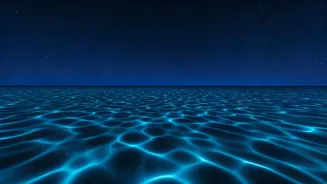









A Sea of Liquid Stars
The experience is often described as surreal. On a moonless night in the Andaman archipelago, far from the light pollution of major cities, the ocean holds a secret. From a kayak or the shoreline, the water appears dark and unremarkable. But the moment
it's disturbed—by a paddle, a trailing hand, or a breaking wave—it ignites. Thousands, even millions, of tiny points of light flash in unison, outlining every movement in a ghostly, beautiful glow. It feels like swimming through a field of fallen stars or commanding magic with your fingertips. The light is ethereal, a cool blue-green that lingers for a moment before fading back into the darkness, leaving you eager to trigger the spectacle all over again. This fleeting, interactive light show is what sears the Andaman nights into a traveler’s memory.
The Science Behind the Sparkle
This breathtaking phenomenon isn't magic, but biology. The glow comes from microscopic organisms called dinoflagellates, a type of phytoplankton that drifts in the water. Like fireflies on land, these tiny life-forms are bioluminescent, meaning they produce and emit light through a chemical reaction. The light is a defense mechanism. When the phytoplankton feel pressure or movement—like a fish swimming by or a kayak paddle slicing the water—they flash. The sudden burst of light is meant to startle a potential predator, and in some cases, it can illuminate that predator, making it vulnerable to even bigger hunters in a process known as the "burglar alarm" theory. The result for us is a spectacular visual display triggered by simple motion, a direct and dazzling interaction with a hidden marine ecosystem.
Finding the Glow: Best Locations
While bioluminescence can theoretically occur anywhere in the Andamans, certain spots are famous for their reliable and brilliant displays. Havelock Island, now officially known as Swaraj Dweep, is the epicenter for this activity. Its secluded coves and mangrove-lined creeks provide the perfect calm, nutrient-rich environment for phytoplankton to thrive. Many guided night-kayaking tours depart from the beaches here. Neil Island (Shaheed Dweep) and Radhanagar Beach are also known for sightings, though they can be less predictable. The key is finding a location with minimal light pollution and calm waters. Often, the most spectacular shows are found in quiet bays where the organisms can congregate without being dispersed by strong currents or waves.
Timing Is Everything
To give yourself the best chance of witnessing a truly unforgettable show, planning is crucial. The single most important factor is darkness. The bioluminescence is faint, so any competing light from the moon will wash it out. Always plan your trip around the new moon phase, when the sky is at its darkest. The two weeks centered on the new moon are ideal. As for the time of year, the phenomenon is present year-round, but many guides suggest the months between November and May. This period avoids the heavy monsoon rains, ensuring clearer skies and calmer seas, which makes for a more pleasant and safer night excursion. A calm, dark, and clear night is the perfect recipe for a world-class bioluminescent experience.
How to Experience It Respectfully
The most popular and immersive way to see the glowing waters is on a guided night-kayaking tour. Local operators provide all the necessary equipment and, more importantly, the expertise to take you to the best spots safely. Paddling through the mangroves and into open water allows you to create the light show yourself, watching the swirls and eddies from your kayak come alive. Some people are lucky enough to see it simply by walking along the water’s edge on a dark beach and agitating the water with their feet. Whichever way you choose, it’s vital to go with a reputable guide who respects the fragile ecosystem. Avoid using lotions, sunscreens, or insect repellents right before entering the water, as these chemicals can harm the very organisms you’ve come to admire.