



The Perfect Pair for Wet Weather
Why do ferns and turmeric work so well together in damp conditions? It comes down to their native habitats. Many popular fern varieties hail from shady, humid forest floors, where consistent moisture is a given. They don't just tolerate dampness; they
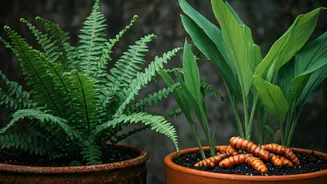
crave the humidity that a rainy climate provides. Turmeric (Curcuma longa), a member of the ginger family, is a tropical plant that thrives in warm, wet environments. While we often see it as a dried spice, the plant itself is a beautiful ornamental with large, elegant leaves. For a balcony gardener in a city with frequent rainfall, these plants see the weather as a feature, not a bug. They share a love for filtered light and consistently moist—but not waterlogged—soil, making them surprisingly compatible neighbors.
Choosing Your Plants
Success starts with selecting the right varieties. For ferns, look for robust and forgiving types. The Boston fern (Nephrolepis exaltata) is a classic for a reason; its arching, shaggy fronds quickly create a sense of lushness. Bird's nest ferns (Asplenium nidus) offer a different look, with wide, solid leaves that unfurl from a central rosette, resembling a bright green nest. Both are adaptable to container life. For turmeric, you won't be buying a plant but a rhizome—the same part you cook with. Look for fresh, firm turmeric rhizomes at an international grocery store or online. Choose a piece with several visible buds, or 'eyes,' as these are where new growth will sprout. Planting the rhizome is your first step toward a homegrown harvest.
Potting for Success in a Downpour
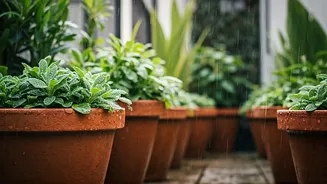
This may sound counterintuitive for plants that love water, but excellent drainage is the single most important factor for success. The word “effortless” only applies if you prevent root rot from the start. A rainy climate provides plenty of water, but roots sitting in a stagnant puddle will quickly die. Choose pots with multiple, generous drainage holes. If a decorative pot has no holes, either drill them yourself or use it as a cachepot (a decorative outer pot) by placing a smaller plastic pot with drainage inside. Use a high-quality, lightweight potting mix designed for containers. Avoid heavy garden soil, which compacts easily and holds too much water. Mixing in perlite or orchid bark can further improve aeration and drainage, creating a perfect balance of moisture retention and airflow that both ferns and turmeric love.
The Low-Maintenance Routine
Here's where the “effortless” part comes in. In a climate with regular rain, you'll water far less than your sun-drenched counterparts. The key is to check the soil, not the calendar. Stick your finger an inch or two into the soil. If it feels dry, it's time to water. If it’s damp, let the rain do its job. Ferns will appreciate a misting on dry days to keep humidity high. Turmeric is a heavier feeder. During its growing season (spring and summer), provide a balanced liquid fertilizer every few weeks to support its large leaf production and rhizome development. In the fall, as temperatures drop, the turmeric leaves will yellow and die back naturally. This is your signal that the plant is going dormant and the harvest is near.
Harvesting Your Golden Reward
The ultimate payoff for growing turmeric is the harvest. Once the leaves have completely died back, you can tip the entire pot out onto a tarp or newspaper. Gently break the soil away from the root ball to reveal the cluster of fresh turmeric rhizomes. You’ll find a 'mother' rhizome (the piece you originally planted) and several new 'fingers' that have grown throughout the season. Snap off what you need for cooking—the flavor is brighter and more complex than dried—and you can save a few healthy pieces with buds to replant for the following year. It’s a rewarding cycle that turns your ornamental balcony into a productive one.