


Not Your Average Airport Transfer
First, a dose of reality. You can’t just land at Haneda, pop open your app, and order a sideways ride. “Uber Drift” was a brilliant, limited-time marketing campaign that ran for just a few days during Japan's Golden Week holiday in 2023. In a genius partnership,
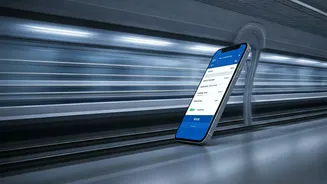
Uber Japan teamed up with legendary automakers Toyota and Nissan to offer a handful of lucky riders a truly unforgettable experience. The service wasn't for getting from point A to B; it was the destination itself. Located at a dedicated, non-public venue in Tokyo's Odaiba district, the experience was a meticulously choreographed stunt. The rides were free, available through a special request in the Uber app, but incredibly scarce. Getting one was like winning the lottery, which only added to its allure.
Strapping In for Sideways G-Forces
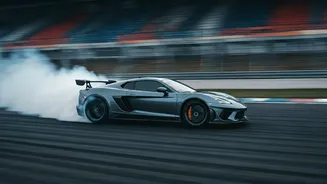
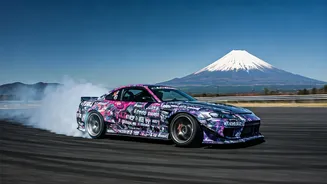
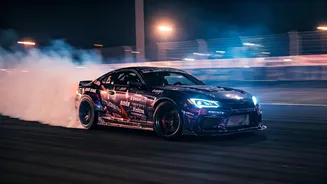
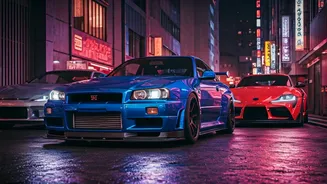
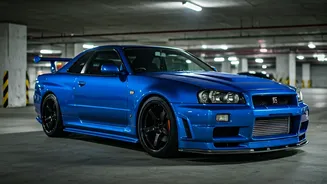
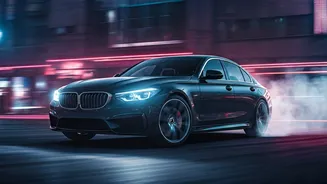
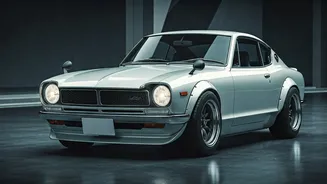
So what was it actually like? Forget everything you know about a typical rideshare. Passengers were strapped into the passenger seat of a high-performance machine, like a modified Toyota GR Supra or a Nissan Skyline, piloted by a professional drift driver. These weren't amateur racers; they were masters of car control. With a roar of the engine and the squeal of tortured tires, the car would launch into a dance of controlled chaos. The experience was a sensory overload of G-forces, engine noise, and the smell of burning rubber, all within the safe confines of a closed course. Videos that flooded social media showed passengers with expressions of pure, unadulterated glee and terror. It was a theme park ride for gearheads, condensed into a few exhilarating minutes. It delivered on the promise of its name, providing a real taste of professional drifting that few people ever get to witness up close, let alone from the passenger seat.
From Mountain Passes to Marketing Gold
To understand why this resonated so deeply, you have to understand Japan's relationship with the drift. Born in the winding mountain passes (or *touge*) of rural Japan in the 1970s, drifting is the art of intentionally oversteering, causing the car to slide sideways through a turn while maintaining control. It’s a spectacular display of driver skill. Popularized globally by anime like *Initial D* and the *Fast & Furious* film franchise, drifting became synonymous with Japanese underground car culture. It represents a rebellious, stylish, and highly technical side of the automotive world. By creating “Uber Drift,” Uber wasn't just offering a ride; it was tapping into a half-century of cultural legacy. They took an activity born in the shadows of the street and put it into a clean, branded, and shareable package, making it accessible and turning subculture into a mainstream spectacle.
The Art of the Ephemeral Flex
This is what makes Uber Drift the “wildest flex.” In an age where travel is often performative, documented second-by-second on Instagram and TikTok, the value of an experience is tied to its uniqueness and scarcity. You can go to the Shibuya Scramble Crossing anytime. You can visit the Senso-ji Temple. But you could only experience Uber Drift for a few days in 2023. It was ephemeral, and that made it priceless. It wasn't about wealth—the ride was free. It was about being in the right place at the right time, with the luck to snag a booking. It was the ultimate “you had to be there” moment, a story you could tell that no one could easily replicate. In the currency of modern travel, where a unique narrative is worth more than a luxury hotel stay, securing an Uber Drift ride was like minting social gold.