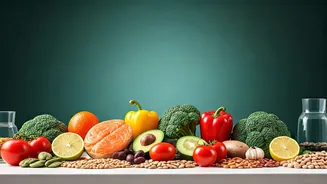






The Old Playbook Is Failing
Remember the food pyramid? The low-fat craze of the 90s? The endless debates over carbs vs. fats? For generations, nutritional advice has been delivered as a universal prescription. The underlying assumption was that a calorie is a calorie, and a human
body is a human body. But this one-size-fits-all approach is showing its cracks. We’ve all seen it: two people can eat the exact same meal, and one will feel energized while the other feels sluggish and gains weight. These individual differences aren't just in our heads; they're in our biology. The failure of mass-market diets to produce lasting results for the majority has prompted scientists to ask a better question: Instead of finding the perfect diet for everyone, what if we could find the perfect diet for *you*?
Your Genes and Your Gut Call the Shots
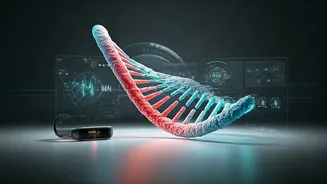
The movement toward personalized nutrition is built on two key scientific pillars: nutrigenomics and the gut microbiome. Nutrigenomics is the study of how your specific genes affect your response to foods. For example, some people have a genetic variant that makes them process caffeine slowly, meaning a morning coffee could still disrupt their sleep at night. Others might be genetically predisposed to have a stronger inflammatory response to saturated fats. It’s not about having “good” or “bad” genes, but about understanding your personal operating system. Even more influential is your gut microbiome—the trillions of bacteria living in your digestive tract. Groundbreaking research, like the PREDICT studies, has shown that the makeup of our gut bacteria is a better predictor of how our bodies will respond to a food (specifically, our blood sugar and fat levels) than the food's nutritional label. One person’s gut biome might process a banana with a gentle blood sugar rise, while another’s causes a dramatic spike, leading to a subsequent crash.
Technology Brings the Lab to Your Kitchen
This shift isn't just happening in research labs; it's becoming accessible to consumers. The rise of wearable technology and at-home testing kits is empowering people to become detectives of their own health. Continuous Glucose Monitors (CGMs), once reserved for diabetics, are now being used by wellness enthusiasts to see in real-time how a bowl of oatmeal versus scrambled eggs affects their blood sugar. Companies like Zoe and Viome offer at-home kits to analyze your gut microbiome, providing personalized food recommendations based on the results. You can send in a stool or saliva sample and receive a detailed report on what foods are likely to be “good” or “bad” for your unique biology. While the science is still evolving, these tools represent a profound shift from following generic rules to getting personalized, data-driven feedback.
A Reality Check Is Still on the Menu
Before you rush to order a battery of tests, it's important to keep the excitement in check. The field of personalized nutrition is still in its early days. Many experts caution that some commercial services may be making stronger claims than the current science can support. Furthermore, this level of personalization isn't a license to ignore the fundamentals. No matter what your genes or gut bacteria look like, some truths remain almost universal: eating more whole foods, vegetables, and fiber is good for you. Limiting ultra-processed foods, added sugar, and excessive alcohol is also a safe bet. Personalization isn't about discovering a magical “superfood” or a single villain to eliminate. Instead, it’s about fine-tuning an already healthy foundation. It adds a layer of nuance, helping you understand why you might feel better swapping your morning toast for a Greek yogurt, even if both have similar calorie counts.