





A Fruit with Royal Blood
In the sweltering heat of an Indian summer, long before air conditioning, the royal courts of the Nawabs of Awadh found their relief in a golden-skinned fruit. The city of Lucknow, their opulent capital, became the epicenter of a mango obsession. This
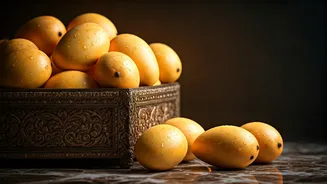
wasn't just about a sweet treat; it was about cultivating perfection. The Nawabs, known for their lavish patronage of arts and cuisine, sponsored contests and funded horticultural experiments to develop mangoes with unparalleled sweetness, fragrance, and fiberless flesh. This pursuit of excellence gave birth to legends, but one variety, in particular, became synonymous with the region: the Dasheri. Slender, aromatic, and with a brilliant yellow-green skin, the Dasheri is less a fruit and more an heirloom, a direct descendant of a 200-year-old mother tree that still stands in a nearby village.
The Terroir of the Mango Belt
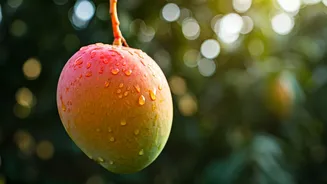
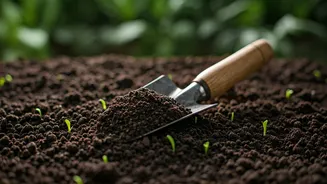
The headline's mention of 'magic soil' isn't just poetic license; it's a nod to the concept of terroir. Just as the soil of Napa Valley gives its Cabernet Sauvignon a distinct character, the land around Lucknow imparts a unique quality to its mangoes. The city is nestled in a region known as the 'mango belt,' particularly the town of Malihabad. This area lies in the Gangetic plain, blessed with rich, alluvial soil deposited by the Gomti river over millennia. This soil, combined with the region’s specific subtropical climate—a scorching summer followed by a monsoon—creates the perfect storm of conditions. The intense heat concentrates the sugars in the fruit, while the mineral-rich earth provides the nutrients for its complex, almost perfumed flavor profile. It's a natural alchemy that orchard owners have understood for generations, long before the term 'terroir' became a global buzzword.
How to Eat a Legend
Eating a Dasheri mango the right way is a cultural ritual. While you could certainly slice it neatly into cubes, the traditional method is far more satisfying, and messier. Connoisseurs gently knead the fruit until the pulp inside turns to liquid. Then, they break off the tip near the stem and suck the sweet, fragrant juice directly from the skin. It’s an immersive, multisensory experience that connects you directly to the fruit. This method, often called 'sucking mangoes,' is a cherished summer memory for millions in Northern India. The season is an event in itself. Families send boxes to relatives, friends host 'mango parties,' and the air in markets is thick with the intoxicating scent of ripe fruit. The arrival of the first Dasheris in late May is a harbinger of joy, a sweet reward for enduring the pre-monsoon heat.
Protecting a National Treasure
The reputation of Lucknow's mangoes is so profound that it’s now protected by law. The Malihabadi Dasheri mango was granted a Geographical Indication (GI) tag in 2009. Similar to the way 'Champagne' can only come from the Champagne region of France, this tag certifies that only mangoes grown in this specific geographic area can be sold as 'Malihabadi Dasheri.' This designation protects the livelihood of thousands of farmers and preserves the mango's legacy against cheaper imitations. It’s a formal acknowledgment of what locals have known all along: that the mangoes from this particular slice of the world are unique. While 'best' is always a matter of personal taste, the GI tag is an official stamp of exceptional quality and origin, cementing the Dasheri's place in the pantheon of the world's great fruits.