






1. Master Your Drainage
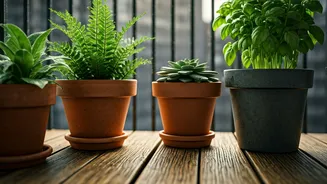
Monsoon storms deliver a massive amount of water in a very short time. If your pots can’t drain it away quickly, your plants will be sitting in a muddy soup, leading to root rot. First, ensure every single one of your pots has drainage holes. If not,
now is the time to repot. Next, lift your pots and check that the holes aren’t clogged with compacted soil or old roots. A good trick is to use “pot feet” or small bricks to elevate your containers an inch or so off the balcony floor. This simple step creates an air gap that allows water to escape freely, preventing your saucers from turning into stagnant ponds that attract mosquitos and suffocate your plant’s roots.
2. Brace for Impact
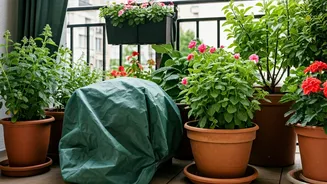
The fierce, unpredictable winds of a monsoon storm are a balcony garden’s greatest enemy. Lightweight plastic pots, hanging baskets, and tall, top-heavy plants are all at risk of being knocked over or blown away. Your first job is to secure everything. Group smaller pots together on the floor, placing them behind larger, heavier containers for protection. Move delicate plants closer to the building wall. For hanging baskets, consider taking them down before a predicted storm or using sturdy S-hooks that close fully. If you have climbing plants on a trellis, make sure the trellis is securely fastened to the wall or railing. It’s better to be overly cautious than to wake up to a balcony of broken pots and damaged plants.
3. Prune for Resilience
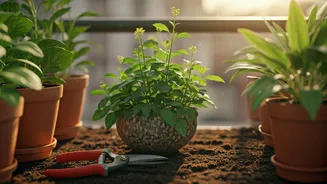
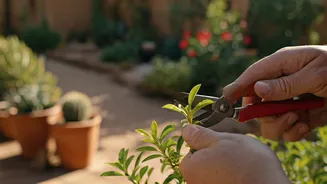
A dense, overgrown plant acts like a sail in the wind, making it more likely to be damaged or uprooted. A strategic pre-monsoon pruning can dramatically improve your plants’ chances of survival. Trim back any dead, weak, or leggy branches. This not only makes the plant more compact and wind-resistant but also encourages it to put energy into stronger, healthier growth. Thinning out some of the foliage improves air circulation, which is crucial for preventing the fungal diseases that thrive in the post-rain humidity. Don’t go overboard, but a thoughtful trim will make your plants tougher and tidier.
4. Re-Evaluate Sun and Shelter
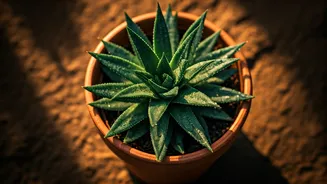
What was the perfect sunny spot in May might be a death trap in July. Monsoon storms can roll in quickly, and the accompanying cloud cover, dust storms (haboobs), and driving rain change everything. Pay attention to your balcony’s orientation. If it’s exposed to the direction from which storms typically arrive, your sun-loving plants may suddenly be in the direct line of fire. Consider moving more sensitive plants, like succulents that hate being waterlogged or herbs with delicate leaves, to a more sheltered spot. Perhaps this is under a small table or deeper into a covered alcove. The goal is to protect them from the worst of the physical battering and excessive water.
5. Adjust Your Watering Routine
During the dry heat of early summer, you were likely watering your balcony plants constantly. Once the monsoon kicks in, you need to change your habits completely. The combination of rainfall and higher humidity means your plants’ soil will stay moist for much longer. Overwatering is a huge risk. Always check the soil before reaching for the watering can. Stick your finger two inches deep; if it feels damp, wait another day. A moisture meter is a great tool for taking the guesswork out of it. After a heavy storm, you may not need to water for several days. Learning to read your plants and the soil is the most important skill for a monsoon-era gardener.
6. Scout for Pests and Disease
The warm, humid conditions that follow a monsoon rain are an open invitation for pests and fungal diseases. Powdery mildew, for example, loves this environment. Be vigilant. After a storm, take a few minutes to inspect your plants. Look under leaves for signs of pests like spider mites or aphids. Check for any unusual spots or fuzzy growth on stems and foliage. Good air circulation is your best defense, which is why pruning and proper spacing are so important. If you spot a problem early, you can often treat it by simply removing the affected leaf or using a gentle insecticidal soap before it becomes a full-blown infestation.