

The Foundation: A Good Raincoat
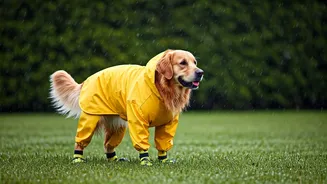
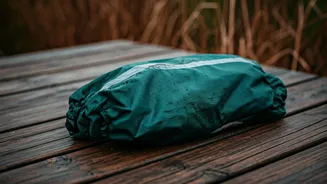
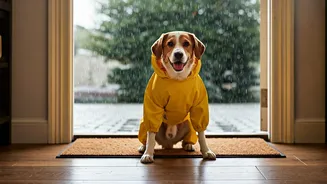
The first line of defense is a quality raincoat. But not all coats are created equal. For full protection, look for a jacket that offers belly coverage to prevent splashes from soaking their underside. The material is key: 'water-resistant' fabrics will
hold up in a light drizzle, but for a downpour, you need something genuinely 'waterproof.' Look for taped seams, which prevent water from seeping through the stitching. Fit is also crucial. A coat that’s too tight will be uncomfortable, while one that’s too loose can get tangled or fail to provide adequate coverage. Many modern dog raincoats also include a harness opening—a small, covered slit on the back that lets you clip a leash to a harness worn underneath the coat. This is far more secure and comfortable for most dogs than clipping a leash to a collar, especially for those who pull.
The Paw Problem: Boots, Waxes, and Washes
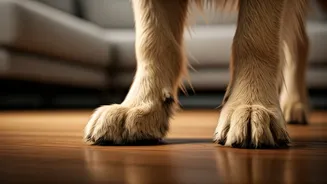
Paws are ground zero for mud and moisture. Dog booties are the most comprehensive solution, keeping paws completely clean and dry. However, getting a dog to tolerate them is a famous challenge. If you go this route, introduce them slowly with lots of treats and praise. For the boot-averse dog, you have options. Paw wax can create a semi-permeable barrier that protects paw pads from irritants and helps repel some water, though it won't keep them totally dry. The most practical solution for many is a dedicated paw-cleaning tool. Portable paw washers, which look like a tumbler with soft silicone bristles inside, are incredibly effective. You simply fill it with a little water, dip your dog's paw in, and the bristles gently scrub away the mud. It's a game-changer for keeping your entryway clean.
The Welcome Home: Your Cleanup Station
Your rain strategy is only as strong as your re-entry plan. The key is to create a designated “drying zone” right inside your door. This prevents your dog from shaking water and tracking mud all over the house. Start with a highly absorbent doormat or a specific 'mud mat' designed for this purpose. Have your supplies ready before you even leave for the walk. This includes a super-absorbent microfiber dog towel (these dry dogs much faster than standard bath towels), pet-safe wipes for a quick face and leg clean, and your paw washer, if you use one. By having everything in one place, you can execute a quick, efficient cleanup before your dog has a chance to make a mess. This little bit of preparation is the 'homework' that pays off every single time.
The Human Element: Acclimation and Training
You can buy the best gear in the world, but it's useless if your dog freezes, panics, or runs away the moment they see it. Getting your dog comfortable with wearing a raincoat or boots is a critical step. Start indoors on a dry day. Let your dog sniff the new gear. Put it on them for just a few seconds, shower them with high-value treats and praise, and then take it off. Gradually increase the duration over several short sessions. The goal is to create a positive association: 'When I wear this weird thing, I get delicious snacks!' Never force the gear on them or leave it on if they seem genuinely distressed. A little patience up front will make the process smooth and stress-free when the rain actually starts falling.
When to Skip It: Indoor Alternatives
Some dogs, no matter how well-equipped, simply despise the rain. Forcing a miserable walk can be stressful for both of you. On days with torrential downpours or for dogs with extreme rain-aversion, it’s okay to skip the long walk. A quick potty break is sufficient. Instead, focus on indoor enrichment to burn off energy. A 15-minute session with a puzzle feeder, a game of 'find the treat,' or practicing commands can be just as tiring as a walk. You can also use this time to work on brushing or other grooming habits. A happy, mentally stimulated dog who gets a quick, dry potty break is better than a miserable, soaked dog who was dragged around the block against their will.