


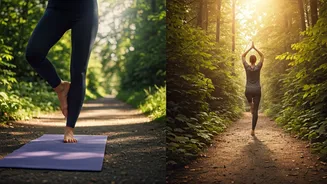


What Exactly Is Walking Yoga?
Forget contorting yourself into a pretzel or sweating through a hot yoga class. Walking yoga is exactly what it sounds like: a fusion of yoga’s core principles with the simple act of walking. It’s not just a leisurely stroll, nor is it a fast-paced power
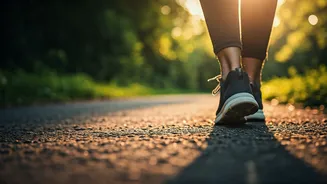
walk. Instead, it’s a moving meditation that synchronizes breath with movement, turning a walk around the block into a practice of profound mindfulness. At its heart, walking yoga involves paying close attention to your body and surroundings. You coordinate your footsteps with your inhales and exhales, a practice known in yoga as pranayama. Instead of focusing on a destination or a step count, the goal is to become fully present in the rhythm of your own body. This practice draws from ancient traditions, including the walking meditations taught in Zen Buddhism, but packages them for a modern audience seeking calm, not just cardio.
The Rise of the 'Slow Fitness' Movement
Walking yoga is arriving at the perfect time. Many Americans are feeling burned out by the pervasive “no pain, no gain” ethos that has dominated the fitness industry for decades. High-Intensity Interval Training (HIIT), CrossFit, and punishing bootcamps promise rapid results but can also lead to injury, exhaustion, and a feeling that exercise is just another high-stress task to check off a to-do list. “Slow fitness” is the antidote. This growing movement champions gentle, restorative, and mindful forms of exercise like tai chi, qigong, stretching, and, of course, walking yoga. It prioritizes long-term well-being over short-term intensity, and mind-body connection over brute force. It reframes exercise not as a war against your body, but as an opportunity to listen to it. In a culture saturated with digital noise and pressure to perform, the deliberate, unhurried nature of walking yoga feels less like a retro trend and more like a necessary modern adaptation.
Mind, Body, and Pavement
The benefits of this practice extend beyond physical fitness. While it is a low-impact activity that improves balance, circulation, and posture, its primary rewards are mental and emotional. By focusing intently on the physical sensations—the feeling of your feet hitting the ground, the air on your skin, the rhythm of your breath—you are pulled out of the cycle of anxious thoughts and into the present moment. This deliberate focus can lower cortisol levels, reduce stress, and promote a sense of groundedness and calm. Unlike seated meditation, which many find difficult, walking yoga gives a restless mind something simple to focus on: the body. It’s an active, engaged form of mindfulness that doesn’t require a quiet room or a special cushion. It can be practiced on a city sidewalk, a park path, or a hiking trail, making it one of the most accessible wellness tools available.
How to Get Started
The beauty of walking yoga is its simplicity. You don’t need special gear or a membership. Here’s a basic guide to your first session: 1. **Find Your Space:** Choose a safe, relatively quiet place where you can walk without too many interruptions, like a park, a track, or a quiet neighborhood street. 2. **Start with Breath:** Before you take your first step, stand still for a moment. Close your eyes if you feel comfortable. Take a few deep, conscious breaths. Feel your feet planted firmly on the ground. 3. **Sync Breath to Steps:** Begin walking at a slow, natural pace. Start to link your breath to your steps. A common pattern is to inhale for three steps and then exhale for three steps. Don’t force it; find a rhythm that feels comfortable for you. 4. **Engage Your Senses:** Pay attention to the physical sensations of walking. Notice the roll of your foot from heel to toe. Feel the breeze. Listen to the sounds around you without judgment. If your mind wanders, gently guide it back to the rhythm of your steps and breath. 5. **Keep it Simple:** Start with just 10 or 15 minutes. The goal isn’t duration or distance, but the quality of your attention. There’s no right or wrong way to do it—only the way that brings you back to yourself.