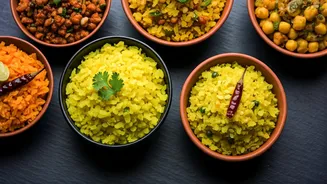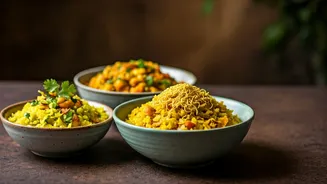

First, What Is Poha?
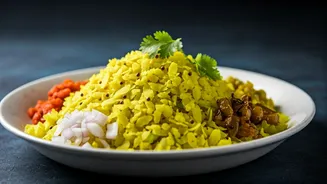
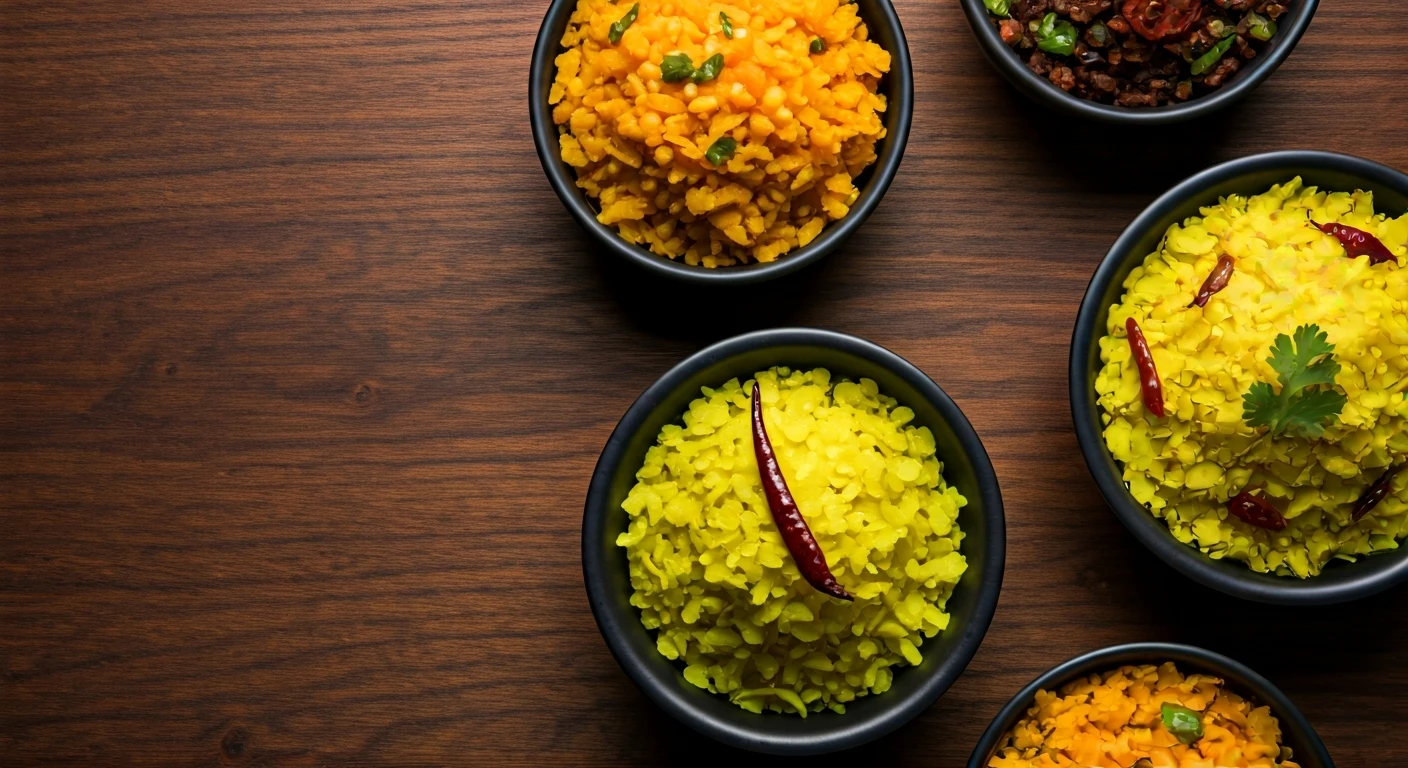
Before we dive into the regional rivalries, let’s get acquainted. Poha (pronounced PO-ha) is a staple dish made from flattened, parboiled rice flakes. Think of them as the quicker, lighter, and more delicate cousin to rolled oats. These rice flakes are
incredibly versatile. When soaked briefly and then stir-fried with spices and other ingredients, they transform into a fluffy, savory, and satisfying meal that’s both gluten-free and light on the stomach. It’s the kind of breakfast that powers you through the morning without weighing you down. While the basic ingredient is the same, the preparation is a fierce point of regional pride, and how it's made can tell you exactly where you are in India. The debate isn't just about taste; it's about identity.
1. Indore: The Reigning Street Food King
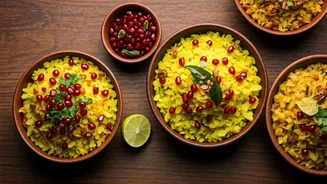
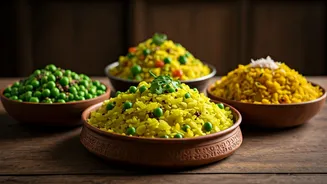
If poha had a capital city, it would be Indore in the state of Madhya Pradesh. Here, poha isn't just breakfast; it's an institution, a 24/7 street food obsession. Indori Poha sets the gold standard for many. The secret starts with the preparation: the flattened rice is steamed, not just soaked, resulting in an exceptionally soft and fluffy texture. It's then gently tossed with turmeric, mustard seeds, and curry leaves. But the magic is in the toppings. A plate of Indori poha is a canvas for a riot of flavors and textures. It’s generously garnished with crispy, fried chickpea-flour noodles called 'sev,' finely chopped raw onions for a pungent crunch, and juicy pomegranate seeds for a sweet burst. The final, non-negotiable flourish is a sprinkle of 'jeeravan masala,' a tangy, smoky, and slightly spicy local spice blend that elevates the dish from great to unforgettable. A squeeze of lime ties it all together. It's a complex, multi-layered experience in every bite.
2. Banaras: The Simple, Soulful Classic
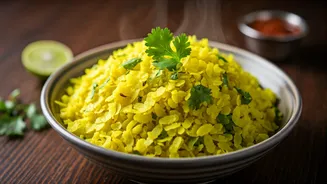
Travel northeast to the ancient city of Banaras (Varanasi) in Uttar Pradesh, and you’ll find a completely different take. Here, the dish is often called 'Chura Matar,' which translates to 'flattened rice and peas.' This name tells you everything you need to know. The Banarasi version is a masterclass in simplicity and celebrates seasonal ingredients. Instead of a mountain of toppings, the focus is on the beautiful interplay between the soft rice flakes ('chura') and tender, sweet green peas ('matar'). The poha is sautéed with minimal spices—often just turmeric, green chilies, and ginger. It's less about a flavor explosion and more about a comforting, soulful warmth. Sometimes garnished with fresh cilantro, it’s a much lighter, homestyle preparation that feels wholesome and pure. It’s the poha you’d expect to eat in a family home, not from a bustling street cart, reflecting the city's spiritual and less frantic pace.
3. Bengal: The Sweet and Savory Contender
Head east to Bengal, and the poha chat takes another delightful turn. In this region, flattened rice is known as 'chire,' and the dish is 'Chirer Pulao.' As the name 'pulao' suggests, it's treated more like a light pilaf. The Bengali palate often leans towards a delicate balance of sweet and savory, and its poha is no exception. Here, you'll find the flattened rice stir-fried with onions, potatoes cut into small cubes, and often roasted peanuts for a satisfying crunch. The defining characteristic? A subtle hint of sugar is frequently added, which doesn't make the dish sweet but balances the salt and spice in a way that is uniquely Bengali. It's heartier than the Banarasi version and less adorned than the Indori one, striking a perfect middle ground. It's a popular snack for any time of day, enjoyed with a cup of tea as a perfect mid-afternoon pick-me-up.