


From Functional to Focal Point
For the longest time, home lighting was treated as a purely functional afterthought. You needed to see, so you installed a light. Whether it was a boring flush-mount 'boob light' or a generic chandelier from a big-box store, its primary job was to illuminate,
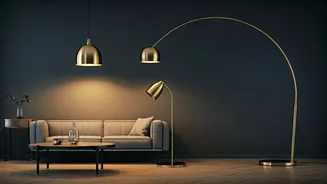
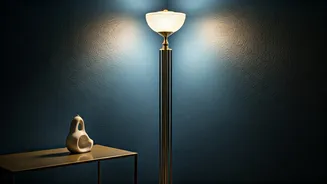
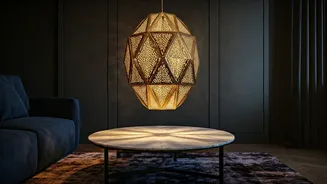
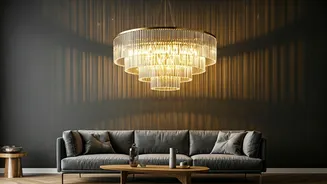
not inspire. Style was secondary, if it was considered at all. But a major shift is underway. Interior designers and style-savvy homeowners are now treating lighting as the primary artistic statement in a room. It’s no longer just a utility; it’s the centerpiece, the conversation starter, and the single element that can define an entire space before a single piece of furniture is brought in.
The Post-Minimalist Mood
Why now? Part of the answer lies in our collective recovery from peak minimalism. After years spent decluttering, simplifying, and embracing a 'less is more' ethos inspired by figures like Marie Kondo, we’re slowly starting to reintroduce personality into our spaces. But we’re doing it more intentionally. Instead of filling our homes with lots of small, decorative objects, the trend is to invest in one or two significant, high-impact pieces. A dramatic, sculptural light fixture is the perfect vehicle for this. It adds personality, artistry, and texture without creating clutter. It's a confident, curated choice that says, 'I care about design, but I'm not a maximalist.' It’s the architectural equivalent of a single, stunning piece of jewelry worn with a simple black dress.
The 'Jewelry' of a Room
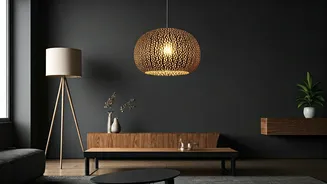
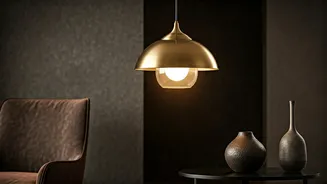
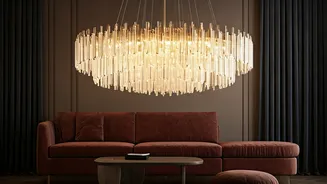
That jewelry analogy is one designers use constantly, and for good reason. Think about it: a light fixture can set the tone for everything else. An oversized, woven rattan pendant can instantly give a dining room a relaxed, bohemian vibe. A spiky, brass-and-black sputnik chandelier channels mid-century modern cool. A delicate, multi-bulb fixture with smoked glass can add a touch of moody, industrial glamour. Like a necklace or a watch, the light fixture is often the finishing touch that pulls the whole look together. It can tie in metallic finishes, introduce a new texture, or provide a surprising pop of color that makes a neutral room feel dynamic and complete.
Sculptural Forms and Artistic Expression
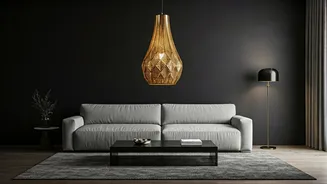
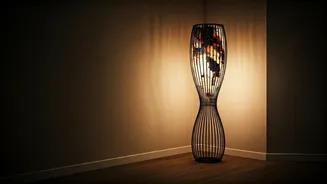
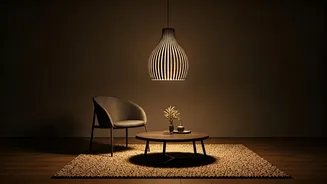
This trend isn't just about big chandeliers. It’s about treating lighting as sculpture. We’re seeing fixtures that are abstract, asymmetrical, and made from unexpected materials. Think swooping, ribbon-like LED pendants, clusters of hand-blown glass orbs, and linear fixtures that look like minimalist art installations. The light source itself is often hidden or integrated into the design, putting the focus on the form. This is where the 'flex' really comes in. It’s a way to showcase your artistic taste and invest in a piece that feels more like a commissioned work of art than a piece of hardware. It signals an appreciation for craftsmanship and unique design.
How to Flex (Without the Big Budget)
While a custom, designer fixture can cost thousands, participating in this trend doesn't require a massive budget. The key is scale and placement. A single, well-chosen, oversized pendant over a dining table or in an entryway can have a transformative effect for a few hundred dollars. Look for large-scale paper or bamboo lanterns for an airy, high-impact look at a low cost. Scour vintage shops and flea markets for unique mid-century or Art Deco pieces that just need a little rewiring. Even a simple plug-in swag light with a dramatic, exposed-filament bulb can become a statement piece when hung in an unexpected corner. The goal is to be deliberate. Choose one spot and make the lighting in it the star of the show.