




An Unconventional Holy Site
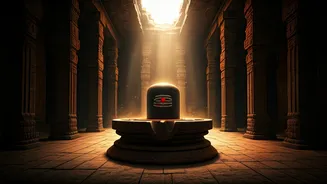
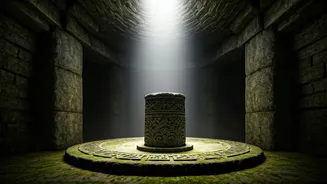
Nestled atop the Nilachal Hills in Guwahati, Assam, the Kamakhya Temple is not like other places of worship. There is no central statue or idol of a deity in its inner sanctum. Instead, in a darkened cave, a yoni-shaped rock formation is worshipped as
the living embodiment of the goddess Sati, also known as Shakti. A natural spring perpetually keeps the stone moist, a geological feature that is central to the temple’s profound spiritual identity. For culture travelers—those who seek to understand a place through its deepest beliefs rather than its superficial attractions—Kamakhya represents a powerful entry point into the esoteric traditions of Shakta Hinduism, where the divine feminine is the ultimate cosmic power.
The Legend of the Living Goddess
To understand Kamakhya, one must know the myth of Sati and Shiva. As the story goes, Sati’s father held a grand sacrifice but did not invite her or her husband, Shiva. Deeply insulted, Sati immolated herself. An enraged and grief-stricken Shiva retrieved her body and began a dance of destruction across the universe. To save creation, the god Vishnu used his discus to dismember Sati’s body, the parts of which fell across the Indian subcontinent. The sites where they landed became known as Shakti Peethas, or seats of goddess power. Kamakhya is considered the most powerful of these, as it is where her yoni (vulva and womb) is said to have fallen. This origin story imbues the site with an unparalleled sanctity tied to creation, fertility, and the raw, untamed power of womanhood.
The Festival of the Bleeding Goddess
The temple’s most famous event, and the one that has increasingly captured the attention of outsiders, is the Ambubachi Mela. Held annually during the monsoon season in June, this four-day festival celebrates the goddess's yearly menstruation. During this period, the temple is closed to worshippers as the goddess is believed to be in her period of ritual impurity and rest. The waters of the spring in the sanctum are said to run red, a phenomenon devotees believe to be a physical manifestation of her menstrual cycle. Pilgrims, ascetics, and tantrics from all over India gather outside the temple to chant, meditate, and await its reopening. On the fourth day, small bits of red cloth, supposedly dampened by the goddess's menstrual fluid, are distributed as 'prasad'—a blessed offering. This frank celebration of a biological process, often considered taboo elsewhere, is what makes the festival a profound and radical experience for visitors.
A Hub for Tantra and Mysticism
Kamakhya has long been known as a major center for Tantra, a complex and often misunderstood spiritual path that uses ritual, meditation, and the body itself to achieve enlightenment. While Western pop culture often reduces Tantra to sexuality, at Kamakhya it is a deeply serious tradition focused on harnessing divine energy. The Ambubachi Mela attracts many tantrics, whose presence adds to the mystical and intense atmosphere of the festival. For culture travelers fascinated by alternative spiritual systems and philosophies, observing these practices offers a rare glimpse into a side of Hinduism that is far from the mainstream. It’s an encounter with faith in its most primal and elemental form, appealing to those who travel not for comfort, but for transformation.