







The Emerald Halls of Washington
In the northwest corner of the United States, Washington’s Olympic National Park is home to the Hoh Rainforest, a place that receives an average of 140 inches of rain per year. This isn't just rain; it's the lifeblood of a temperate rainforest that feels
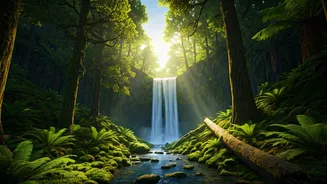
prehistoric. Giant Sitka spruce and Western hemlock trees form a towering canopy, but the real magic is at eye level. Every surface is draped in thick, velvety layers of clubmoss and spike moss, hanging from branches in what are aptly called “halls of moss.” The air is damp and smells of earth and decaying leaves. Sunlight filters through the dense canopy in ethereal green rays, illuminating a world that’s almost entirely green and brown. It’s a testament to how an abundance of water doesn’t just sustain life—it creates a completely immersive, monochromatic world of profound tranquility.
The Weeping Walls of Kauai
Hawaii’s oldest island, Kauai, is famously known as the “Garden Isle,” a name earned by the nonstop action of its central volcano, Mount Waialeale. The summit is one of the wettest spots on Earth, getting well over 400 inches of rain annually. This constant deluge has carved the island into a spectacle of natural drama. The rainwater feeds countless rivers and creates waterfalls so numerous they defy counting. It has sculpted the iconic, razor-sharp ridges and deep, verdant valleys of the Nā Pali Coast. From a helicopter or a boat, the cliffs appear to be “weeping” as water cascades down their fluted, emerald faces. This is beauty on a grand, geological scale, where the sheer power of water is on display, shaping a volcanic shield into a tropical masterpiece.
The Misty Fjords of New Zealand
Fiordland National Park, on New Zealand’s South Island, is a landscape defined by extremes. Sheer granite cliffs, carved by ancient glaciers, plunge thousands of feet into dark, inky water. While stunning on a clear day, the region’s soul is truly revealed in the rain—which falls on more than 200 days a year. A downpour in Milford or Doubtful Sound is a transformative event. The mountainsides, which already host a dense, green rainforest clinging to near-vertical rock, suddenly come alive with hundreds, if not thousands, of temporary waterfalls. Thin silver ribbons of water appear everywhere, cascading down the rock faces and turning the entire fjord into a dynamic water feature. Wrapped in a shifting cloak of mist and low-hanging clouds, it’s a moody, powerful, and deeply beautiful experience that feels torn from the pages of a fantasy epic.
The Living Bridges of Meghalaya, India
Near the village of Mawsynram in northeastern India—often cited as the wettest inhabited place on Earth—the rain is not just an environmental condition; it's a collaborator in human ingenuity. The region’s intense monsoon season causes rivers to swell, making passage difficult. For centuries, the local Khasi and Jaintia peoples have worked with nature, guiding the pliable aerial roots of rubber fig trees across rivers and chasms. Over decades, these roots grow and strengthen, weaving themselves into sturdy, living bridges that can withstand the torrential rains. These structures are a breathtaking fusion of nature and culture, a perfect symbol of how a challenging, water-logged environment can give rise to unique forms of beauty and resilience. They are functional, sustainable, and astonishingly pretty.