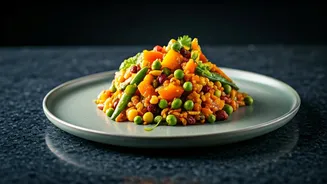






Beyond Traditional Vegetarianism
Indian cuisine has arguably the world's most sophisticated and long-standing vegetarian tradition. For centuries, dishes built around lentils (dal), chickpeas (chana), potatoes (aloo), and paneer have been staples, not afterthoughts. So, when we talk
about a new 'plant-based' push, it’s not about suddenly discovering that vegetables are delicious. Instead, it’s about a conscious evolution that speaks directly to a modern American diner. This new wave differentiates itself in two key ways. First, it adopts the language of the modern wellness movement—'plant-based' feels more inclusive and health-forward to flexitarians who aren’t strict vegetarians but want to reduce meat consumption. Second, it's about innovation. While traditional vegetarian menus are rightfully beloved, the new plant-based focus is on creation: think meaty jackfruit standing in for pulled pork in a biryani, Impossible Foods' ground 'meat' forming a spectacular keema, or dazzling presentations that make a humble cauliflower the undisputed star of the show.
Meeting the Modern Diner's Demands
So, why the big shift? It's a savvy response to overwhelming consumer demand. The American dining landscape has been reshaped by a groundswell of interest in health, environmental sustainability, and ethical eating. Diners today are more informed and intentional about their choices. A menu that only offers a couple of uninspired vegetarian options feels dated. Chefs and restaurateurs are recognizing that a robust, exciting plant-based section is no longer a niche courtesy but a powerful business driver. It attracts not just vegans and vegetarians, but the far larger and more influential group of 'plant-curious' and flexitarian diners who want compelling, flavorful, and satisfying meals that just happen to not contain meat. By meeting this demand, Indian restaurants are expanding their customer base and positioning themselves as contemporary, forward-thinking establishments. It's a classic case of aligning culinary passion with smart business sense.
Innovation on the Plate
The real excitement is happening in the kitchen. Chefs are using the plant-based trend as a license to experiment. In cities like New York, San Francisco, and Chicago, acclaimed Indian restaurants are crafting menus that challenge old expectations. You might find a 'beetroot chop' that mimics the texture and richness of a meat cutlet, served with vibrant chutneys. Or a kofta (traditionally a meatball or vegetable dumpling) made from lotus root and yams, swimming in a creamy, dairy-free cashew sauce. This isn't about simply removing meat; it’s about building flavor from the ground up with vegetables, fungi, and legumes as the heroes. Techniques like smoking, grilling, and fermenting are being applied to vegetables to extract astonishing depth of flavor. Mushrooms are being treated with the reverence once reserved for lamb, and lentils are being transformed into elegant pâtés. For the diner, this means Indian food feels both timelessly authentic in its spicing and thrillingly new in its execution.
A Perfect Culinary Marriage
Ultimately, the plant-based movement and Indian cuisine are a perfect match. The foundational flavor principles of Indian cooking—complex spice blends, the balance of sweet, sour, and savory, and the art of building sauces (curries)—are uniquely suited to elevating plant-based ingredients. A carrot or a piece of eggplant can become just as decadent and crave-worthy as a piece of chicken when simmered in a masterfully spiced coconut-tamarind sauce. This inherent compatibility gives Indian chefs a head start. They aren't trying to force a foreign concept onto their culinary framework; they are simply expanding a part of their heritage that was always there. The spice cabinet is the great equalizer, capable of transforming any ingredient into something extraordinary. This allows them to create plant-based dishes that don't feel like a compromise but rather a delicious and intentional choice.