
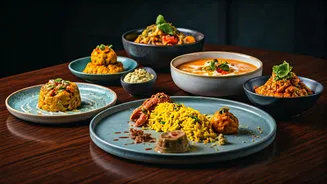
From Comfort Food to Cultural Capital
For decades, the American concept of a “fancy” meal was stubbornly Eurocentric: French techniques, Italian pastas, or a classic steakhouse experience. Status was signaled by price tags, exclusivity, and familiar luxury. But a quiet revolution has been
simmering, and it’s finally boiling over. Today, the real flex isn’t about affording the most expensive thing on the menu; it's about understanding the most interesting thing on it. And increasingly, that interesting thing comes from the Indian subcontinent. This is the “smart flex.” It’s not a garish display of wealth, but a subtle showcase of cultural knowledge. It’s the ability to distinguish between regional specialties, to appreciate complex spice profiles, and to seek out food that is unapologetically itself. In this new hierarchy, knowing about the fiery, funky flavors of a Goan vindaloo or the delicate fermentation in a perfect dosa demonstrates a worldly palate and an open mind—qualities that have become far more valuable than simply owning a gold-plated fork.
The Quest for 'Authentic' Spice
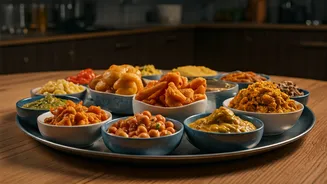
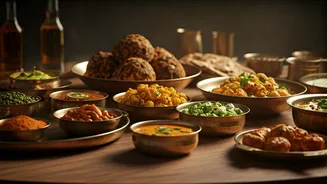
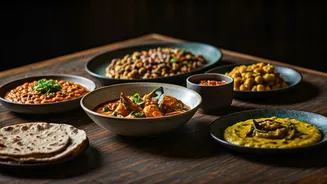
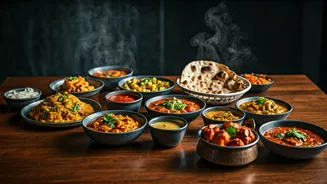
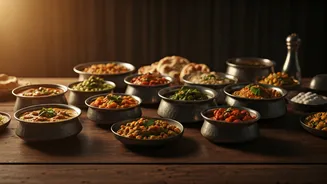
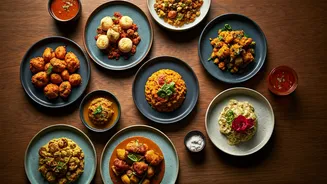
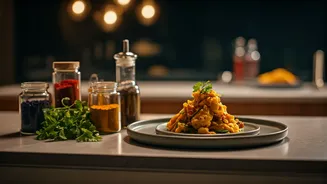
For years, many Indian restaurants in the U.S. felt compelled to cater to a perceived American palate that was afraid of heat and unfamiliar spices. Menus were dominated by a handful of creamy, sweet, and Anglicized dishes like chicken tikka masala and mild kormas. They were delicious, but they were a translation, not the original text. The current trend rejects this dilution. The “bold” in “bold Desi flavours” isn't just about chili heat, though that’s part of it. It’s about the pungent hit of mustard oil, the sour tang of tamarind, the earthy depth of black cardamom, and the funky notes of asafoetida. It’s the complex layering of a dozen spices in a single dish, where each one can still be tasted. Chefs at a new wave of Desi establishments are no longer toning it down. They’re banking on the fact that diners are ready—and eager—for the real deal. Ordering “spicy” is no longer a dare; it’s an expression of genuine appreciation for the cuisine’s intended form.
Beyond the Buffet
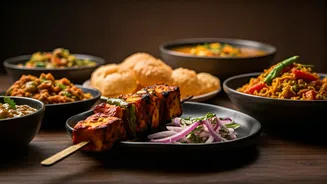
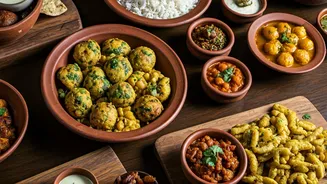
The generic, all-you-can-eat Indian buffet is being replaced by hyper-specific, chef-driven concepts that celebrate the vast diversity of the subcontinent’s cuisine. It’s a crucial shift. Lumping all “Indian food” together is like saying you’re having “European food”—it erases the immense regional differences between, say, Sicilian and Danish cooking. New restaurants are making a name by focusing on one specific region or culinary tradition. You might find a spot dedicated entirely to the street food (chaat) of Delhi, another celebrating the coastal seafood of Kerala, or a third exploring the rustic, robust dishes of Punjab. Places like New York City’s Dhamaka, with its focus on the “unapologetic” provincial food of India, have become some of the hottest tables in the country. This specificity is the core of the flex; it’s about knowing that a paper-thin dosa is a South Indian specialty completely distinct from the tandoori-cooked breads of the North.
The Diaspora-Driven Revolution
So, why now? A major driving force is the coming-of-age of second- and third-generation South Asian Americans. This generation, raised with a foot in two cultures, is increasingly embracing and celebrating its heritage with a newfound confidence. They are the chefs opening these restaurants, the influencers showcasing their family’s recipes on TikTok, and the customers demanding food that tastes like home—not a watered-down version of it. Their pride is infectious. They’ve helped demystify the ingredients and techniques for a wider American audience that is, in general, more curious and adventurous than ever. Thanks to the internet, travel, and a more multicultural society, diners of all backgrounds are seeking new experiences. They’re trading in the predictability of the familiar for the thrill of discovering something new, vibrant, and deeply authentic.