


More Feeling, Less Posing
So, what exactly is breath-synced movement? Imagine a yoga class where the goal isn’t to nail a perfect Warrior II or hold a challenging arm balance. Instead, the instructor encourages you to close your eyes and let your breath guide you. An inhale might
inspire you to lengthen your spine, while an exhale might invite a gentle twist or forward fold. The specific shape your body makes is secondary to the internal sensation of moving in harmony with your own respiratory rhythm. This practice, often falling under the umbrella of somatic movement, parts ways with the highly structured Vinyasa flows that dominate many American studios. While Vinyasa also links breath to movement (one breath, one movement), it typically follows a set sequence of postures, or asanas. Breath-synced movement is more exploratory. It’s a meditative dialogue between your body and your breath, prioritizing internal awareness over external form. There’s no “right” way to do it; the only rule is to listen closely to what your body needs in that moment.
A Reaction to ‘Instagram Yoga’
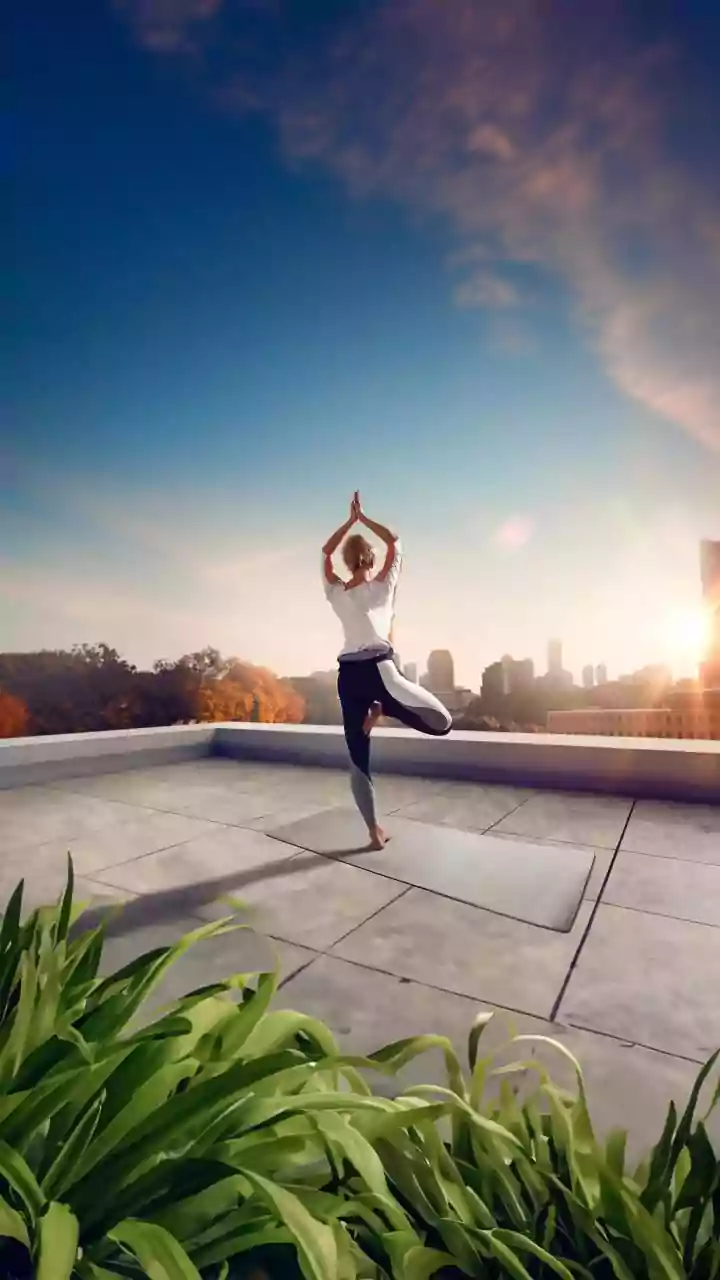
This emerging trend can be seen as a quiet rebellion against the commercialization and performative nature of modern yoga. In a world saturated with images of hyper-flexible influencers in pretzel-like poses, many people feel intimidated or inadequate. The pressure to achieve a certain aesthetic can overshadow the practice’s introspective roots. Breath-synced movement offers an antidote. By turning the focus inward, it removes the element of competition and comparison. It’s not about how the movement looks, but how it feels. This philosophy resonates deeply in a post-pandemic era where burnout is rampant and people are searching for more authentic, sustainable forms of self-care. The practice is less about a workout and more about a “work-in”—an exploration of the body’s subtle intelligence and a way to release stored tension that might not be accessible through conventional stretching or exercise.
Ancient Roots, Modern Application
While this free-form approach feels new, its foundations are ancient. The practice is deeply rooted in pranayama, the yogic science of breath control, which has been central to Indian spiritual traditions for millennia. Pranayama teaches that breath is the carrier of prana, or life force energy, and that by regulating it, one can influence their mental, emotional, and physical state. What’s modern is the application. Innovators in cities like Mumbai and Bangalore are blending these ancient principles with contemporary knowledge of the nervous system, trauma, and embodiment. They are creating spaces where people can explore movement without judgment, using the breath as an anchor to stay present. It’s a response to the stresses of 21st-century urban life—a way to calm a hyper-stimulated nervous system and reconnect with a sense of wholeness in a fragmented world.
What a Session Actually Feels Like
If you were to walk into a breath-synced movement class, you might find a dimly lit room with soft music, or perhaps no music at all. Instead of a teacher demonstrating at the front, you might see them moving around the room, offering quiet verbal cues. The session could begin with participants lying on their backs, simply noticing the natural rise and fall of their chests and bellies. From there, the guidance is invitational: “As you inhale, feel your ribs expand, and perhaps let that inspire a gentle arch in your back.” or “On your exhale, see if your body wants to curl inward, releasing your head and neck.” The movements are often slow, fluid, and cyclical, resembling a gentle, unchoreographed dance. One person might be rocking slowly from side to side, while another is tracing circles with their hips. The experience is deeply personal and can be profoundly relaxing, as it encourages the body to enter a parasympathetic “rest and digest” state, a welcome break from the “fight or flight” mode many of us inhabit daily.