



The Air Fryer Samosa
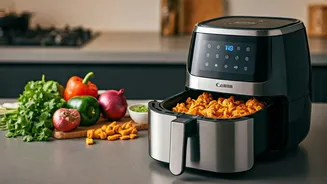
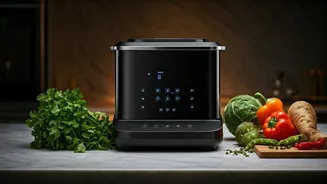
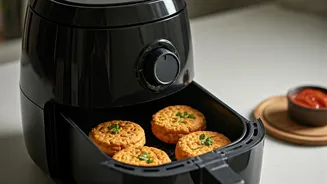
At the heart of this culinary evolution is the air fryer, a countertop convection oven that has become the unofficial hero of the modern Indian-American kitchen. Traditionally, many of the most beloved Indian snacks—samosas, pakoras (vegetable fritters),
and vadas (lentil doughnuts)—owe their irresistible texture and flavor to a deep-fry bath. While delicious, this method is often reserved for special occasions due to the time, mess, and, of course, the calories. The air fryer changes the entire equation. By circulating superheated air, it achieves a remarkable crispness on the outside while keeping the inside tender, all with just a light spritz of oil. Suddenly, a batch of samosas isn't a weekend project; it's a weeknight possibility. This isn't about replacing the authentic, oil-rich originals but creating a “good enough” version that can be enjoyed more frequently. Online communities and TikTok are flooded with hacks for air-frying everything from frozen parathas to homemade mathri, turning calorie-dense treats into everyday indulgences.
Beyond the Fryer: An Arsenal of Gadgets
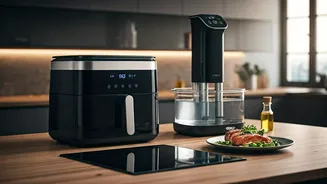
While the air fryer gets most of the attention, the glow-up extends across the kitchen counter. The Instant Pot, already a staple for its ability to speed up lentil and bean dishes, is now a go-to for preparing savory fillings for snacks in record time. It can perfectly steam potatoes for samosas or cook chickpeas for chana chaat without any stovetop monitoring.
High-speed blenders like Vitamix or Blendtec are being used to create impossibly smooth batters for dosas (crepes) and idlis (steamed cakes), and vibrant green chutneys without the grainy texture of older appliances. Even niche gadgets are finding a market. The Rotimatic, a fully automated flatbread maker, promises perfect, puffed-up rotis at the press of a button, solving a time-consuming daily chore for many families. Together, these tools form a modern culinary arsenal that respects the flavors of the past while embracing the conveniences of the present.
Why Now? Health, Time, and Tradition
This trend isn't just about cool new toys; it’s driven by a powerful confluence of cultural and social shifts. Many second- and third-generation Indian Americans grew up with the rich, full-flavored foods of their parents and grandparents but are now hyper-aware of modern wellness trends. They want to keep the culture, but maybe not all the ghee. These gadgets provide a perfect compromise, allowing them to recreate nostalgic flavors in a way that aligns with contemporary health goals.
Time is another crucial factor. In dual-income households juggling demanding careers and family life, the hours required for traditional Indian cooking can feel prohibitive. Technology that automates, simplifies, or speeds up the process is not just a luxury but a necessity. It’s what allows these culinary traditions to be passed down. By making a beloved but complex snack more accessible, a parent is ensuring their child will actually eat it—and maybe one day learn to make the “healthy” version themselves.
A Question of Authenticity
Of course, not everyone is on board. For purists, an air-fried pakora is an oxymoron. They argue that the oil is not just a cooking medium but a crucial ingredient that imparts a specific flavor and mouthfeel that simply cannot be replicated. The deep, resonant crunch of a twice-fried samosa, they contend, is a texture born of tradition, not technology. This debate plays out in family group chats and on social media threads across the diaspora.
But proponents of the gadget glow-up aren’t trying to trick anyone into thinking an air-fried version is a perfect substitute for the original. Instead, they see it as an adaptation—a smart, practical evolution. They frame it as a choice not between a “real” samosa and a “fake” one, but between a healthier, homemade snack and ordering a less-healthy takeout version. For many, that’s an easy decision.