


The Artist and His Canvas
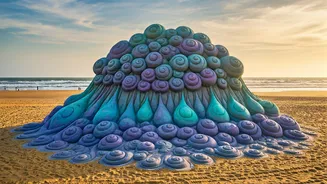
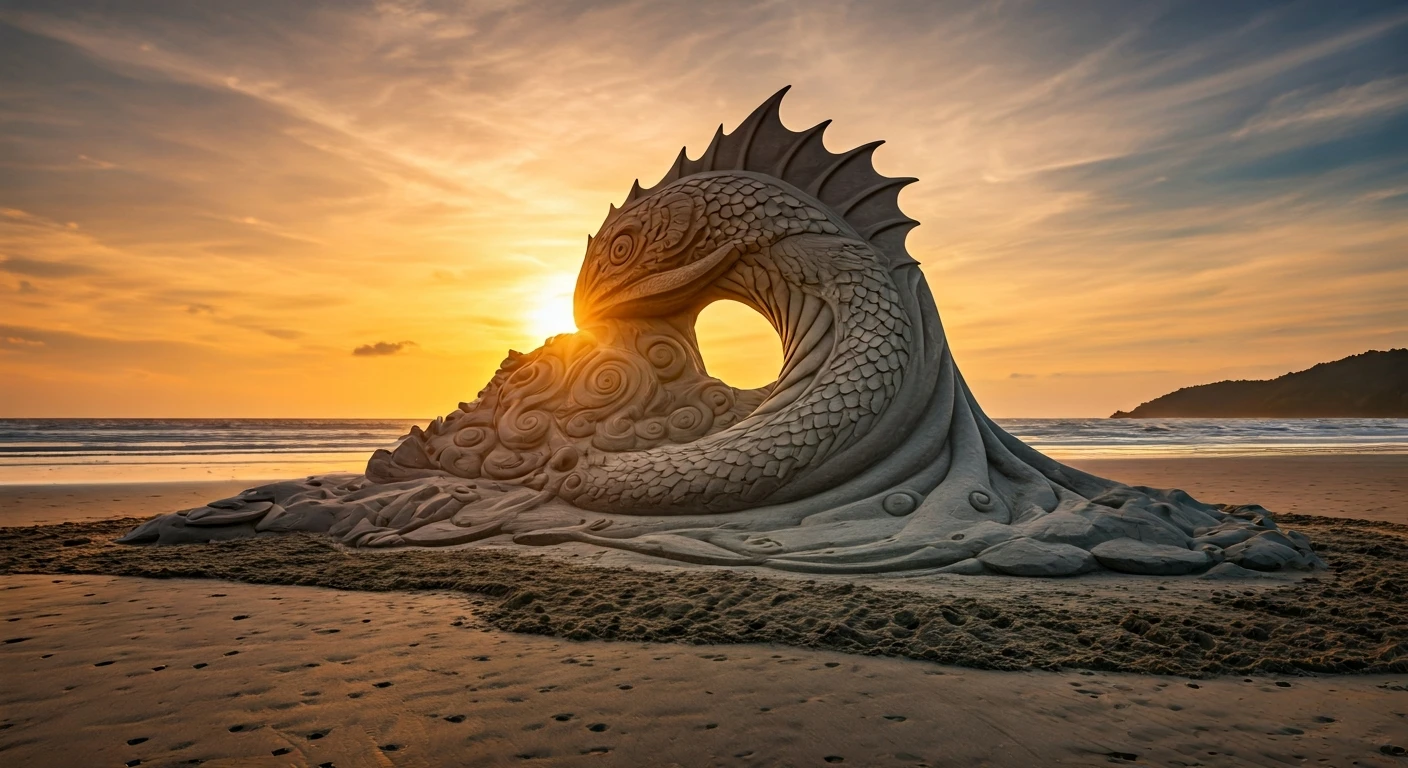
The epicenter of this phenomenon is often Puri Beach in Odisha, India, the sprawling canvas for world-renowned sand artist Sudarsan Pattnaik. For decades, Pattnaik has used the simple, abundant materials of sand and water to create astonishingly detailed
and emotionally resonant sculptures. While most of us were happy with a lopsided bucket-molded castle on our childhood beach trips, Pattnaik has elevated the medium to a globally recognized art form. He has represented India in over 60 international sand art competitions and festivals, winning dozens of awards and setting a high bar for what can be achieved with one of nature's most basic elements. His work has made Puri Beach a destination not just for pilgrims and sunbathers, but for art lovers from around the world.
Sculpting with the Storm
Creating art during the monsoon season presents a unique set of challenges and opportunities. The sand is wetter and heavier, allowing for different consistencies and structural possibilities than dry, loose sand. Artists must work quickly and decisively, often between downpours. The dramatic, overcast skies of the monsoon create a natural, diffused lighting that makes the sculptures pop, lending a moody, atmospheric quality to the works that you wouldn't get under a bright summer sun. The process is a dance with the elements. An artist might spend eight to ten hours meticulously carving a massive, intricate piece, fully aware that the same weather system that enables its creation could wash it away in a matter of minutes. This tension between creation and destruction is at the heart of the art form's appeal.
More Than Just Pretty Pictures
What draws such enormous crowds isn't just the technical skill on display; it's the powerful messages embedded in the sand. Pattnaik and other artists in the region frequently use their temporary platform to comment on pressing social and global issues. One day, the beach might host a 25-foot-tall tribute to healthcare workers; the next, a plea for world peace, a sculpture raising awareness about plastic pollution, or a celebration of a local cultural festival. This transforms the beach from a place of leisure into a dynamic public square for dialogue and reflection. The art becomes a conversation starter, accessible to everyone who walks the shore, regardless of their background. It’s a democratic art form—free to view, located in a public space, and speaking a universal visual language.
The Beauty of Impermanence
Perhaps the most profound aspect of this art is its fleeting nature. These magnificent, labor-intensive creations are not meant to last. They are built at the edge of the sea, and eventually, the tide comes in. The waves that provide the water to bind the sand are the same waves that will reclaim it. This ephemerality is a core part of the experience. It creates a sense of urgency, encouraging people to come and see the work *now*, before it's gone forever. The act of watching a sculpture slowly dissolve back into the coastline is a poignant spectacle in itself—a powerful metaphor for the cycles of nature, life, and the temporary nature of all things. In a world obsessed with permanence and preservation, there is something deeply moving about an art form that embraces its own demise.
An Ocean of Onlookers
The result is a unique cultural event. On any given day a new sculpture is unveiled, thousands of people flock to the shoreline. The atmosphere is a mix of a hushed art gallery and a bustling festival. Families, tourists, and locals alike gather, phones held high to capture the temporary masterpiece. The crowd becomes part of the installation—their reactions, their conversations, and their shared awe are integral to the piece's life. This communal experience reinforces the art's purpose. It’s not just something to be looked at; it’s something to be experienced together, a moment of shared wonder on the edge of the vast, indifferent ocean.