




The City of Sun and Sand
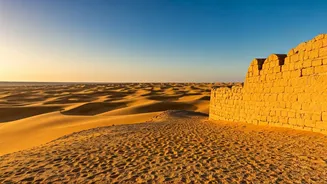
To know Jaisalmer on a typical day is to understand the power of the sun. The city is a masterpiece of environmental design, a labyrinth of narrow lanes, high walls, and intricately carved jharokhas (balconies) designed not just for beauty, but for survival.
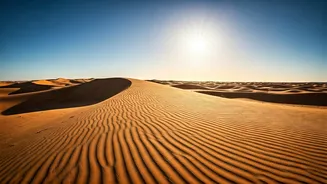
They create pockets of shade and channel the faintest breeze, offering brief respite from the shimmering heat. The Jaisalmer Fort, a living citadel that rises from the desert floor like a colossal sandcastle, seems to have baked for centuries into its permanent golden-brown hue. The air is thick with the fine dust of the desert, coating everything in a pale film. Tourists and locals alike move with a practiced slowness, conserving energy, their days dictated by the arc of the sun across a vast, blue, and almost always cloudless sky.
A Change in the Desert Wind
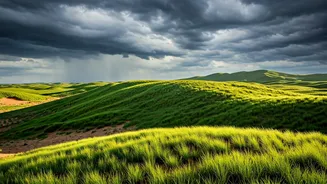
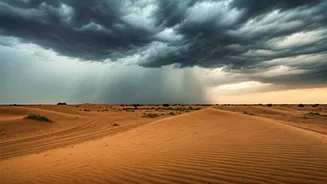
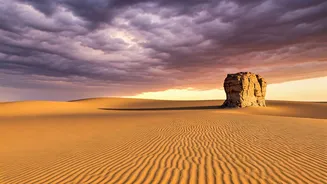
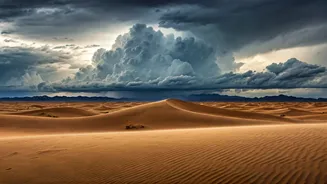
But then, something shifts. It starts not with a drop, but with the air itself. The oppressive, stagnant heat begins to stir. A wind, carrying a scent entirely alien to the desert—a damp, earthy coolness—sweeps through the alleyways. On the rooftops, where families sleep on summer nights, laundry lines begin to dance. The sky, a reliable canvas of monotonous blue, suddenly becomes dramatic. Towering grey clouds, bruised purple at their bases, gather on the horizon with impossible speed. A deep, resonant silence falls over the city as the birds quiet down and the usual hum of motorbikes and market chatter subsides. It’s a collective pause, a city-wide intake of breath in anticipation of a miracle.
The First Drops on Ancient Stone
The first drop of rain lands with an audible *splat* on the dusty flagstones, leaving a dark, star-shaped mark. Then another, and another. Within seconds, a percussive rhythm begins, a sound so foreign it feels like a dream. The immediate, intoxicating smell of petrichor—the scent of rain hitting dry earth—rises from the ground. It’s a primal perfume, a scent of life and relief that floods the senses. Children who were moments ago seeking shade now run into the open, faces tilted to the sky with pure joy. Shopkeepers, instead of pulling their wares inside, stand at their doorways, smiling. This isn’t an inconvenience; it’s a blessing. The rain isn’t just water; it’s an event, a city-wide celebration.
A City Washed Anew
As the shower intensifies, the city undergoes a breathtaking transformation. The layers of dust are washed away, and the true color of the golden sandstone is revealed—a deep, rich honey-gold that seems to glow from within. Water cascades from gargoyles on ancient temples and runs in clean rivulets down streets that have been dry for months. The fortress walls, streaked with dark water, look less like ancient stone and more like a watercolor painting. The world shrinks to the sound of the downpour, a million tiny drums playing on tin roofs, stone ramparts, and the placid surface of Gadisar Lake, where the ornate cenotaphs are reflected in a newly shimmering surface. The air is suddenly cool, clean, and utterly alive.
The Glistening Afterglow
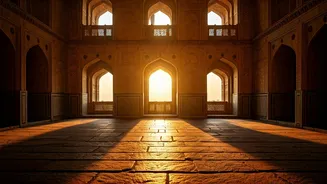
Just as quickly as it began, the rain stops. The clouds part, making way for the setting sun to cast its final, spectacular rays across the glistening city. This is the moment the headline promises—the unreal moment. The wet sandstone catches the low, orange light, amplifying it into an otherworldly incandescence. Steam rises gently from the warm streets. The air is crisp, cool, and fragrant with wet jasmine and earth. For a brief, magical hour, Jaisalmer is no longer a desert outpost baked by the sun. It’s a city of gold, washed clean and polished by the heavens, shimmering in the afterglow of a rare and precious gift.