







The Science of Green: What is Biophilia?
Before you dismiss office plants as mere decoration, it’s worth understanding the principle of biophilia. Coined by biologist E.O. Wilson, the term describes our innate, genetically-driven need to connect with nature. For millennia, humans evolved in natural
environments, and our brains are still wired to respond positively to natural patterns, light, and life. In the modern world of sterile cubicles and endless screen time, this connection is often severed, leading to mental fatigue and stress. Biophilic design is the practice of intentionally incorporating nature into our built environments to satisfy this need. It’s more than just putting a plant on a desk. It’s about creating an ecosystem that calms our nervous system and enhances our cognitive function. Studies in environmental psychology suggest that workspaces with natural elements can lead to lower stress levels, increased creativity, and better concentration. By simply introducing living greenery, you’re giving your brain the subtle, restorative cues it craves, making it easier to focus on complex tasks.
The Unkillable Icon: The Snake Plant
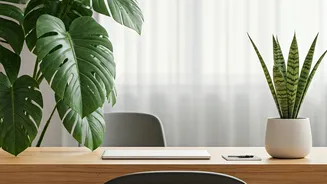
If you’re convinced you have a “black thumb,” the Snake Plant (Sansevieria trifasciata) is here to prove you wrong. This plant is the undisputed champion of low-maintenance greenery, making it the perfect starting point for any office. Its stiff, upright leaves provide a strong vertical element that adds architectural interest without taking up a wide footprint, ideal for crowded desks or narrow bookshelves. What makes it so perfect for a workspace? First, it thrives on neglect. Snake Plants prefer their soil to dry out completely between waterings, meaning you can forget about it for weeks at a time without issue. Second, it’s incredibly versatile with light. While it prefers indirect brightness, it can tolerate very low-light conditions, making it suitable for interior offices or cubicles far from a window. As a bonus, it’s known for its air-purifying qualities, filtering common office toxins. Its resilience means you get all the biophilic benefits with almost zero stress.
The Lush Statement: The Monstera Deliciosa
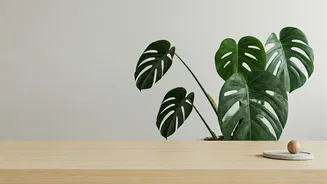
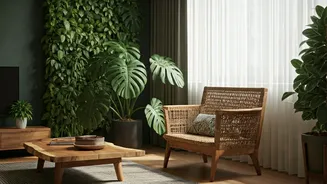
Where the Snake Plant is subtle and structural, the Monstera deliciosa is lush, dramatic, and full of personality. Known for its iconic, fenestrated (split) leaves, the Monstera instantly makes a space feel more vibrant, intentional, and alive. It’s a statement piece that signals a departure from the generic, uninspired office environment. Its large, glossy green leaves are experts at catching the light and creating a sense of a verdant canopy, even with just a single plant. While it requires a bit more attention than a Snake Plant, the Monstera is still remarkably forgiving. It enjoys bright, indirect light—placing it near a window but out of direct sun is perfect. Water it when the top inch or two of soil feels dry. The reward for this minimal effort is watching its spectacular leaves unfurl. As a climbing plant, you can provide it with a moss pole to encourage upward growth, adding another layer of natural texture and turning your workspace into a mini indoor jungle that inspires creativity.
Strategic Placement for Mental Breaks
Simply owning these plants isn't the final step; where you place them matters. The goal is to integrate them into your workflow to create “micro-restorative” moments. Position your Monstera in your line of sight but not as a distraction—perhaps in a corner you naturally glance toward when pausing to think. Its broad leaves can break up the monotony of a blank wall and soften the hard lines of monitors and desks. The slender Snake Plant is perfect for shelves above your monitor or a filing cabinet beside you. Its vertical form draws the eye upward, creating a sense of space. Having a living thing to briefly look at allows your eyes to relax and your mind to wander constructively for a moment before diving back into a task. This brief disengagement is crucial for preventing the cognitive burnout associated with prolonged, focused attention. Think of your plants not just as objects, but as quiet, living colleagues that encourage healthier work habits.