





Beyond the Smart Speaker
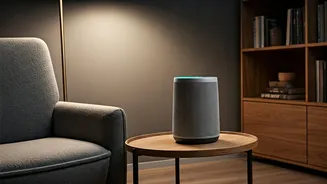
For years, the 'smart home' was defined by what you could see and command: a voice-assistant cylinder on the counter, a video doorbell on the porch, a smart plug awkwardly jutting from the wall. These were isolated tools, additions to a home rather than
a part of it. The next evolution, driven by artificial intelligence, is a shift toward 'ambient computing'—a seamless, almost invisible intelligence that anticipates our needs and enhances our environment without constant prompting. This isn't about asking an AI to turn on the lights. It’s about the house knowing you’ve come home from a stressful day and automatically dimming the lights, cueing up a relaxing playlist, and adjusting the thermostat for comfort. The goal is for technology to recede into the background, working silently to make life more pleasant and efficient. It’s a move from a house full of smart objects to a home with a singular, responsive intelligence.
The Art of Adaptive Lighting
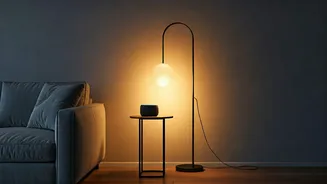
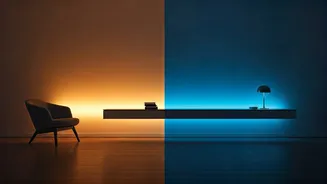
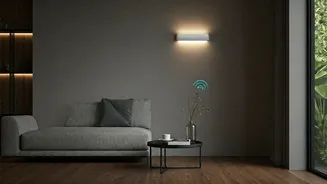
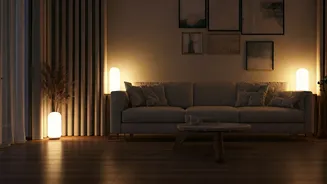
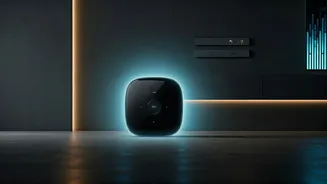
The 'glow' in an AI-powered home is quite literal. Advanced lighting systems are at the forefront of this design revolution. Instead of a simple on/off switch or even a dimmer, AI-driven lighting can create dynamic, responsive environments. The most compelling application is circadian rhythm lighting, which mimics the natural progression of sunlight throughout the day. Your home’s lights can automatically shift from a cool, energizing blue-white in the morning to a warm, soft amber in the evening, promoting alertness during the day and helping you wind down for sleep at night.
Systems like Philips Hue and Lutron are already making this accessible. AI can take it a step further, learning your patterns and adjusting the lighting based not just on the time of day, but on the weather outside, the activity in the room, or even your biometrics via a wearable device. Imagine a 'focus mode' that brightens your desk for work or a 'movie night' scene that perfectly dims the lights and highlights the path to the kitchen for a snack run.
Invisible Integration Is the New Luxury
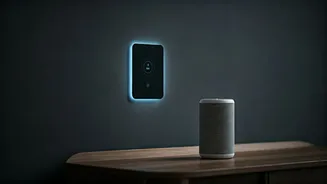
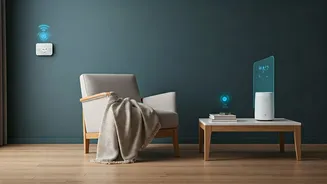
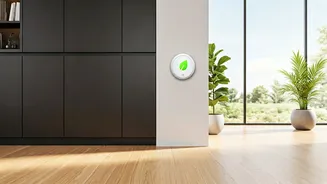
The ultimate goal for today’s forward-thinking designers is to make technology disappear. This philosophy, known as 'calm technology,' prioritizes aesthetics and human experience over showcasing gadgets. In an AI home, this means speakers are embedded invisibly into walls (like those from Sonos), charging pads are seamlessly integrated into nightstands and countertops, and televisions masquerade as framed art when not in use (think Samsung's 'The Frame').
Even windows are getting an AI upgrade. Smart glass can automatically tint to block harsh sunlight and reduce heat, then turn perfectly clear as the sun sets, all without the need for blinds or shades that clutter a minimalist aesthetic. This focus on invisible integration ensures that the home's style—whether it’s modern, traditional, or eclectic—is the star of the show. The technology is a silent, diligent servant, not a loud, attention-seeking houseguest.
A Personalized Sensory Experience
A truly future-ready home engages more than just our eyes and ears. AI is beginning to orchestrate a full sensory experience tailored to the individual. Automated blinds can work in concert with the thermostat, tracking the sun’s path to optimize natural light and maintain a perfect temperature, saving energy in the process. Your home’s AI could learn that you prefer the house a few degrees cooler for sleeping and automatically adjust the temperature an hour before you typically go to bed.
This extends to air quality monitors that trigger purifiers when pollen counts are high and even smart scent diffusers that can release a calming lavender scent in the evening or an invigorating citrus in the morning. It’s a holistic approach to living, where the home environment is no longer a static backdrop but an active participant in your well-being, constantly adapting to create a personal sanctuary.