






Welcome to the Abode of the Clouds
The name Meghalaya translates from Sanskrit to “the abode of the clouds,” and it’s a promise the state breathtakingly keeps. Tucked away in northeastern India, this is a land of rolling emerald hills, deep valleys, and a culture deeply intertwined with
nature. While most travel plans are designed to avoid rain, a trip to Meghalaya during the monsoon is about embracing it. From June to September, the region receives some of the highest rainfall on the planet. This isn’t a miserable drizzle; it’s a dramatic, life-giving force that transforms the landscape into a scene of almost supernatural beauty. The air is thick with the scent of wet earth, the soundtrack is a constant symphony of falling water, and every shade of green seems to vibrate with life.
Walking on Living Architecture
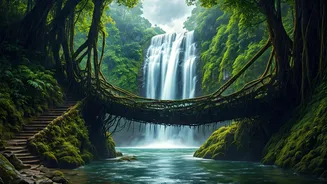
Perhaps nothing captures the magic of Meghalaya more than its living root bridges. For centuries, the indigenous Khasi and Jaintia peoples have guided the aerial roots of rubber fig trees across rivers and ravines, weaving them into functional, sturdy bridges that grow stronger with time. Unlike concrete and steel, these structures are part of the forest itself. Walking across a moss-covered root bridge, with a river rushing below and the jungle canopy overhead, feels like stepping into a fantasy novel. The most famous is the “double-decker” bridge in Nongriat, a challenging but rewarding trek that has become a pilgrimage for adventurous travelers. These bridges aren’t ancient relics; they are a living testament to a sustainable, symbiotic relationship between humans and nature.
Chasing World-Class Waterfalls
The monsoon’s deluge feeds Meghalaya's other main attraction: its waterfalls. During these months, trickling streams become roaring torrents that cascade down cliffsides in spectacular fashion. Nohkalikai Falls, one of the tallest plunge waterfalls in India, is a staggering sight as it drops dramatically into a turquoise pool below. Elephant Falls, named for a rock formation that once resembled an elephant, is a popular three-tiered waterfall easily accessible from the capital city, Shillong. Throughout the state, countless other falls appear during the rains, their white spray a stark, beautiful contrast against the dark green hills and grey skies. It’s a landscape in constant, powerful motion.
The Experience of Extreme Rain
Meghalaya is home to Mawsynram and Cherrapunji, two villages that vie for the title of the wettest place on Earth. Visiting them during the monsoon isn't about sightseeing in the traditional sense; it’s about experiencing the sheer force of nature. Locals go about their days under unique, full-body bamboo umbrellas called ‘knups.’ The sound of rain on a tin roof becomes a constant, meditative rhythm. For visitors, it offers a strange sense of peace and a humbling perspective on the power of the natural world. It’s a destination where the weather isn’t just a backdrop—it’s the main event, an immersive experience that redefines what a “rainy day” can be.
Beyond the Scenery
While the landscape is the primary draw, the culture of Meghalaya adds another layer of fascination. The region is home to several tribes, most notably the Khasi, who practice a rare matrilineal system where lineage and inheritance are traced through women. This unique social structure is reflected in the confidence and prominence of women in society. The local cuisine is also an adventure, with dishes centered on pork, rice, and fermented ingredients that offer a distinct taste of the region. A trip here is not just about witnessing beautiful places, but about experiencing a way of life that is unique within India and the world.