









The ‘New Space’ Gold Rush
For decades, the path to a career in space ran almost exclusively through government agencies like NASA. It was prestigious, but opportunities were limited. Today, the landscape has been completely reshaped by what’s known as the “New Space” movement.
This era is defined by private companies—from giants like SpaceX and Blue Origin to a thriving ecosystem of hundreds of startups—commercializing everything from satellite deployment to space tourism. This isn't a niche hobby for billionaires; it's a full-blown economic sector. Morgan Stanley projects the global space industry could generate over $1 trillion in revenue by 2040, up from roughly $350 billion in the late 2010s. That explosive growth isn't just about launching rockets; it's about building the infrastructure, technology, and services that support a space-based economy, and it requires a massive, skilled workforce.
It’s Not Just Rocket Science
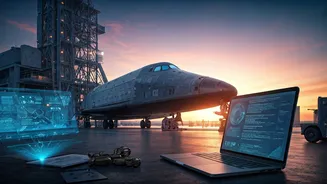
The single biggest misconception about space careers is that you must be a physicist or an aerospace engineer. While those roles are critical, the modern space industry needs a surprisingly diverse range of talent. The thousands of satellites being launched need people to design, build, and operate them, but they also need data scientists to analyze the immense flow of information they send back to Earth—from climate monitoring to agricultural insights. Software engineers are in high demand to write the code that flies rockets, controls robotic arms, and manages complex ground systems. Technicians are the backbone of the industry, responsible for manufacturing components, assembling spacecraft, and preparing launchpads. The sheer scale of the industry means a growing demand for roles you might not expect, including space lawyers specializing in orbital regulations, marketers telling the story of new ventures, and financial analysts modeling the next big investment.
The Most In-Demand Skill Sets
If you’re looking to break into the field, focusing on a few key areas can give you a significant edge. Unsurprisingly, a strong foundation in STEM (Science, Technology, Engineering, and Math) remains paramount. Aerospace, mechanical, and electrical engineering are the traditional pillars. However, software proficiency is rapidly becoming the great differentiator. Expertise in programming languages like C++ and Python, along with experience in embedded systems and data analysis, can make a candidate incredibly attractive. Beyond technical skills, the industry values systems thinking—the ability to understand how complex components fit together into a functioning whole. Given the high-stakes nature of space missions, an obsessive attention to detail and a collaborative mindset are non-negotiable.
Where the Jobs Are
While the work is focused on the stars, the jobs are firmly on the ground in several key hubs across the United States. Traditional aerospace centers remain dominant. Florida’s “Space Coast” around Cape Canaveral, Southern California, and Houston continue to be epicenters of activity, hosting major launch sites and the headquarters of established players and new startups alike. But the industry is decentralizing. Colorado has quietly become a major hub for military and commercial space operations. Washington state, anchored by Blue Origin and a host of satellite companies, is another key player. Texas, particularly around Austin and Brownsville, is seeing explosive growth thanks to SpaceX’s massive presence. As remote work becomes more common, opportunities are becoming less geographically constrained, but proximity to these clusters still provides a significant advantage for networking and career advancement.