






1. Check Your Treads and Pressure
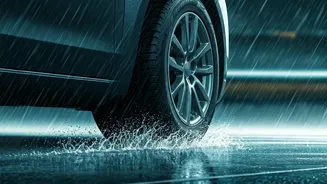
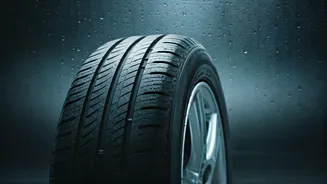
Your tires are the only part of your car that actually touches the road, and their ability to grip is dramatically reduced on wet pavement. Before the rainy season starts, inspect your tire tread. The easiest way is the penny test: place a penny with
Lincoln's head upside down into a tread groove. If you can see the top of his head, your treads are worn and it’s time for new tires. According to the National Highway Traffic Safety Administration (NHTSA), tires need at least 2/32 of an inch of tread depth to be safe. Also, check your tire pressure. Underinflated tires can make hydroplaning more likely and reduce your car’s handling ability when you need it most. Your car’s recommended pressure is listed on a sticker inside the driver’s side doorjamb.
2. Replace Your Worn-Out Wipers
If your wipers are smearing water instead of clearing it, they're a liability. Wiper blades are made of rubber, which degrades over time from sun exposure and use. Most experts recommend replacing them every six to twelve months. Don’t wait for them to start streaking, chattering, or skipping across the glass. New blades are an inexpensive and simple upgrade that can dramatically improve your visibility in a downpour. While you’re at it, top off your windshield washer fluid. The spray can help clear away the oily, vision-obscuring road grime that gets kicked up in the first few minutes of a storm.
3. Test Your Lights (All of Them)
In rainy conditions, your lights aren't just for helping you see—they're for helping others see you. Many states have laws requiring your headlights to be on whenever your wipers are in use. Before you get caught in bad weather, do a quick walk-around of your vehicle. Check your headlights (both low and high beams), taillights, brake lights, and turn signals. Ask a friend to help you confirm the brake lights are working as you press the pedal. A single burned-out bulb can make your car nearly invisible from certain angles, especially in the gray, low-contrast environment of a rainstorm.
4. Know How to Handle a Skid
The most terrifying moment in wet-weather driving is hydroplaning, when your tires lose contact with the road and skim across a layer of water. It can feel like the car is floating, and the instinct is to panic. Don't. The key is to make smooth, deliberate movements. Immediately take your foot off the accelerator. Do not slam on the brakes, as this can lock up the wheels and make the skid worse. Keep the steering wheel pointed in the direction you want to go. As the car slows, the tires should regain contact with the pavement, and you’ll feel control return. The best way to avoid hydroplaning is to slow down, especially when driving through standing water.
5. Give Yourself Double the Space
Wet roads mean longer stopping distances. The standard “three-second rule” for following distance in dry weather simply isn't enough when it's raining. To be safe, double it to at least five or six seconds. To measure this, watch the vehicle ahead of you pass a fixed object like a sign or an overpass. Then, start counting. If you reach the same object before you’ve finished counting to five, you’re following too closely. This buffer zone gives you more time to react to sudden stops and helps you avoid spraying the windshield of the person behind you if you have to brake hard.
6. Defog Your Windows Instantly
As rain cools the outside of your car, the moisture from your breath can cause the inside of your windows to fog up quickly, completely obscuring your view. Don't fumble for a towel while you're driving. Know your car's defrost system. The fastest way to clear a foggy windshield is to turn your car’s defroster on high and activate the air conditioning. The A/C system acts as a dehumidifier, pulling moisture from the air inside the cabin. If your car has it, switching to the fresh air intake (instead of recirculating) will also help equalize the temperature and humidity faster.