







So, What Exactly Is a Tiffin?
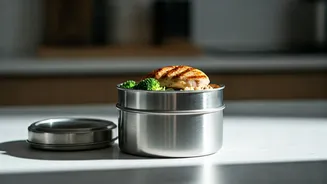
Before it became the darling of the fitness-obsessed, the tiffin was, and still is, a cultural icon in India. The word 'tiffin' refers to a light midday meal, but it’s more famously associated with the container used to carry it: a stackable, cylindrical
lunchbox, typically made of stainless steel. These containers, also known as 'dabbas,' consist of two to four individual tins that lock together vertically with a clasp. For over a century, Mumbai’s legendary 'dabbawalas' have used this system to deliver hundreds of thousands of hot, home-cooked lunches to office workers across the city with near-perfect accuracy. The tiffin isn’t just a lunchbox; it's a time-tested logistical masterpiece, designed for efficiency, durability, and keeping different foods perfectly separate until it's time to eat.
The End of Sad Desk Lunches
Let’s be honest: the average meal prep container has its flaws. The plastic stains an unsettling shade of orange after one encounter with tomato sauce, the lids never seem to fit after a few runs through the dishwasher, and a single misplaced container can send your entire organizational system into chaos. The tiffin elegantly solves these problems. Its stainless steel construction is non-porous, meaning it won't absorb odors, stains, or flavors. Your curry won't make your fruit taste funny tomorrow. It’s also incredibly durable, shrugging off the bumps and drops of a daily commute. Most importantly, the multi-tiered design is a game-changer for food quality. No more soggy salads or mushy sides. Your wet ingredients and dry ingredients can coexist peacefully in their own compartments, waiting to be combined right before you eat. It’s a simple, sustainable upgrade that makes your lunch feel intentional, not like an afterthought.
The Ultimate Protein-Packing System
Here’s where the tiffin truly shines for the modern fitness enthusiast. Achieving your protein goals often means eating balanced, component-based meals, and that’s precisely what the tiffin was built for. Its separate compartments are practically begging to be filled with your macros. Imagine your post-workout meal, perfectly organized: the bottom tier holds a generous portion of grilled chicken or salmon; the middle tier contains a serving of quinoa or sweet potatoes; and the top tier is filled with crisp, roasted broccoli and a lemon wedge. Everything stays distinct and fresh. This system encourages portion control and makes it visually intuitive to build a balanced meal. It transforms the task of 'getting your protein in' from a chore into a clean, organized, and satisfying ritual. It’s the perfect tool for anyone serious about fueling your body correctly.
How to Build Your Tiffin 'Flex'
The 'flex' isn't just about having a cool-looking lunchbox; it's about the effortless organization it represents. Unstacking a perfectly packed tiffin at your desk is a quiet statement that you have your life together. But what do you put inside? Think in components. For a classic protein lunch, try: blackened shrimp in the bottom tier, a corn and black bean salsa in the middle, and brown rice in the top. For a protein-heavy breakfast on the go: Greek yogurt in the largest tin, with separate tiers for fresh berries and homemade granola. Even your snacks can get an upgrade: one tier for hard-boiled eggs, another for baby carrots and celery sticks, and a third for a scoop of hummus or almond butter. The key is to embrace the separation. It not only keeps food better but also makes your meal a more engaging, multi-part experience.
Finding the Right Tiffin for You
Ready to make the switch? Tiffins are now widely available online and in specialty kitchen stores. When choosing, consider a few things. First, size: they come in various diameters and tier counts, from compact two-tier models perfect for a snack to larger four-tier versions that can hold a feast. A three-tier tiffin is a great starting point for most lunch needs. Second, look for quality. A good tiffin will have sturdy clasps and, ideally, silicone gaskets on the lids of at least some tiers to ensure they are leak-proof for saucier foods. Finally, decide if you need insulation. While traditional tiffins are not insulated, many modern versions are, keeping food hot or cold for several hours—perfect if you don’t have access to a fridge or microwave at work or the gym.