

The Opposite of a Spectacle
Before we go further, let’s be clear about what we mean by fruit custard. It isn’t one single, rigidly defined dish. It’s a concept, a feeling, a culinary folk song with a thousand variations. At its heart, it’s a creamy, sweet custard—whether it’s a classic
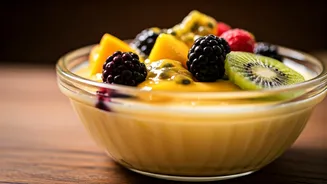
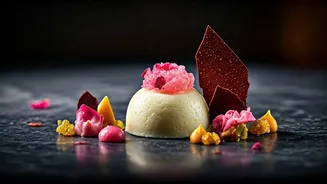
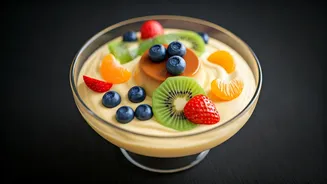
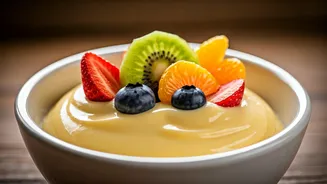
crème anglaise, a sturdy-set pudding from a packet, or even a vegan alternative—pooled around or layered with fruit. It’s the polar opposite of a culinary spectacle. It doesn’t demand a blowtorch, a specialty mold, or a trip to a high-end grocer. In its most honest form, it might involve canned fruit cocktail, and that’s not an insult; it’s a core feature of its charm. This dessert doesn’t ask for a close-up. It slumps. It jiggles. It often arrives in a large, unglamorous glass bowl, meant to be scooped, not sliced. Its beauty isn't in its sharp edges or architectural height, but in its cheerful, yielding softness. It’s the food equivalent of a well-worn sweater or a favorite old movie—utterly devoid of pretension and built entirely for comfort.
A Passport of Memories
Part of fruit custard’s power lies in its ubiquity. It’s a dish that transcends borders, showing up in different forms in countless cultures, each tied to a specific kind of memory. For many Americans, it conjures images of church potlucks and summer barbecues, served alongside Jell-O salads and sheet cakes. It’s the dessert that a grandmother or aunt brought, a cool and creamy relief on a hot day. In the UK, it’s a close cousin to the magnificent trifle, a layered masterpiece of sponge cake, sherry, jam, fruit, and custard, all crowned with whipped cream. For families with roots in South Asia, particularly India and Pakistan, fruit custard is a festive staple. Often brighter and denser, it’s studded with a technicolor mix of apples, bananas, grapes, and pomegranate seeds, sometimes with jelly cubes and nuts mixed in. It’s the flavor of celebrations, from Eid feasts to birthday parties. Each version tells the same story: this is a dish for gathering. It’s made in large batches because it’s meant to be shared.
The Psychology of Comfort
So why the deep-seated nostalgia? The attachment isn't just about the taste; it’s about the context. Fruit custard is a low-stakes food. No one is judging its texture or critiquing its presentation. It represents a time and place where the goal was simple nourishment and communal pleasure, not culinary one-upmanship. In our current food landscape, dominated by viral TikTok recipes and Michelin-starred ambitions, the pressure to perform in the kitchen is real. Every meal can feel like an audition. The fruit custard is a gentle rejection of that pressure. It’s a reminder that food can be easy. It’s a symbol of care from a generation that showed love by making sure there was always enough for everyone, with a little something sweet to finish. It’s a direct link to childhood, when the appearance of that big glass bowl signaled that the day was special, but in a relaxed, familiar way.
Why We Need It Right Now
The argument for the fruit custard revival isn’t just about looking backward. It’s about what we crave in the present. We live in a world of overwhelming complexity, digital noise, and constant striving. We’re tired. We’re overstimulated. And sometimes, we don’t want a challenge on our plate. We want a hug in a bowl. Fruit custard offers exactly that. It’s predictable in the best possible way. The smooth custard, the sweet burst of fruit—it delivers every single time. It doesn't require a tutorial or an acquired taste. It’s an immediate, uncomplicated pleasure. Bringing it back isn’t about indulging in a kitschy retro trend; it’s about actively choosing simplicity and genuine satisfaction over the exhausting pursuit of perfection. It’s permission to enjoy something simply because it makes you feel good, no hashtags required.