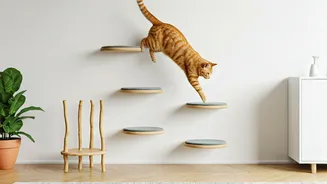









Why Cats Crave the High Ground
Before you dismiss it as just another quirky cat habit, understand that the drive to climb is deeply ingrained in your feline’s DNA. In the wild, cats are both predators and prey. A high vantage point serves two critical purposes: it provides a secure
place to rest away from ground-level threats and offers a strategic lookout for spotting potential prey—or, in a modern home, for watching the household's daily drama unfold. By providing vertical territory, you’re not just spoiling your cat; you're speaking their language. You’re giving them a sense of security and control over their environment, which is fundamental to a cat's well-being. This instinct is why a simple cardboard box is often ignored in favor of the highest point on a cat tree or the back of the sofa.
The Benefits of a Vertical World
A network of wall-mounted shelves and perches does more than just satisfy a primal urge. It’s a powerful tool for environmental enrichment that can solve common behavioral issues. For starters, it encourages exercise. Leaping from shelf to shelf is a fantastic workout that keeps your cat agile and helps maintain a healthy weight. In multi-cat households, vertical space is a game-changer. Cats often experience conflict over resources, including territory. By expanding their world upwards, you effectively increase the available real estate, allowing them to establish their own zones and avoid each other without confrontation. This “time-sharing” of space reduces stress and territorial disputes, leading to a more harmonious home for everyone.
Planning Your Cat's Superhighway
A successful wall path is more than just a few randomly placed shelves. Think like an architect designing a tiny, furry city. The best layouts have a clear purpose and flow. Start by identifying your cat's favorite spots. Is there a window with a great view of the bird feeder? Make that a destination perch. Does your cat love to nap in a sunny spot in the afternoon? A cozy wall hammock there would be perfect. Create routes, not just destinations. A good path allows your cat to travel across a room without touching the floor. Connect shelves with small steps or ramps, especially for older cats or less confident jumpers. Avoid dead ends where a cat could feel trapped by another pet. A continuous loop or multiple exit points will make the space feel safer and more usable.
Choosing the Right Components
The market for cat wall furniture has exploded, offering everything from simple floating shelves to elaborate bridges and hammocks. When choosing components, prioritize sturdiness and material. Solid wood or thick, high-quality plywood is far superior to particleboard. Look for surfaces covered in carpet, sisal, or another non-slip material to give your cat confidence and a place to scratch. A mix of elements creates a more engaging environment. Combine simple perches for resting, longer shelves for walking, and a cozy enclosed box or hammock for secure napping. Some systems are modular, allowing you to start small and add on over time. Always check the weight rating for any component to ensure it can safely support your cat—or multiple cats, if they’re likely to share.
Installation and Safety First
Your cat’s highway to the sky is only as good as its installation. Safety is non-negotiable. Always anchor shelves and perches directly into wall studs. A simple drywall anchor is not strong enough to handle the force of a cat leaping onto it and will eventually fail, potentially injuring your pet and damaging your wall. Use a stud finder to locate the studs before you drill. Follow the manufacturer's installation instructions to the letter. Once everything is installed, give each piece a firm tug and push to test its stability before you let your cat explore. Introduce your cat to the new setup slowly, using treats or toys to lure them up and build their confidence. With a secure and well-planned design, your cat will be navigating their new vertical world in no time.