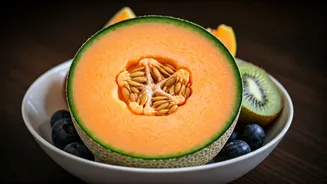


An Escape from the Fruit Platter
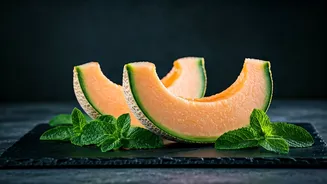
For years, cantaloupe was the culinary world’s reliable B-lister, forever typecast in the role of “Fruit Salad Component #3.” It was the melon you ate because it was there, wedged between a more glamorous strawberry and a few puckered grapes. Its reputation
was one of blandness, a watery placeholder in the grand buffet of life. This perception wasn’t entirely unfair. Too often, we’ve been served underripe, rock-hard cantaloupe, harvested before its sugars could develop, tasting more like a cucumber’s sad cousin than a sweet summer treat. It became shorthand for low-effort catering, the kind of fruit that signals a distinct lack of imagination. But a quiet rebellion has been brewing, not in overthrowing the dessert cart entirely, but in rethinking what a sweet finish to a meal can be.
The Rise of the Simple Sweet
The secret to cantaloupe’s comeback lies in a broader cultural shift. We’re increasingly skeptical of overly processed, sugar-laden confections that leave us feeling heavy and regretful. The ten-layer chocolate fudge cake, the deconstructed cheesecake with its foams and gels—they’re still there, but they’re no longer the only definition of indulgence. A new kind of luxury has emerged, one that prizes freshness, simplicity, and natural flavor. In this new world order, a perfectly ripe, fragrant, and juicy piece of fruit isn’t a compromise; it’s the entire point. Cantaloupe, when it’s good, is exceptionally good. It delivers a floral, musky sweetness and a flood of cool, refreshing juice that no amount of pastry cream can replicate. It’s dessert as nature intended: clean, light, and deeply satisfying without the subsequent sugar crash.
Beyond Prosciutto-Wrapped Slices
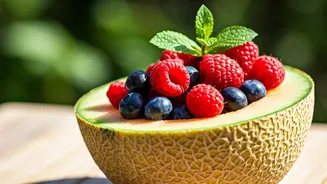
The classic Italian pairing of prosciutto e melone was the first hint of cantaloupe’s potential. The salty, savory cured meat cuts through the melon’s sweetness, creating a symphony of flavor that’s more complex than the sum of its parts. Today’s chefs and home cooks are taking that principle and running with it. We’re seeing cantaloupe granitas and sorbets that concentrate its essence into a single, icy spoonful. It’s being grilled with a sprinkle of sea salt and a drizzle of olive oil, caramelizing its sugars and giving it a smoky depth. On social media, you’ll find it cubed and tossed with feta, mint, and a squeeze of lime, or sprinkled generously with chili-lime seasoning like Tajín for a sweet, spicy, and tangy explosion. Others are turning it into chilled soups or even blending it into agua frescas. The new rule is simple: treat it like a serious ingredient, and it will reward you.
The Secret Is in the Selection
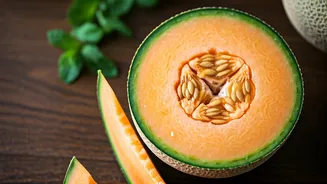
Of course, this entire renaissance hinges on one crucial factor: you have to start with a good cantaloupe. The sad, anemic cubes of our past are a result of poor sourcing, not a flaw in the fruit itself. A great cantaloupe doesn’t come from guesswork; it comes from knowledge. Forget tapping it. The real secrets are in the scent and the feel. A ripe cantaloupe should feel heavy for its size, a sign that it’s full of juice. Most importantly, check the stem end—the small, circular spot where it was attached to the vine. It should be slightly indented and smell sweet, floral, and unmistakably like cantaloupe. If it has no smell, it’s not ready. If it smells funky or alcoholic, it’s past its prime. The skin should have a pronounced, web-like netting over a creamy, beige-gold background, not a green one. Nailing the selection is the difference between a disappointing memory and a transcendent dessert experience.