








Not Your Grandfather’s Almanac
For centuries, humanity has looked to the moon. It guided harvests, inspired myths, and served as a celestial clock. A lunar calendar, at its core, tracks time based on the moon's phases—from the dark new moon to the brilliant full moon and back again.
Unlike the unyielding grid of the Gregorian calendar that governs our work lives, lunar cycles are about waxing and waning, periods of growth and periods of rest. Traditionally, following this required almanacs, careful observation, and a bit of celestial know-how. Now, that entire system of ancient wisdom is being downloaded from the App Store. These aren't just simple calendars showing a picture of the moon; they are entire ecosystems for living in sync with its rhythm.
The Appeal of ‘Cyclical Living’
So why is this resonating so deeply with a generation raised on the internet? The answer lies in a powerful counter-movement against hustle culture. For many young people, the demand for constant productivity feels draining and unnatural. Cyclical living, a concept popularized by these apps, offers an alternative. It encourages users to align their energy and activities with the moon’s phase. The waxing period might be for starting new projects and socializing (outward energy), while the waning period is for finishing tasks and introspection (inward energy). This isn't about rigid rules; it's about giving oneself permission to not be 'on' 100% of the time. In a world of burnout, a calendar that builds in rest and reflection is a radical act of self-care. It reframes personal energy not as a resource to be endlessly exploited, but as a tide that ebbs and flows.
An App for Every Vibe
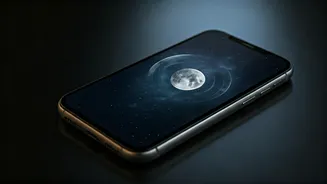
The technology itself is the key that unlocks this ancient practice for a modern audience. Apps like Co–Star (famous for its astrology), The Moon, Stardust, and My Moontime transform esoteric concepts into a user-friendly experience. They typically offer a dashboard showing the current moon phase, its zodiac sign, and what that might mean for your day. Push notifications might remind you that a full moon is coming, suggesting you journal or set intentions. Many integrate other wellness practices, offering daily horoscopes, tarot card pulls, breathing exercises, and journaling prompts tied to the lunar cycle. The design is sleek, the language is affirming, and the experience is personalized. By “simplifying” the lunar calendar, these apps don’t dumb it down; they translate it into the native language of Gen Z: a personalized, aesthetically pleasing, and digitally accessible daily ritual.
A Digital Portal to an Analog World
There's an obvious irony in using a smartphone—often the very source of our digital distraction and anxiety—to connect with something as primal as the moon. But for digital natives, the phone is not an external object; it's an extension of the self and the primary tool for navigating the world. In this context, a moon phase app isn't just another screen. It acts as a portal. It's a notification that prompts you to look away from the device and up at the sky. It’s a digital reminder to engage in an analog activity, whether that's taking a quiet moment to reflect, going for a walk in the evening, or simply being more mindful of your own energy levels. The app is the bridge, not the destination. It uses technology to foster a deeper connection to nature, the body, and a sense of cosmic rhythm that the modern world often tries to erase.