
The Superfood You’ve Never Heard Of
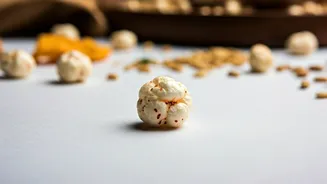
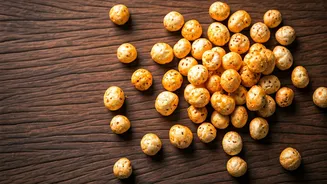
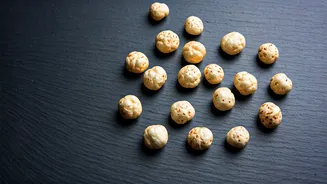
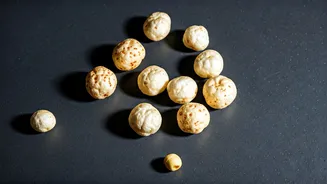
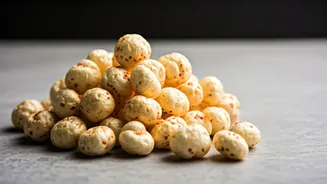
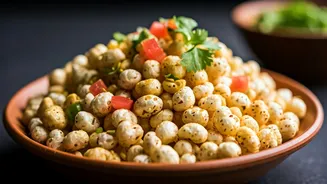
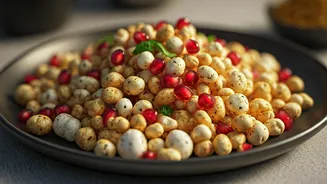
Let’s start with the star of the show: makhana. If you haven’t encountered them before, you’re in for a treat. Known in the U.S. as puffed lotus seeds or fox nuts, makhana are the seeds of the water lily plant. Harvested from ponds in India and other
parts of Asia, these seeds are dried and then roasted at high heat until they pop, much like popcorn, transforming into light, airy, crunchy spheres. For centuries, they’ve been a humble staple in Indian households, eaten roasted as a simple snack or used in curries and desserts. But recently, they’ve gained traction in wellness circles, and for good reason. Makhana are naturally low in calories and fat, gluten-free, and a good source of plant-based protein, magnesium, and potassium. Unlike popcorn, there’s no pesky kernel to get stuck in your teeth. On their own, they have a mild, neutral flavor, making them a perfect canvas for other ingredients. They are the crunchy, guilt-free base that’s about to get a major flavor upgrade.
Meet Chaat, the Ultimate Snack-Time Art Form
To understand why makhana chaat is so special, you first have to understand chaat. In India, chaat isn’t just a type of food; it’s an entire culinary philosophy. The word itself translates to 'to lick,' and the dishes are designed to be so irresistible you want to lick the plate clean. It’s the vibrant, chaotic, and utterly delicious world of Indian street food, built on a foundation of contrasting flavors and textures. A proper chaat is a symphony in a bowl. It must have something crunchy (like crispy fried dough wafers called papdi), something soft (like boiled potatoes or chickpeas), and a riot of sauces. Typically, this includes a sweet and tangy tamarind chutney, a fresh and spicy cilantro-mint chutney, and cool, creamy yogurt. The final dish is then showered with spices like chaat masala—a pungent, funky blend containing amchur (dried mango powder)—and often finished with a confetti of finely chopped raw onions, tomatoes, and a sprinkle of sev (crispy chickpea flour noodles). It’s a full-sensory experience that is savory, sweet, tangy, spicy, and crunchy all at once.
A Perfect, Crunchy Collision
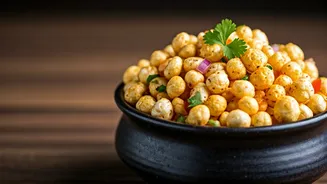
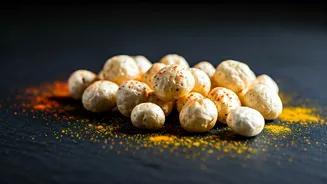
Makhana chaat is where these two worlds collide. The light, airy crunch of the roasted makhana replaces the more traditional fried elements of other chaats, instantly making the dish lighter without sacrificing satisfaction. The makhana act like tiny, edible sponges, soaking up the yogurt and chutneys while remaining remarkably crisp. A typical preparation involves roasting the makhana in a little ghee or oil with spices like turmeric and red chili powder until they are warm and extra-crispy. Then, they’re tossed into a bowl and immediately doused with whisked yogurt, the sweet-sour tamarind and spicy-fresh mint chutneys, and all the classic chaat toppings. Every spoonful is a new adventure: the initial crunch of a makhana, followed by a burst of creamy yogurt, a sweet note from the tamarind, a kick from the mint, and the fresh bite of raw onion. It’s complex, satisfying, and feels impossibly indulgent for something so fundamentally wholesome.
Ditching the Wellness Dogma
This brings us back to the 'superfood' problem. Too often, healthy eating is presented as a form of self-denial. We’re told to eat a sad handful of plain almonds or sprinkle some flavorless seeds onto a joyless salad. It’s treated as a duty, a bitter pill to be swallowed for our long-term good. Makhana chaat completely rejects this idea. It takes a nutritionally dense ingredient and, instead of presenting it in its most austere form, makes it the centerpiece of a flavor party. It’s health by stealth. You’re not dutifully consuming antioxidants; you’re diving into a bowl of crunchy, saucy goodness. You're not counting magnesium milligrams; you're trying to get the perfect ratio of makhana, yogurt, and chutney on your spoon. The dish proves that 'healthy' and 'fun' are not mutually exclusive. It’s a celebration, not a sacrifice, which is a far more sustainable—and enjoyable—way to eat well.