




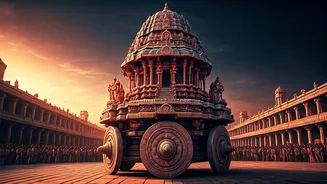


A Spectacle of Unfathomable Scale
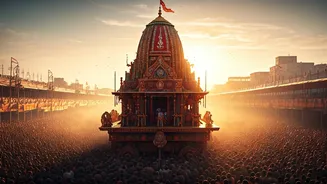
Every year in the city of Puri, in the eastern Indian state of Odisha, something extraordinary happens. The usual sounds of traffic and commerce are drowned out by a crescendo of drums, cymbals, and chants. Over a million devotees descend upon the city for
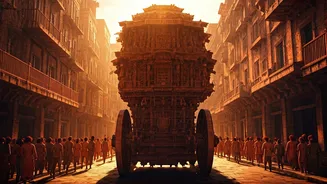
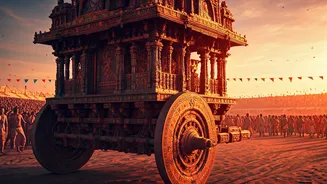
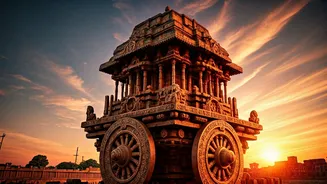
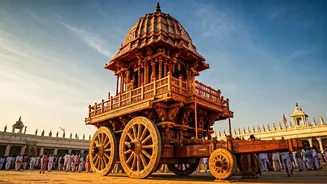
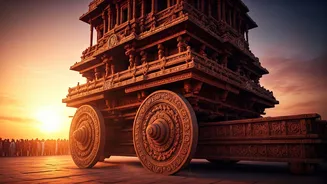
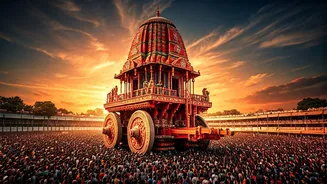
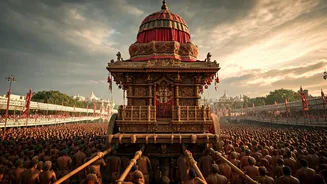
Rath Yatra, or the “Festival of Chariots.” The sight is staggering: a dense sea of humanity moving as one, their focus on three colossal chariots that lumber through the streets. These are not parade floats; they are mobile temples, each carrying a revered deity out from the sanctum of their permanent home to greet the public. The energy is electric, a mix of joyous celebration and profound spiritual devotion. For participants, the sheer scale of the event—the crowds, the sounds, the enormous moving structures—transforms an internal belief into a powerful, shared, and tangible reality.
The Lord of the Universe
At the heart of the festival is Lord Jagannath, a form of the Hindu god Vishnu, revered as the “Lord of the Universe.” He is easily identifiable by his large, round eyes and wide, armless form, a distinct iconography that sets him apart. He is not alone on his journey. Flanking him in their own chariots are his elder brother, Balabhadra, and his sister, Subhadra. The festival celebrates their annual trip from the main Jagannath Temple, where they are worshipped year-round, to the Gundicha Temple, believed to be their aunt’s home, a few miles away. This journey symbolizes the idea that God is not a distant, inaccessible figure confined to a shrine. Once a year, the deities come out to the people, breaking down barriers of caste, creed, and status, allowing everyone to see them and feel their presence.
Building the Divine Vehicles
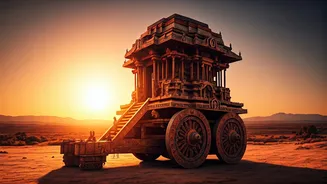
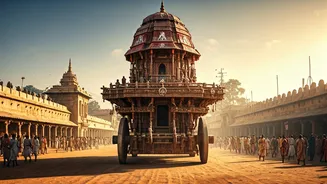
The chariots, or rathas, are masterpieces of sacred engineering and artistry, built fresh every single year according to strict ancient specifications. Lord Jagannath’s chariot, Nandighosha, stands roughly 45 feet tall, has 16 massive wheels, and is draped in brilliant red and yellow cloth. Balabhadra’s chariot, Taladhwaja, is covered in red and green, while Subhadra’s, Darpadalana, uses red and black. A specialized group of carpenters begins construction months in advance, using specific types of wood from designated forests, all without modern blueprints—the knowledge is passed down through generations. Once built and decorated by artists, these structures are more than just vehicles; they are considered divine extensions of the temple, consecrated and prepared to carry the gods among their people.
Pulling the Ropes of Faith
The most iconic act of Rath Yatra is pulling the chariots. Thick, long ropes are attached to each ratha, and thousands of people grab hold to heave them forward. This act is considered incredibly meritorious. It’s a physical expression of devotion, a way of directly serving and connecting with the divine. The immense weight of the chariots means that no single person can move them; it requires the collective effort of the community. In this moment, everyone is equal. The simple act of pulling the rope becomes a powerful metaphor for the spiritual journey—it is arduous and requires collective will, but it moves everyone closer to the divine. The sight of these behemoths slowly inching forward, powered solely by human strength and faith, is what makes the festival feel truly monumental.
From Puri to Philadelphia
While Puri remains the epicenter, the spirit of Rath Yatra has crossed oceans. Thanks to the efforts of Hindu diaspora communities and organizations like the International Society for Krishna Consciousness (ISKCON), Rath Yatra is now celebrated in over a hundred cities worldwide, from New York and San Francisco to London and Toronto. These festivals, while smaller in scale, capture the same essential spirit. Replicas of the iconic chariots are pulled down major city streets, introducing Americans of all backgrounds to the vibrant colors, music, and inclusive message of the festival. It’s a testament to how a deeply rooted tradition can find new life and meaning far from its origin, continuing to make faith a visible, communal, and monumental force.