




Start by Looking for Shadows
Imagine you’re trying to prove a tiny, shy bird lives in a forest, but you can never spot it directly. One strategy is to wait for it to pass in front of a light source. This is the logic behind the “transit method,” one of the most successful ways we
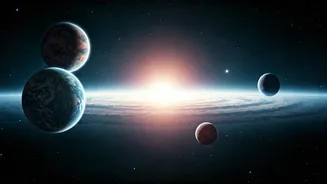
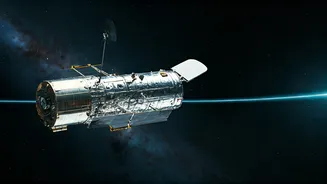
find planets outside our solar system (exoplanets). Astronomers point incredibly sensitive telescopes, like NASA’s Kepler or TESS, at a distant star and measure its brightness with painstaking precision over days, weeks, and months. If a planet is orbiting that star, and its orbit happens to cross our line of sight, it will block a minuscule fraction of the star’s light as it passes in front. The telescope detects this as a slight, temporary dip in brightness. If that dip is periodic—happening every 10 days, 50 days, or 300 days—that’s a huge clue. Scientists can then deduce the planet’s size based on how much light it blocks and its orbital period based on the timing. We haven't “seen” the planet, but we've seen its shadow, and that’s powerful evidence.
Then, Watch for the Wobble
Another way to find an invisible object is to watch its effect on something you *can* see. Think of two figure skaters spinning together; even if one partner were invisible, you could infer their presence by the way the visible skater moves and wobbles. Planets and stars are locked in a similar gravitational dance. A star doesn't just sit perfectly still while a planet orbits it. The planet's gravity also tugs on the star, causing the star to make its own tiny, circular or elliptical path—a stellar wobble. While we can’t see this wobble directly from Earth, we can detect its effect on the star’s light. As the star wobbles toward us, its light waves get compressed, shifting toward the blue end of the spectrum. As it wobbles away, the light waves stretch out, shifting toward the red. This phenomenon, known as the Doppler effect, is the basis of the “radial velocity method.” By measuring these tiny, cyclical color shifts, astronomers can detect the presence of an unseen planet and even estimate its mass.
Follow the Invisible Gravity
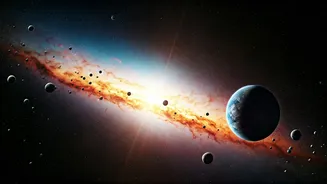
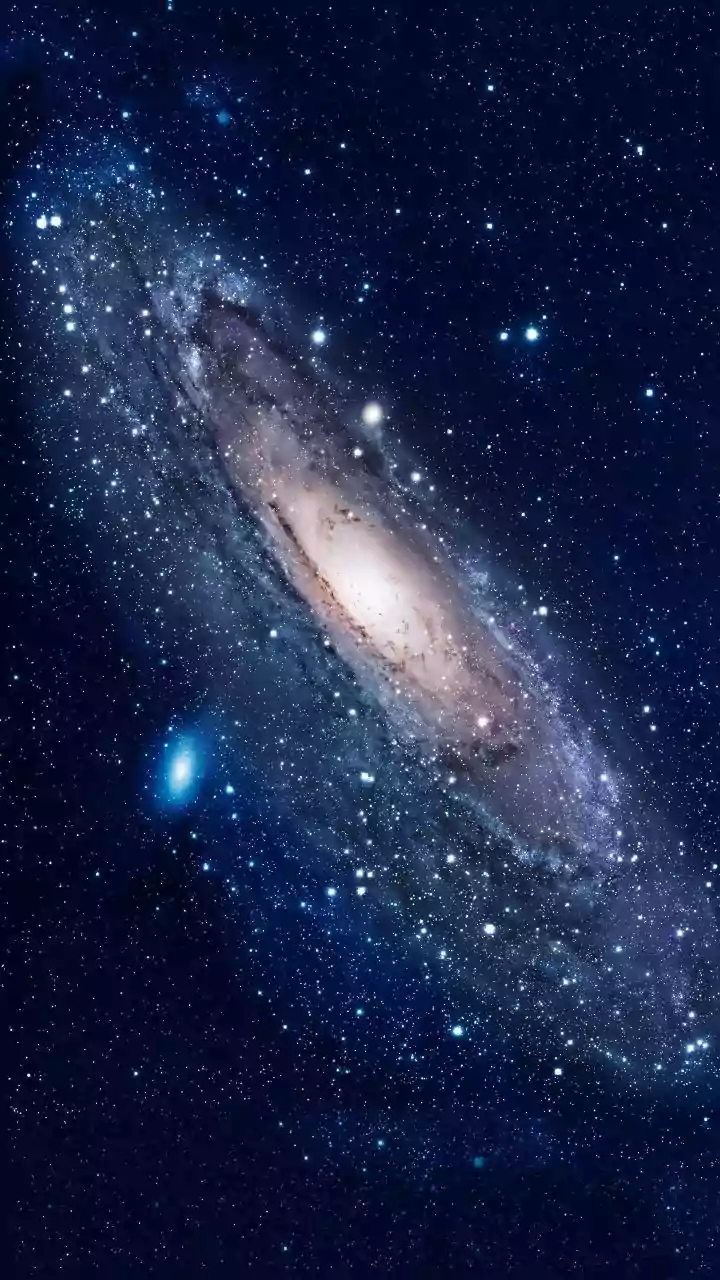
The challenge gets even bigger with something like dark matter. It’s not just a small, distant object; it’s a mysterious substance that makes up about 85% of the matter in the universe, and it doesn't emit, reflect, or interact with light at all. It’s completely invisible. So how do we know it’s there? By its sheer gravitational muscle. In the 1970s, astronomer Vera Rubin was studying the rotation of galaxies. Logic dictates that stars on the outer edges of a galaxy should move much slower than stars near the center, just as Pluto moves slower than Mercury. But that's not what she found. Instead, the outer stars were whipping around just as fast as the inner ones. The only way to explain this was if the galaxies were filled with a huge amount of unseen mass—a gravitational glue holding everything together. We can't see the dark matter itself, but we can see its gravitational pull keeping galaxies from flying apart.
Use a Cosmic Magnifying Glass
Einstein’s theory of general relativity tells us that massive objects warp the fabric of spacetime. A good way to picture this is placing a bowling ball on a trampoline; it creates a dip that objects rolling nearby will curve around. In space, this means that a massive object—like a galaxy or a huge clump of dark matter—can act like a lens. Light from a very distant galaxy, traveling toward us, will bend as it passes by this massive, invisible object. From our perspective on Earth, this “gravitational lensing” can make the background galaxy appear distorted, magnified, or even duplicated into multiple images. Astronomers can then work backward. By analyzing these distortions, they can map the location and mass of the invisible foreground object that’s acting as the lens. It’s an extraordinary way to “see” dark matter by observing the way its gravity warps the light from objects billions of light-years behind it.