





The Festival of the Bleeding Goddess
Every year during the monsoon season, the city of Guwahati in the Indian state of Assam becomes the epicenter of a unique spiritual gathering: the Ambubachi Mela. Hundreds of thousands of pilgrims, ascetics, and devotees flock to the Kamakhya Temple,
a sacred site perched atop Nilachal Hill. But this isn't a typical religious festival. The Ambubachi Mela celebrates the annual menstruation of the presiding deity, the goddess Sati, also known as Kamakhya. For four days, the temple's inner sanctum is closed as the goddess is believed to be undergoing her period. During this time, the earth is considered fertile and powerful. Instead of treating menstruation as impure, the festival venerates it as the ultimate symbol of life, creation, and feminine power. Farmers halt their tilling, and devotees focus on prayer and introspection, awaiting the temple's reopening when small pieces of red cloth, believed to be moistened by the goddess's menstrual fluid, are distributed as blessings.
A Tradition Rooted in Tantra
The folklore behind the festival is deeply entwined with Tantra, a mystical and often misunderstood branch of Hinduism. The Kamakhya Temple is one of the most revered Shakti Peeths, or seats of divine feminine power. Legend holds that after the goddess Sati died, her distraught husband, Shiva, carried her body across the universe. To calm him, the god Vishnu used his discus to dismember her corpse, and pieces fell to earth. Her yoni (womb and vulva) is said to have landed on Nilachal Hill, where the temple now stands. This makes the site a powerful hub for Tantric worship, which embraces the physical body and the material world as pathways to the divine. The Ambubachi Mela is the foremost celebration of this belief, honoring the raw, creative energy (Shakti) embodied by the goddess and, by extension, all women.
Folklore for the Digital Age
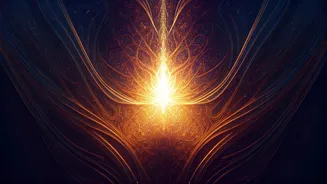
For centuries, these stories were passed down through oral tradition, sculpture, and ritual. Today, Assamese artists are giving this ancient folklore a vibrant, 21st-century update. Armed with digital drawing tablets and software like Procreate and Adobe Illustrator, a new generation is reinterpreting the imagery of the goddess, the festival, and its deep symbolism. Their work is a striking blend of old and new. You might see the goddess depicted not as a stone idol, but as a dynamic, modern woman, her power radiating in electric blues and neon pinks. The sacred red cloth might be reimagined as a flowing, graphic element in a complex digital collage. These artists often use motifs from traditional Assamese culture—the patterns of local textiles, the region's lush flora and fauna—and fuse them with a contemporary, globally-influenced aesthetic. The art is not just illustrative; it’s an act of cultural translation, making profound spiritual concepts feel immediate and accessible.
From Temple Walls to Instagram Feeds
This digital renaissance is doing more than just creating beautiful images; it's building a bridge between a hyper-local tradition and a global audience. While the Ambubachi Mela itself can be an intense and overwhelming experience, a piece of digital art shared on Instagram or Behance can travel the world in seconds. For young Assamese people, it’s a source of immense cultural pride and a way to connect with their heritage on their own terms. For outsiders, it serves as a powerful, visually engaging introduction to a complex spiritual tradition. By transforming sacred narratives into shareable content, these artists are demystifying their culture and challenging monolithic views of India. They are ensuring that the story of the menstruating goddess doesn't just remain within the temple walls but thrives in the digital spaces where modern culture is forged.