




From Illumination to Intervention
Think about the lights in your home. You probably chose them based on style, brightness, or energy efficiency. A chandelier for the dining room, a task lamp for your desk, a soft-glowing bulb for the bedroom—each serves a practical or aesthetic purpose.
This has been the guiding principle of lighting design forever. But now, architects, designers, and even tech companies are asking a different question: What if our lights could do more? What if they could actively improve our health? This is the core idea behind “human-centric lighting” or “wellness lighting.” It’s a design approach that prioritizes the effect of light on the human body over simple visibility. Instead of being a static feature of a room, lighting becomes a dynamic system designed to support our natural biological rhythms, improve our mood, boost our focus, and even help us sleep better. It’s the shift from simply illuminating a space to curating an environment that makes us feel good.
The Science of Your Body Clock
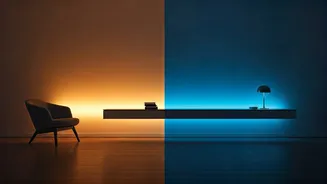
The entire concept hinges on a well-understood biological process: the circadian rhythm. This is the 24-hour internal clock that governs our sleep-wake cycles, hormone release, and energy levels. For millennia, this clock was set by the sun. Bright, blue-toned sunlight in the morning would tell our bodies to wake up, produce cortisol, and be alert. As the sun set, the light would shift to a warm, dim, orange-and-red glow, signaling our brains to produce melatonin and prepare for sleep.
Modern life has thrown a wrench in this system. We spend over 90% of our time indoors, often under harsh, static lighting that doesn’t change throughout the day. Worse, we stare at blue-light-emitting screens late into the night, effectively telling our brains it’s still midday. The result is a collective sense of jet lag, leading to poor sleep, daytime grogginess, and mood disruption. Wellness lighting aims to correct this by bringing the dynamic, natural cycle of the sun back into our homes.
Mimicking the Sun Indoors
So how does it work in practice? The key technology is “tunable white” LED lighting. Unlike a standard bulb that has a fixed color temperature (e.g., “soft white” or “daylight”), tunable bulbs can change their color and intensity throughout the day.
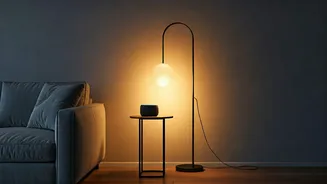
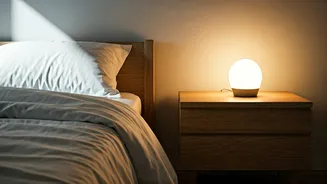
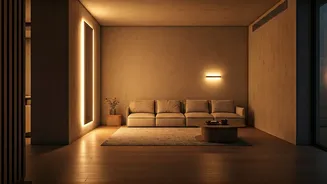
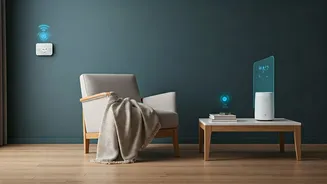
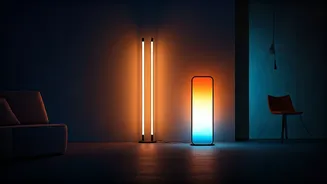
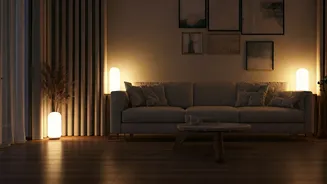
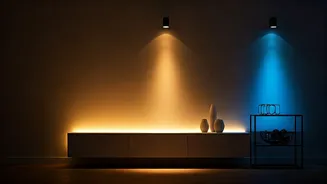
When integrated into a smart home system, this lighting can be programmed to mimic the sun's natural progression. Imagine your lights automatically turning on with a cool, bright, energizing hue in the morning to help you wake up. Throughout the afternoon, the light might remain bright to aid concentration. Then, as evening approaches, the system would gradually dim and shift the light to a warm, amber glow, mirroring a sunset. This gentle transition helps your body wind down naturally, easing you toward a more restful night’s sleep. It’s less about flipping a switch and more about living within a responsive, lightscape.
Wellness Lighting Comes Home
Just a few years ago, this kind of sophisticated system was the exclusive domain of high-end architectural projects, luxury hotels, and forward-thinking office spaces like those certified by the WELL Building Standard. But thanks to the explosion of consumer-grade smart home technology, human-centric lighting is now more accessible than ever.
Companies like Philips Hue, C by GE, and Wyze offer affordable smart bulbs and apps that put tunable lighting in anyone’s hands. With a few taps on your phone, you can set up “scenes” for waking up, concentrating, or relaxing. Many systems now come with pre-programmed circadian rhythm routines that automate the entire process. What was once a complex, professionally installed system is quickly becoming a DIY weekend project, allowing anyone to turn their home’s lighting from a simple utility into a personalized wellness tool.