

First, What Is Barfi?
Walk into any Indian sweet shop, or mithai shop, and you’ll be greeted by a dazzling display of colorful, jewel-like treats. Among them, you'll almost certainly find barfi. In its simplest form, barfi is a milk-based confection with a texture somewhere
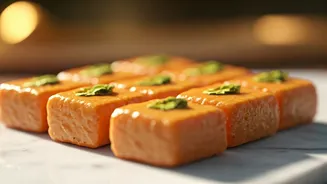
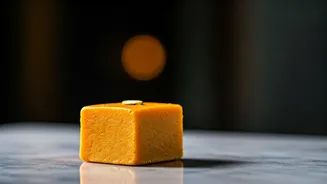
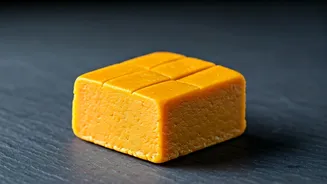
between a dense fudge and a rich, milky cake. The name itself comes from the Persian word 'barf,' meaning snow, likely a nod to its classic white, milk-heavy appearance. It’s traditionally made by cooking down milk solids (khoya or mawa), sugar, and ghee (clarified butter) until it thickens into a paste. This mixture is then pressed into a pan, cooled, and cut into diamonds or squares. While the plain version is delicious, barfi is a perfect canvas for other flavors, from nuts like pistachio and cashew to spices like cardamom and saffron.
The King of Fruits Meets Mithai
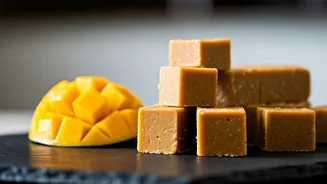
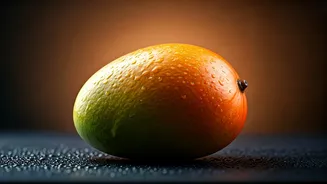
In India, the mango isn’t just a fruit; it's a cultural phenomenon, an obsession that marks the arrival of summer. Known as the “king of fruits,” its annual appearance is met with celebration. So, it’s only natural that this beloved fruit would find its way into the country’s most cherished sweets. Mango barfi, or 'aam ki barfi' (aam being the Hindi word for mango), is a seasonal specialty that perfectly marries the creamy richness of traditional barfi with the bright, tropical sweetness of fresh mangoes. It represents the best of both worlds: the comforting, festive tradition of mithai and the vibrant, sun-drenched flavor of peak-season produce. It’s a way to concentrate and preserve that perfect mango flavor, transforming a perishable fruit into a stable, shareable treat that lasts for days.
The Core Magical Ingredients
The beauty of mango barfi lies in its simplicity. While recipes vary, the core components are remarkably straightforward. The star, of course, is mango pulp—ideally from sweet, fragrant, non-fibrous varieties like Alphonso or Kesar, which are prized for their deep color and intense flavor. For the best result, fresh, ripe mango puree is used, though high-quality canned pulp is a common and excellent substitute, especially outside of mango season. The second key ingredient is khoya, also known as mawa. These are milk solids, created by slowly simmering whole milk for hours until all the water has evaporated, leaving behind a thick, lightly caramelized, and unsweetened paste. It's the secret to the barfi’s rich, melt-in-your-mouth texture. Sugar provides sweetness, while a touch of ground cardamom or a few threads of saffron can be added to complement the mango without overpowering it. Finally, a garnish of slivered almonds or pistachios adds a welcome crunch.
A Taste of Solidified Sunshine
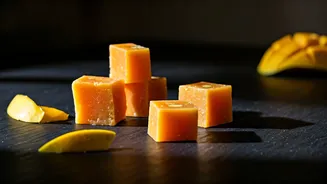
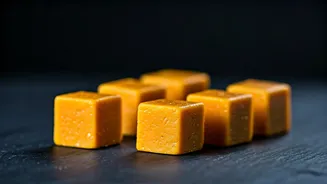
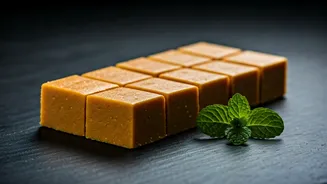
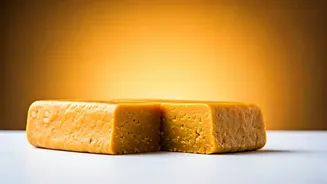
The final product is nothing short of spectacular. Imagine a piece of fudge, but instead of chocolate, it’s bursting with the pure, unadulterated flavor of a perfect mango. The texture is dense and creamy but not heavy, with a slight graininess from the milk solids. It’s sweet, but the natural tartness of the mango cuts through the richness, preventing it from being cloying. Each bite feels like you’re tasting the very essence of summer, concentrated into a single, neat square. Unlike many Western desserts that rely on butter and flour, mango barfi’s richness comes entirely from milk and fruit. It’s often served at room temperature, making it a perfect treat for celebrations, festivals like Diwali, or simply as a special afternoon pick-me-up with a cup of chai.
Bringing the Magic Home
While making it from scratch can be a labor of love, the process is more about patience than complex skill. It involves cooking the mango pulp until it thickens, then adding the crumbled khoya and sugar, and stirring continuously until the mixture pulls away from the sides of the pan. This sweet, fragrant mass is then poured into a greased tray, smoothed out, decorated with nuts, and left to set for several hours before being sliced. Don’t feel like taking on the project yourself? Your best bet is to visit a local Indian grocery store or, even better, a dedicated mithai shop. Ask for their seasonal specialties, and if it’s anywhere between May and August, there’s a good chance mango barfi will be on the menu. It’s the perfect introduction to the vast and wonderful world of Indian sweets, all through the familiar lens of a fruit we already know and love.