




A Fruit with a Royal History
Before it became a smoothie staple and a salsa superstar in the U.S., the mango had a long and storied history. Originating in South Asia over 4,000 years ago, it's deeply woven into the culture of countries like India, Pakistan, and the Philippines,
where it’s the national fruit. Revered in Hindu and Buddhist traditions as a symbol of love and happiness, the fruit was so prized that it was carried by travelers and traders along spice routes to the Middle East, Africa, and eventually, South America. The Portuguese introduced it to Brazil, and from there, its journey into the Americas began. Today, the mango is one of the most widely consumed fruits in the world, a testament to its universal appeal.
How to Choose a Perfect Mango
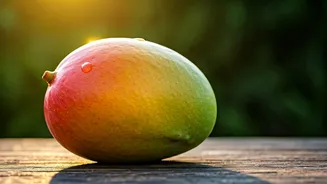
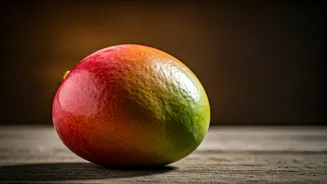
Forget what you think you know about color. While some mango varieties turn bright red or orange, many stay green even when they're perfectly ripe. The single most important test for ripeness is feel. Hold the mango in your palm and give it a gentle squeeze. A ripe mango will have a slight give, similar to a peach or an avocado. If it’s rock-hard, it needs more time. If it’s mushy or has soft spots, it’s overripe. The second test is smell. Sniff the area around the stem; a ripe mango will often have a sweet, fruity, fragrant aroma. Trust your hands and your nose over your eyes, and you’ll rarely be disappointed.
A Quick Guide to Common Varieties
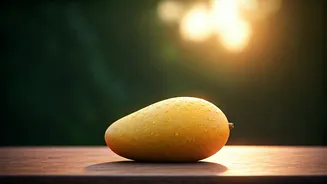
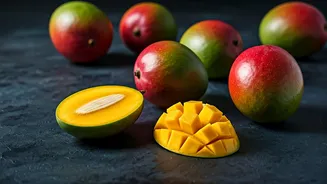
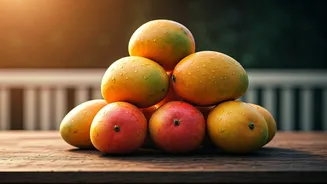
Staring at the mango display can be confusing. While there are hundreds of varieties worldwide, you’re most likely to encounter a few key players in American grocery stores: - **Tommy Atkins:** The most common variety in the U.S. It’s large, oval, and has a dark red blush with green and orange accents. Its flavor is mildly sweet, and its flesh is firm and somewhat fibrous, making it good for transport but not always the most luxurious eating experience. - **Honey (Ataulfo):** These small, kidney-shaped mangoes are golden yellow when ripe. They are intensely sweet, with a creamy, custard-like texture and virtually no fibers, making them a cult favorite. - **Kent:** A large, oval mango that stays largely green with a reddish blush. Kents are incredibly juicy and have a rich, sweet flavor with very little fiber. They are a great all-purpose mango. - **Keitt:** Don’t be fooled by its green skin; this large, oval mango stays green even when it’s perfectly ripe and sweet. It has a tangy-sweet flavor and minimal fiber.
The Best Way to Cut a Mango
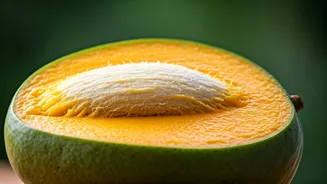
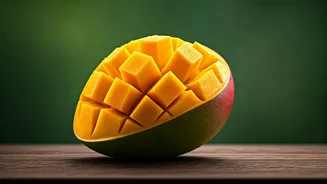
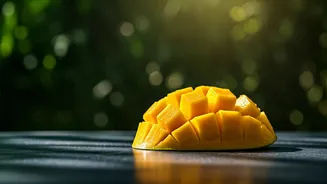
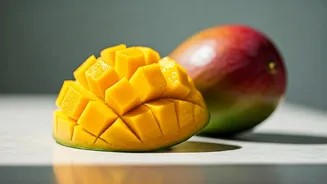
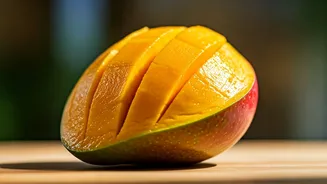
The biggest hurdle for many is the large, flat, oblong pit in the center. Once you know how to work around it, it's simple. Here's the classic 'hedgehog' method: 1. Stand the mango on its end, with the stem facing up. The pit inside is oriented the same way—tall and flat. 2. Imagine the pit in the center and slice downwards with a sharp knife about a quarter-inch away from the midline. You should feel your knife glide past the pit. Repeat on the other side. You'll now have two large halves, or 'cheeks.' 3. Take one cheek and carefully score the flesh in a grid-like pattern, cutting down to the skin but not through it. 4. Gently push the skin from underneath to pop the cheek inside-out. The scored flesh will stand up like a hedgehog's spines. You can now easily slice off the cubes with a knife or just eat them straight off the skin.
Storing for Peak Flavor
If your mango is hard, leave it on the kitchen counter at room temperature for a few days to soften and ripen. Never refrigerate an unripe mango, as the cold will halt the ripening process and damage the flavor. Want to speed things up? Place it in a paper bag with a banana or apple, which release ethylene gas and accelerate ripening. Once your mango is perfectly ripe, you can move it to the refrigerator to slow down further ripening. It will keep in the fridge for up to five days. If you've cut your mango, store the pieces in an airtight container in the refrigerator for about three days, or freeze them on a baking sheet before transferring to a freezer bag for a future smoothie.