








The City as a Concrete Oven
First, it’s important to understand why our cities get so unbearably hot. It’s a phenomenon scientists call the “urban heat island effect.” In rural or suburban areas, much of the landscape is covered by vegetation, soil, and water. These natural surfaces
absorb some of the sun's energy and use it for processes like evaporation and transpiration, which have a cooling effect. In cities, however, we’ve replaced those surfaces with asphalt, concrete, brick, and dark roofing materials. These materials are masters at absorbing and holding onto heat. A black asphalt roof can reach temperatures of 150°F or more on a sunny day. At night, while natural landscapes cool down by releasing heat into the atmosphere, this massive thermal battery of buildings and roads slowly radiates its stored warmth, keeping the city several degrees hotter than its surrounding countryside. This isn't just uncomfortable; it drives up energy costs for air conditioning and poses serious health risks during heatwaves.
How Plants Act as Heat Sinks
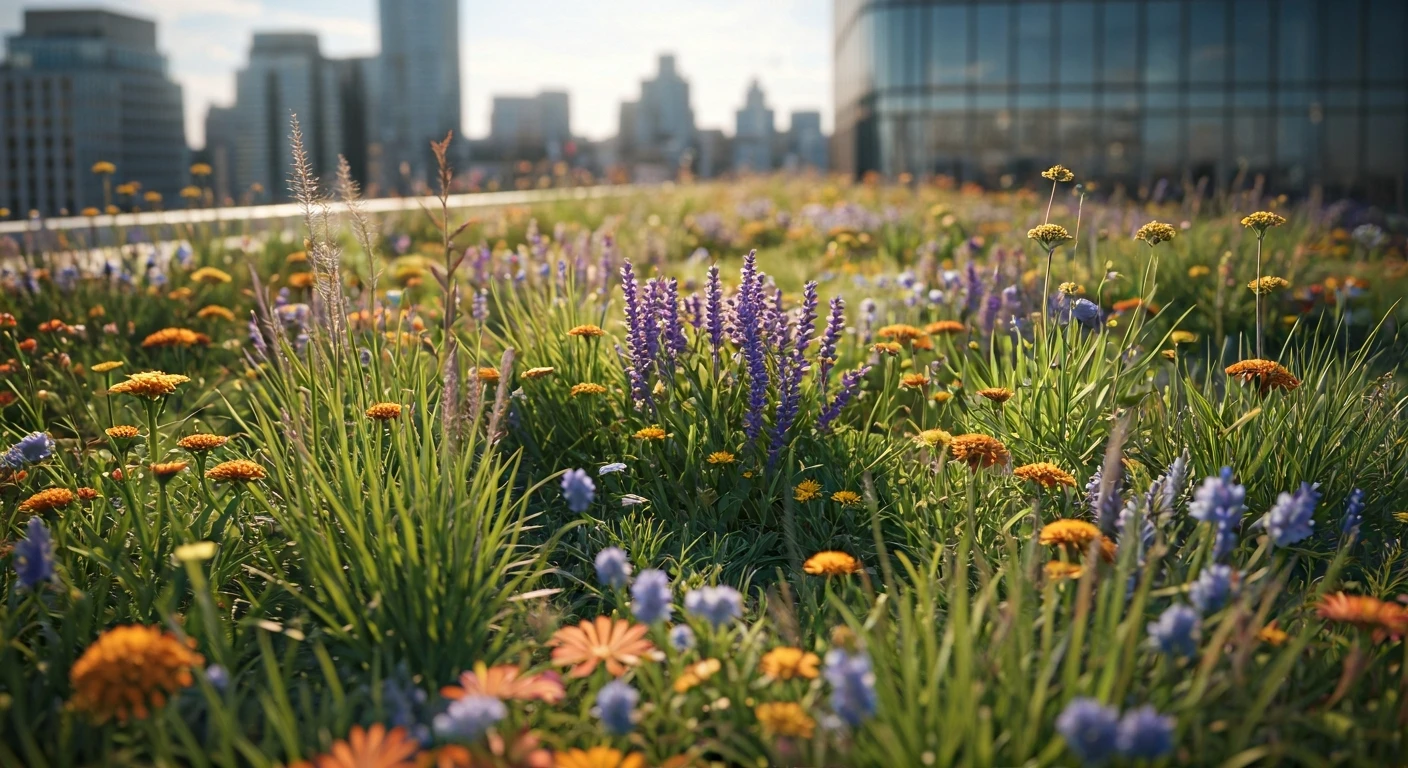
This is where rooftop gardens change the equation. The headline’s term “heat sink” is a great way to visualize what happens. Instead of a dark, heat-absorbing surface, you have a living ecosystem. The most powerful cooling mechanism is called evapotranspiration. It’s essentially the plant equivalent of sweating. Plants draw water up from their roots and release it as water vapor through their leaves. This process requires energy, and the energy it uses is heat drawn from the surrounding air. A single rooftop garden becomes a micro-cooler, actively pulling heat out of the atmosphere. Furthermore, the soil and vegetation provide a layer of insulation. They prevent the sun's rays from ever reaching the roof's surface, keeping the building below significantly cooler and reducing the need for air conditioning. The soil itself can absorb rainwater, which then slowly evaporates, providing another passive cooling benefit. The garden effectively disrupts the cycle of heat absorption and radiation that defines the urban heat island.
More Than Just a Cooler Roof
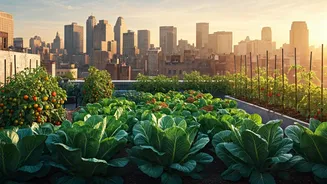
The benefits of covering our cities’ “fifth facade”—the rooftops—with greenery extend far beyond temperature moderation. These vegetable patches become miniature farms, providing hyper-local produce to residents or restaurants, reducing food miles and increasing access to fresh food. They create vital habitats for pollinators like bees and butterflies, which struggle to find homes in concrete jungles. Green roofs are also fantastic at stormwater management. A typical city roof funnels rainwater directly into sewer systems, which can become overwhelmed during heavy downpours, leading to flooding and pollution. The soil in a rooftop garden acts like a sponge, absorbing a significant portion of that rainfall, filtering it, and releasing it slowly over time. This reduces the strain on municipal infrastructure and helps keep our waterways cleaner. They even improve air quality by filtering pollutants and producing oxygen.
From Niche Idea to Urban Strategy
What once seemed like a novelty is now becoming a core part of urban planning in forward-thinking American cities. Places like Chicago, New York City, and Portland have implemented policies that incentivize or even mandate green roofs on new construction. Chicago’s City Hall has had a famous green roof for over two decades, serving as a living laboratory that has demonstrated a measurable cooling effect on the building. In New York, programs support the development of rooftop farms in underserved communities, tackling food security and urban heat simultaneously. These initiatives recognize that building a resilient, livable city for the 21st century means working with nature, not against it. By transforming barren, heat-trapping roofs into productive green spaces, cities are not just beautifying their skylines—they are investing in a more sustainable and comfortable future for everyone who lives there.