




More Than Just Looking Up
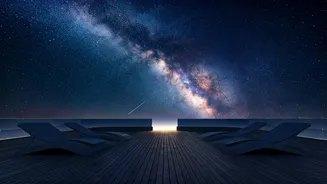
So, what exactly is star bathing? Inspired by the Japanese practice of *shinrin-yoku*, or forest bathing, star bathing is less about amateur astronomy and more about mindful immersion. It’s not about identifying constellations or tracking satellites.
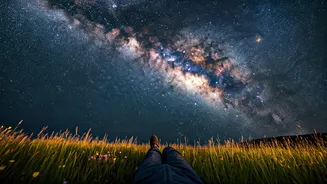
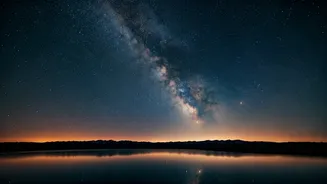
Instead, it’s the practice of finding a dark place, far from the glare of city lights, and simply allowing your senses to be enveloped by the night sky. It’s about feeling the cool air, hearing the nocturnal sounds of nature, and letting the sheer scale of the universe wash over you. While stargazing is an active pursuit of looking *at* something, star bathing is a passive act of *being with* something—a vast, quiet, and awe-inspiring presence.
The Science of Cosmic Calm
The dreamy feeling star bathing provides isn't just anecdotal; it's rooted in psychology. The experience often elicits a powerful emotion known as "awe"—the feeling of being in the presence of something vast that transcends your understanding of the world. Studies suggest that experiencing awe can decrease stress, reduce feelings of impatience, and increase feelings of connectedness to others and the world around you. Gazing at a celestial panorama millions of light-years away has a way of shrinking our daily anxieties. This cosmic perspective shift can be a powerful antidote to the stress of modern life, where our focus is often narrowed to the glowing screen in our hands. It's a forced digital detox that quiets the mind and encourages a state of meditative calm.
Finding Your Dark Sky Sanctuary
The biggest challenge for most Americans is finding a sky dark enough for a proper star bath. Light pollution from cities and suburbs has washed out the Milky Way for an estimated 80% of the U.S. population. This is where the concept of dark-sky tourism comes in. The International Dark-Sky Association (IDA) certifies locations around the world that are actively preserving the natural darkness of their night skies. These parks, reserves, and sanctuaries are the premier destinations for star bathing. Visiting an IDA-certified park isn’t just great for your wellness; it supports crucial conservation efforts to protect nocturnal ecosystems and our shared celestial heritage. Many U.S. National Parks, even if not officially certified, also offer incredible opportunities due to their remote locations and protected landscapes.
America's Best Star Bathing Spots
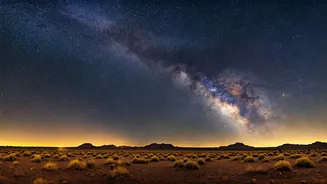
Ready to plan your trip? The U.S. is home to some of the most spectacular dark skies on the planet. For a classic desert experience, head to **Big Bend National Park** in Texas, which has the least light pollution of any national park in the lower 48. The stark, silent landscape adds to the profound sense of isolation and wonder. In the Mountain West, **Great Basin National Park** in Nevada offers high-elevation viewing and ranger-led astronomy programs. For those on the East Coast, **Cherry Springs State Park** in Pennsylvania is a designated Dark Sky Park renowned among astronomers for its exceptionally dark skies. Even the Midwest has gems like **Headlands International Dark Sky Park** in Michigan, which sits on the shores of Lake Michigan, providing a unique water-and-stars horizon.
Your Star Bathing Starter Kit
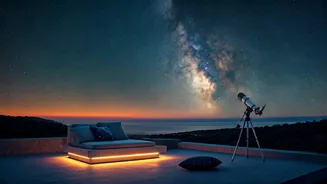
The beauty of star bathing is its simplicity, but a little preparation goes a long way. You don’t need a telescope, but you will want to be comfortable. Pack a thick blanket or a reclining camp chair. Dress in warm layers, as even desert nights can get surprisingly cold. A thermos of hot tea or cocoa is a welcome addition. Crucially, bring a flashlight with a red-light setting. Red light doesn't spoil your night vision the way white light does, allowing your eyes to stay fully adjusted to the dark. Finally, the most important thing to bring is the right mindset: leave your phone in the car, quiet your internal monologue, and just be present.