





From Smart to Seamless
The first wave of smart homes was defined by novelty and control. You could turn on a light from your phone or ask a speaker for the weather. It was clever, but often clunky—a collection of independent devices that didn't always play nice. We were essentially
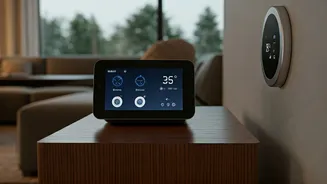
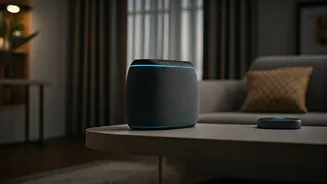
becoming remote controls for our own houses. The next phase, which is solidifying as we head toward 2026, is about something far more profound: ambient computing. The technology is designed to fade into the background, working proactively on your behalf. Instead of you telling your home what to do, your home will start to anticipate what you need. Think of it as the shift from a house with a brain to a home with intuition. It’s less about commanding and more about curating a feeling.
The End of the App Jungle
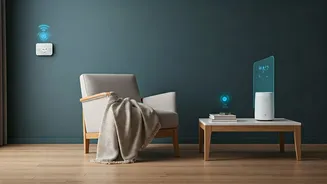
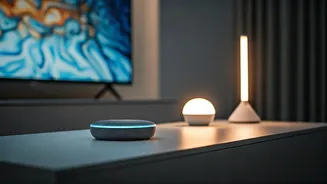
A huge barrier to true smart home comfort has been the digital equivalent of having ten different remote controls on your coffee table. One app for your lights, another for your thermostat, a third for your security camera. It creates friction and discourages deep integration. This is finally being solved by universal standards, most notably Matter. Backed by Apple, Google, Amazon, and hundreds of other companies, Matter is a common language that allows devices from different brands to communicate directly and securely. For the average person, this is a game-changer. It means you can buy a smart plug from one company and a light bulb from another, and they will work together seamlessly within your preferred ecosystem, whether it’s Apple Home, Google Home, or Amazon Alexa. This unification is the critical foundation upon which a truly comfortable, intuitive home is being built.
Your Home as a Wellness Partner
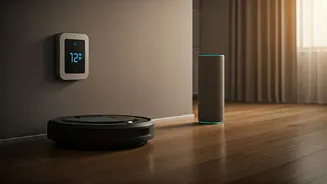
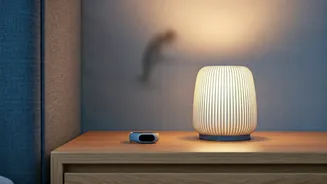
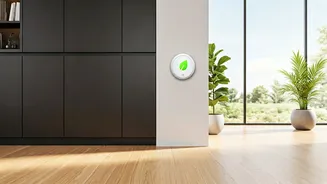
So what does this new era of 'comfort' actually look like? It's your house actively working to improve your well-being. Your lights will automatically adjust their color temperature throughout the day to support your natural circadian rhythm, getting brighter and cooler in the morning to help you wake up, and warmer and dimmer in the evening to help you wind down. Your thermostat, learning your patterns, will pre-warm the bathroom before you wake up on a cold morning. Air quality sensors will detect a rise in allergens and automatically trigger your air purifier. Your sound system might gently fade in a calming playlist when sensors detect you’ve been sitting still at your desk for too long, a subtle nudge to relax. It’s a home that doesn't just respond, but cares. It’s technology serving a fundamentally human need for sanctuary and peace.
The Privacy Question Looms
Of course, a home that knows you this well needs to know a lot about you. It needs to know when you're home, what room you're in, and what your daily habits are. This creates an understandable tension around privacy. For the 'comfort conversation' to succeed, tech companies must earn and maintain user trust. We're already seeing a major push toward on-device processing, where the AI computations happen locally on a hub in your home rather than being sent to a distant server. This keeps sensitive data, like camera feeds or presence detection, within your own four walls. Consumers will have to weigh the tangible benefits of an intuitive home against the data required to run it, and companies that prioritize transparent and robust privacy controls will be the ones that win our confidence and a place in our homes.