



A Foundation of Grip
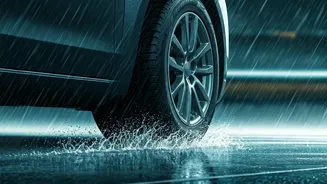
Your tires are the single most important safety feature on your car, especially in the rain. They are the only four points of contact between a two-ton metal box and a slippery surface. Before you even turn the key, you need confidence in your rubber.
Check your tire pressure regularly—underinflated tires can’t properly channel water away and are more prone to hydroplaning. More importantly, check your tread depth. The classic ‘penny test’ is a good start: place a penny upside down in a tread groove. If you can see the top of Lincoln's head, your tires are worn and it's time for a new set. According to the National Highway Traffic Safety Administration (NHTSA), nearly half of all weather-related crashes happen during rainfall. Worn tires dramatically increase your stopping distance on wet pavement and make a dangerous hydroplaning situation far more likely.
Unobstructed Vision, Both Ways
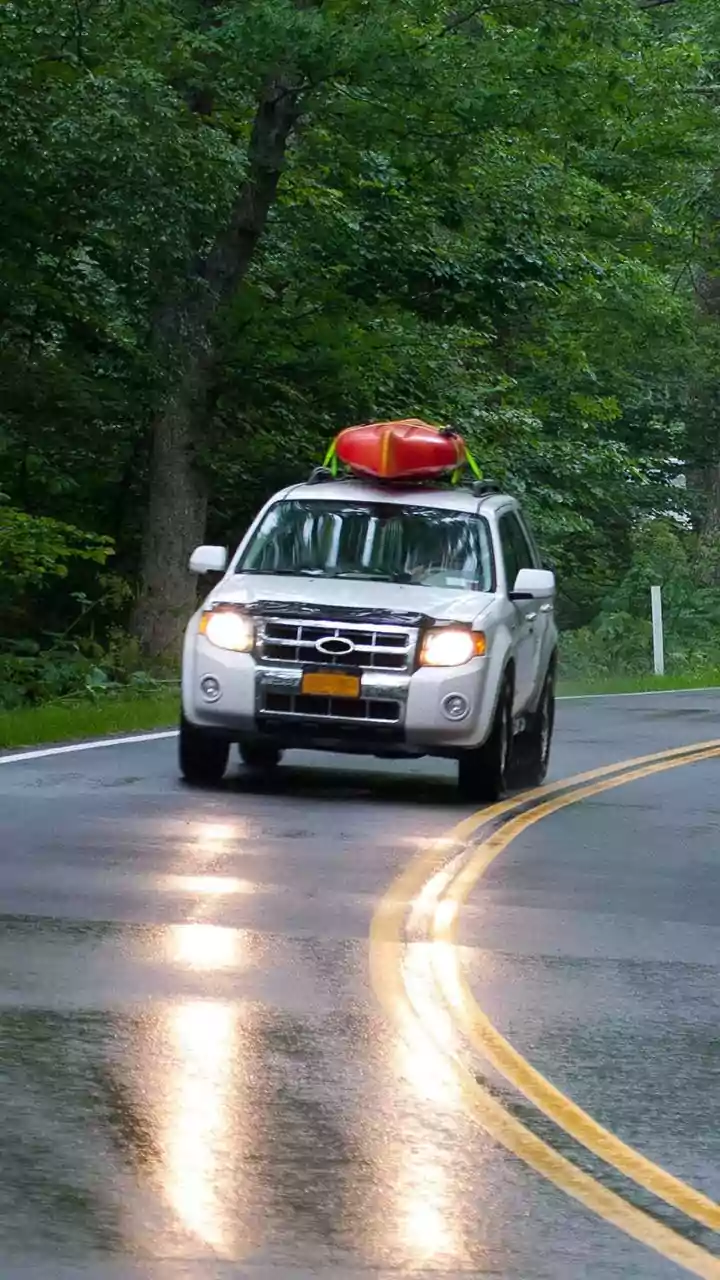
If you can’t see, you can’t react. It’s that simple. Yet, many drivers neglect their wiper blades until they’re streaking, chattering, and failing in a downpour. Wiper blades are made of rubber that degrades over time from sun exposure and use. They should be replaced every six to twelve months. It’s an inexpensive piece of maintenance that pays huge dividends in visibility. Just as crucial is making sure others can see you. In many states, it’s the law: if your wipers are on, your headlights must be on, too. Don't rely on automatic headlights, which may not activate in daytime rain. Manually turning on your headlights—not just your daytime running lights—ensures your front and rear lights are illuminated, making you significantly more visible to other drivers from all angles.
The Six-Second Buffer
The standard ‘three-second rule’ for following distance is for ideal, dry conditions. In the rain, you need to double it. At a minimum. Pick a fixed object ahead, like a sign or an overpass. When the car in front of you passes it, start counting: “one-one-thousand, two-one-thousand…” You should reach at least “six-one-thousand” before your front bumper reaches the same spot. Why so much space? Because braking distances can easily double on wet roads. A larger buffer gives you more time to perceive a hazard, react, and brake safely without locking up the wheels. This extra space is your best defense against rear-ending someone and protects you from the chain-reaction collisions that are common in bad weather.
Knowing How to Handle a Skid
Hydroplaning is terrifying. It’s the feeling of your car suddenly becoming a boat, gliding uncontrollably on a thin layer of water. It can happen at speeds as low as 35 mph if the conditions are right. The key is how you react. Your instinct will be to slam on the brakes and jerk the wheel, but that’s the worst thing you can do. Instead, do this: First, take your foot off the gas pedal smoothly. Do not brake. Second, look and steer gently in the direction you want the car to go. As the tires regain traction, you’ll feel the car respond. The maneuver is subtle and requires a calm head. The best way to handle a skid is to avoid one in the first place by slowing down, but knowing the proper recovery technique can be a literal lifesaver.
Turning Off the Autopilot
We're not just talking about your car's tech; we're talking about your brain. Rainy driving demands active, engaged focus. This is the time to put the phone away, turn the podcast volume down, and minimize distractions. Specifically, you should never use cruise control in rainy or wet conditions. If your car were to hydroplane while cruise control is engaged, the system would try to maintain speed by accelerating, potentially spinning the wheels faster and making a bad situation much worse. By keeping your foot on the pedal, you retain full control and can feel changes in the road surface and tire grip. A rainy drive is a task, not a passive experience. The goal is to arrive safely, and that requires your full attention.