



More Than a Fruit, a National Obsession
In the United States, we have seasonal food crazes—pumpkin spice in the fall, fresh berries in the summer. In India, the arrival of mango season is a national event, a fever pitch of excitement that borders on spiritual. The mango isn't just a fruit;
it's the undisputed “King of Fruits.” It’s woven into the fabric of the country's culture, appearing in mythology, poetry, and religious ceremonies for millennia. During the short, scorching pre-monsoon window from late March to early June, life revolves around it. Families send boxes to loved ones, debates rage over the best way to eat them, and markets overflow with dozens, if not hundreds, of distinct regional varieties, each with its own devoted following.
Meet the Alphonso: The Mango That Rules Them All
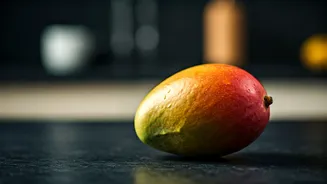
While there are countless mango types, one reigns supreme in this pantheon: the Alphonso, or “Hapus.” Grown primarily in a small coastal belt of western India, the Alphonso is to other mangoes what a Wagyu steak is to a fast-food burger. Its skin is a delicate saffron-yellow, often tinged with a blush of red. But the real magic is inside. The flesh is a deep, uniform saffron color, completely fiberless, and melts on the tongue like a rich custard. The flavor is a complex symphony—not just sweet, but with notes of citrus, honey, and a hint of peach. It’s so aromatic that a single ripe Alphonso can perfume an entire room. This isn't a fruit you slice into a smoothie; it's one you savor, piece by precious piece.
The Long and Winding Road to America
If this mango is so incredible, why are most Americans only just hearing about it? The answer lies in a combination of botany and bureaucracy. For nearly two decades, from 1989 to 2007, the United States banned the import of Indian mangoes due to concerns about fruit flies and other pests. For Indian expatriates and food lovers, this was a source of deep frustration. The ban was finally lifted as part of a trade deal often dubbed “mango diplomacy,” which allowed Indian mangoes back into the U.S. provided they underwent irradiation treatment to ensure they were pest-free. This process, along with the fruit's short shelf life and delicate nature, makes exporting them a logistical challenge. The supply is limited, the season is short, and the price is high—all factors that have only added to its mystique.
A Star on the Global Stage
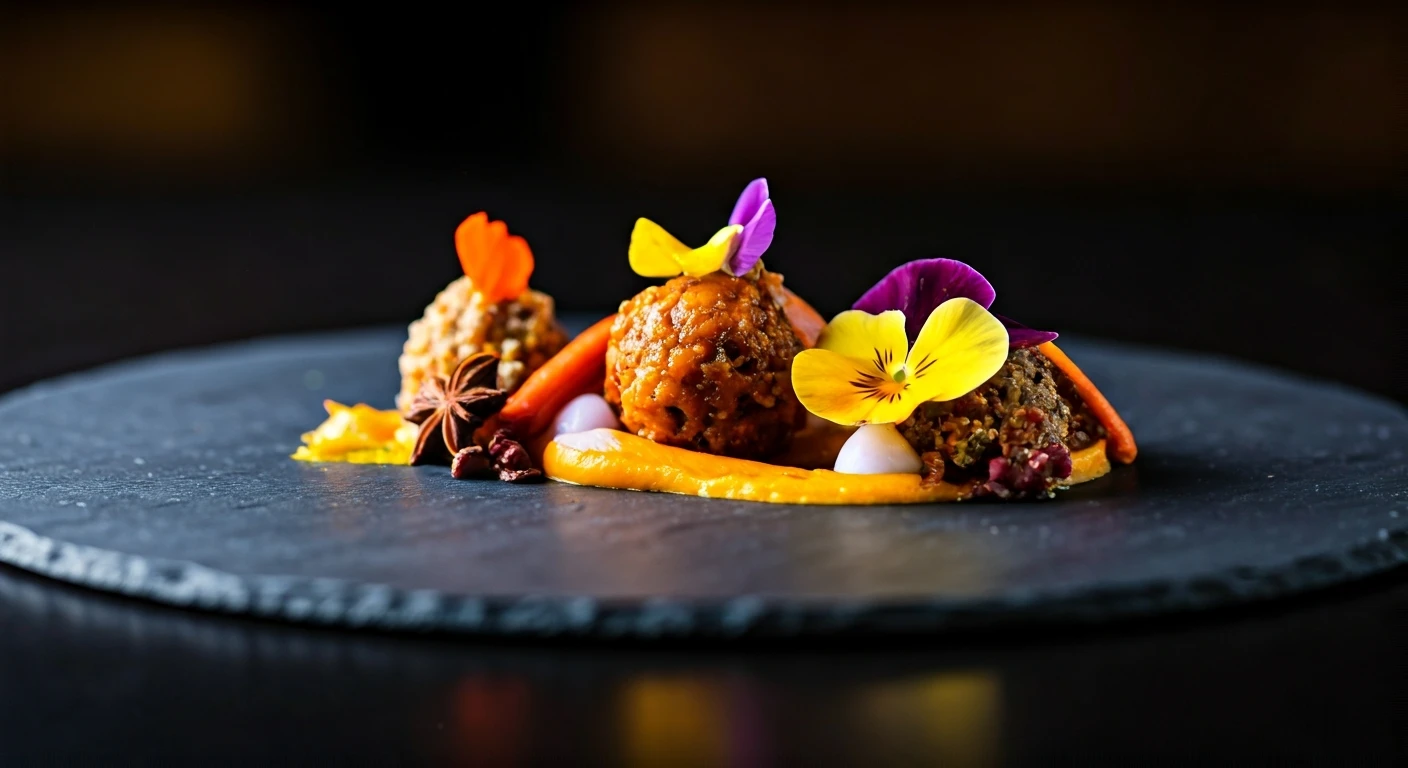
In recent years, the Alphonso's cult following has exploded into a full-blown global moment. Social media is flooded with “unboxing videos” of people eagerly opening precious cargo shipped overnight from India. High-end chefs in New York, London, and Dubai are building entire tasting menus around it, showcasing the fruit in sorbets, foams, and elegant desserts. Specialty grocers in major U.S. cities can’t keep the limited stock on their shelves. The mango has become a status symbol, a bite of edible luxury. This isn’t just about a fruit; it’s about the globalization of taste and the thrill of accessing something rare, authentic, and deeply cherished by another culture.